

The Dish That Stops the Table
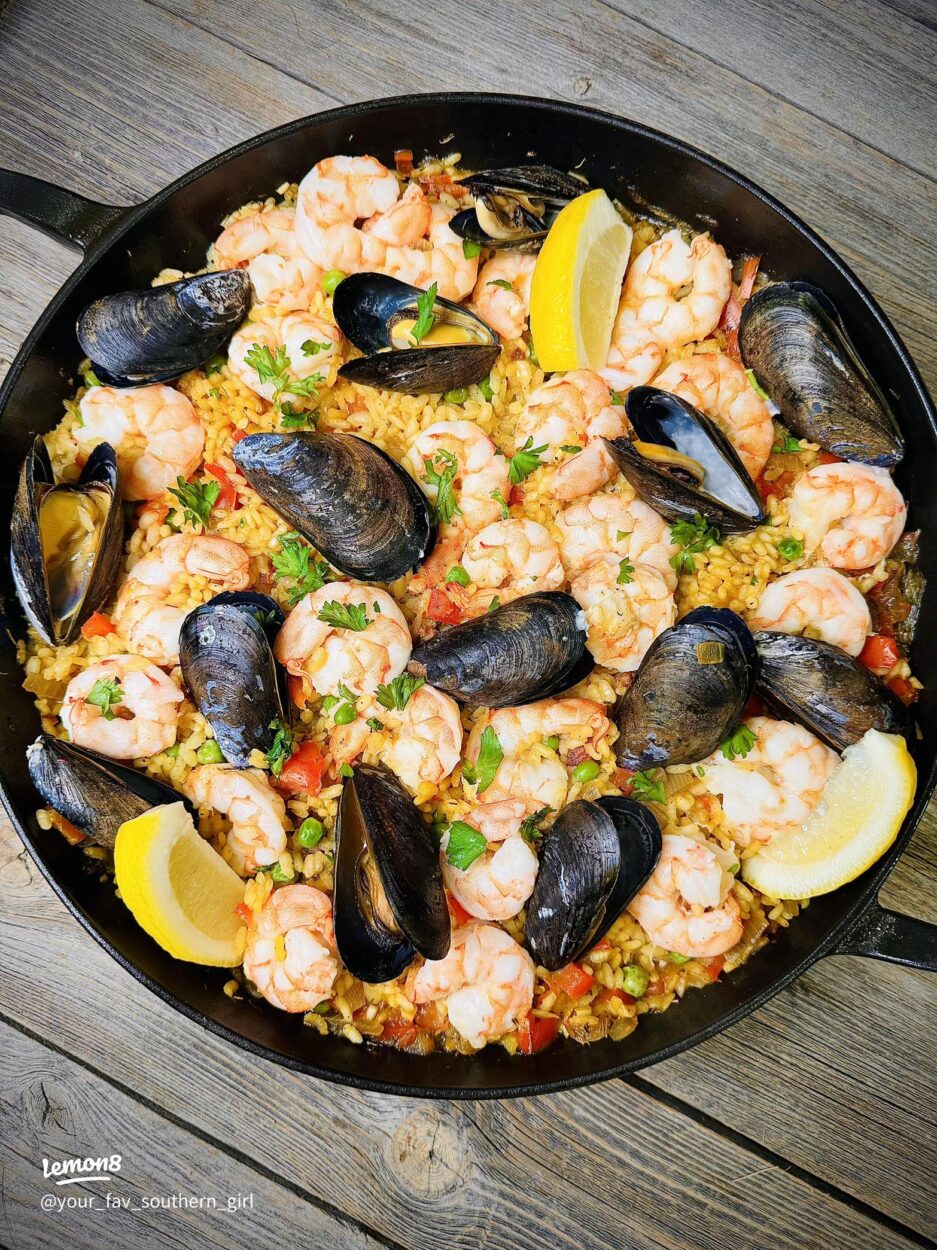
There are meals, and then there are moments. Spanish Paella is undeniably the latter. The second you bring that wide, shallow pan to the table — crimson from smoked paprika, golden from saffron, loaded with plump shrimp, mussels curled open, and chunks of seared chicken — the entire room goes quiet. Forks hover. Noses lift. And then everyone leans in. This is the kind of cooking that transcends the everyday, the dish that makes you feel like you’ve transported your dinner table straight to a sun-drenched terrace in Valencia, with a pitcher of sangria and the smell of the sea in the air.
What makes Spanish Paella so irresistible isn’t any single ingredient — it’s the alchemy. It’s the way saffron bleeds its deep amber into the broth, how the rice absorbs every drop of flavor from the sofrito base, and how the bottom of the pan builds that legendary crust called socarrat: a toasty, slightly caramelized layer that paella purists will literally fight over. This is unapologetically indulgent cooking. We’re talking layers of smokiness from paprika, the oceanic brine of fresh shellfish, and the richness of a properly built chicken and seafood broth that’s been seasoned down to its soul. It’s flavor-forward, generous, and absolutely stunning.
The best part? You don’t need a wood-fired outdoor burner or a trip to Spain to nail it. This recipe is built for the home cook who wants restaurant-quality results — bold, dramatic, and deeply satisfying. Whether you’re feeding a crowd on a Saturday night or making a regular Tuesday feel like a celebration, this Spanish Paella delivers every single time. Let’s get into it.
Why You’ll Love This Recipe
- One-pan magic: Everything — protein, rice, vegetables, and broth — all come together in a single wide pan. Less cleanup, maximum drama.
- Layers of bold flavor: Smoked paprika, saffron, garlic, and a deeply savory sofrito base mean every bite is packed with complexity that tastes like it took days to develop.
- The socarrat: That crispy bottom layer of rice is the holy grail of paella, and this recipe gives you exact guidance on how to achieve it without burning the whole thing.
- Crowd-pleasing and scalable: Double the recipe for a big gathering or keep it intimate for four — it scales effortlessly and looks absolutely show-stopping on the table.
- Customizable proteins: Not a seafood fan? Load it with chicken and chorizo. Want it all seafood? Go for it. This recipe is your canvas.
- Restaurant-quality at home: The technique here — building the sofrito, blooming the saffron, nailing the rice texture — gives you results that rival your favorite Spanish restaurant.
Key Ingredients That Make This Paella Extraordinary
At the heart of any great Spanish Paella is saffron — the world’s most precious spice, and here it earns every penny. Bloomed in warm broth before it ever touches the pan, saffron releases a floral, honey-like depth of flavor and that unmistakable golden hue that makes paella look as stunning as it tastes. Do not skip it. Do not substitute turmeric. Saffron is non-negotiable if you want the real thing.
The rice matters enormously, and Bomba or Calasparra rice is what you want. These short-grain Spanish varieties are engineered to absorb three times their volume in liquid without going mushy — they drink up all that saffron-laced, paprika-spiced broth while staying perfectly al dente at the core. If you can’t find Bomba, Arborio in a pinch will work, but the texture won’t be quite as distinct.
Smoked Spanish paprika (pimentón de la Vera) is the smoky backbone of the sofrito base. It’s different from regular paprika — richer, deeper, with an almost barbecue-like character that gives paella its signature red-orange color and that subtle smokiness you can’t quite put your finger on but absolutely cannot stop tasting. A generous hand with paprika here is rewarded.
For protein, bone-in, skin-on chicken thighs are the move. They sear beautifully and stay juicy through the long cook, releasing their fat into the pan to season everything around them. Pair that with Spanish chorizo — the cured, sliced kind, not the raw Mexican variety — and you get pockets of spiced, paprika-rich pork fat that melt into the rice and elevate every single grain. Finally, fresh mussels and shrimp bring the coastal brine that completes the dish: they’re added toward the end so they steam to perfection right in the pan, opening up and soaking in all that accumulated flavor from below. It’s a layered, deliberate composition — and it tastes like exactly that. You might also love our Moroccan Lamb Tagine if you’re into bold, aromatic one-pot cooking that brings serious depth to the table.
Pro Tips & Variations for Perfect Spanish Paella
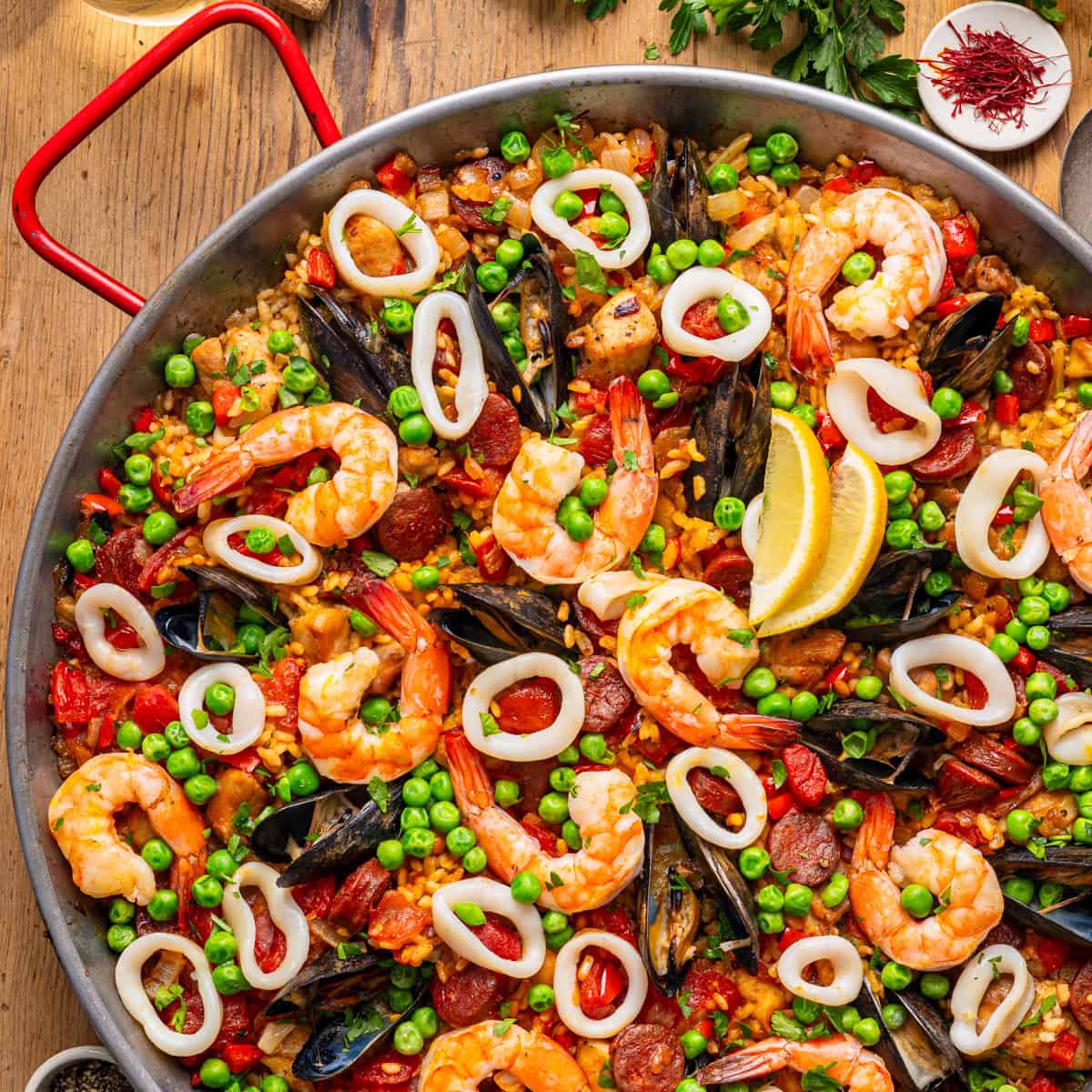
Tip 1 — Bloom your saffron properly. Add a generous pinch of saffron threads to ¼ cup of warm (not boiling) chicken broth and let it steep for at least 10 minutes before adding it to the pan. This activates the aromatic compounds and ensures even color and flavor distribution throughout the rice. Serious Eats has an excellent deep-dive into paella technique if you want to go full nerd-mode on the science.
Tip 2 — Build a proper sofrito. Don’t rush the sofrito. Cook your onion, garlic, and tomato down slowly — a full 10-12 minutes — until the mixture is jammy, deeply caramelized, and most of the liquid has evaporated. This is the flavor foundation the entire dish is built on. Cutting corners here means a flat, one-dimensional paella.
Tip 3 — Never stir the rice once the broth goes in. This is the cardinal rule of paella. Once you add the rice and broth, resist every urge to stir. Stirring releases starch and prevents the socarrat from forming. The rice should bubble and simmer undisturbed until the liquid is absorbed.
Tip 4 — Listen for the socarrat. When the broth is nearly absorbed, lower the heat to medium-low and listen for a gentle crackling sound from the bottom of the pan. That’s the socarrat forming. After about 2 minutes of crackling, do a quick test by nudging the edge of the rice with a spoon — if it lifts cleanly with a crispy underside, you’ve nailed it. Pull it off the heat before it burns.
Tip 5 — Use the right pan. A wide, flat-bottomed paella pan (or a large stainless steel skillet at least 14 inches across) is essential. The wide surface area allows the broth to reduce evenly and gives you maximum socarrat coverage. Avoid nonstick pans — you need metal-on-metal contact for that crust.
Variation — Vegetarian Paella: Skip the meat and seafood and load up on roasted red peppers, artichoke hearts, green beans, butter beans, and extra smoky paprika. Use a rich vegetable broth and add extra saffron. It’s just as stunning and deeply flavorful.
Variation — All-Seafood Paella (Paella de Marisco): Go full coastal with shrimp, mussels, clams, squid, and scallops. Use a seafood stock for maximum ocean flavor and finish with a squeeze of lemon and fresh parsley.
Variation — Weeknight Chicken Paella: If you want to streamline this for a Tuesday night, skip the shellfish and just use chicken thighs and chorizo. It’s quicker, easier, and still absolutely delicious. Pair it with a bright, fresh side like our Caprese Salad with Balsamic Glaze to cut through the richness of the rice.
And if you’re building a big spread for guests, consider Food Network’s classic paella guide alongside this recipe for additional inspiration on timing and presentation when cooking for a large group.
Nutritional Highlights
A serving of this Spanish Paella comes in at approximately 520 calories, delivering a well-rounded macro profile that makes it a genuinely satisfying complete meal. The combination of chicken thighs and seafood means you’re getting a substantial hit of high-quality protein — around 38 grams per serving — which supports satiety and muscle recovery. Bomba rice provides complex carbohydrates for sustained energy, while the olive oil base brings heart-healthy monounsaturated fats. Saffron, beyond its flavor, is rich in antioxidants including crocin and safranal, which have been studied for their anti-inflammatory properties. Mussels and shrimp are exceptional sources of zinc, selenium, and vitamin B12. And the tomato-based sofrito contributes lycopene — a powerful antioxidant — that becomes even more bioavailable when cooked in olive oil. This is indulgent food that also happens to love your body back, which is the best kind.
Frequently Asked Questions
What is the secret to getting the socarrat (crispy bottom) right?
The socarrat is all about patience, heat control, and the right pan. Once your broth is nearly absorbed, increase the heat slightly to medium-high for the final 2-3 minutes to encourage crisping, then reduce back to medium-low and listen. You should hear a gentle crackling — not sputtering or aggressive popping. If you smell anything close to burning, pull it immediately. The socarrat forms in a very short window, so stay close. Using a stainless steel or carbon steel paella pan (never nonstick) is also critical — you need that direct metal contact with the heat source to get the crust without the coating interfering.
Can I make Spanish Paella without a paella pan?
Absolutely. A large, wide stainless steel skillet — at least 12 to 14 inches in diameter — works beautifully. The key is surface area: the wider the pan, the more even the heat distribution and the better your socarrat. A cast iron skillet can work too, though the heat retention is so high you’ll need to be more careful about burning. Avoid deep pots or Dutch ovens — the narrow base concentrates the rice too thickly and prevents both even cooking and proper crust formation. Our Cast Iron Skillet guide is a great primer on cooking with cast iron if you’re going that route.
How do I store and reheat leftover paella?
Transfer any leftover paella to an airtight container and refrigerate for up to 3 days. For reheating, skip the microwave if you can — it turns the rice gummy and kills the texture. Instead, heat a wide skillet over medium heat with a thin layer of olive oil and a splash of chicken broth. Add the paella in an even layer, cover loosely with foil, and let it steam-heat for 5-7 minutes. If you’re lucky enough to have leftovers with some socarrat intact, reheating in a skillet can actually re-crisp the bottom beautifully. Seafood is best consumed within 24 hours for optimal freshness and food safety.
Make It, Share It, Save It
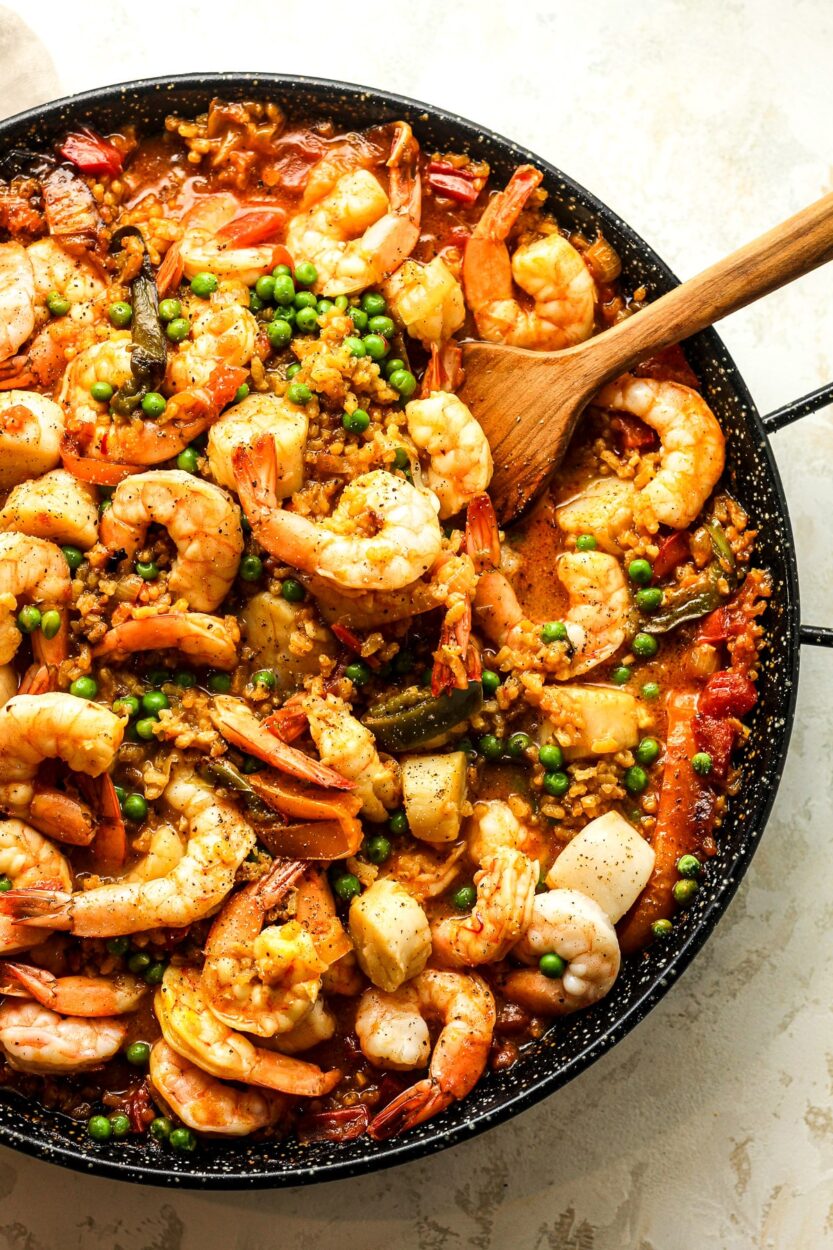
Spanish Paella is one of those recipes that becomes a tradition the moment you make it the first time. It’s the dish your guests will request by name at your next dinner party, the one your family will ask for every special occasion, and honestly — the one you’ll want to make on a random Friday night just because you deserve something extraordinary. It’s bold, it’s beautiful, and it’s the kind of cooking that reminds you why food is one of life’s greatest pleasures.
If you make this recipe, we’d absolutely love to see it. Share your paella photos on Instagram and tag us — there is truly nothing more satisfying than seeing that golden pan come to life in someone else’s kitchen. Save this post, pin it, send it to a friend who needs this in their life. And if you’re building out a full Spanish-inspired feast, don’t sleep on a refreshing Cucumber Tomato Salad as a crisp, tangy counterpoint to all that rich, smoky rice. Now get cooking — your table is waiting.
Find the complete recipe card below ↓
Spanish Paella
Equipment
- 14-inch paella pan or large wide skillet
- Small bowl (for blooming saffron)
- Box grater (for tomatoes)
- Aluminum foil or large lid
- Tongs
- Wooden spoon or heat-safe spatula
Ingredients
For the Paella
- 4 bone-in skin-on chicken thighs about 2 lbs total
- 6 oz Spanish cured chorizo sliced into ¼-inch rounds
- 1 lb large shrimp peeled and deveined, tails on
- 1 lb fresh mussels scrubbed and debearded
- 2 cups Bomba or Calasparra rice or Arborio in a pinch
- 5 cups chicken broth warmed, divided
- 1 cup seafood or clam broth can substitute additional chicken broth
- 1 generous pinch saffron threads bloomed in ¼ cup warm broth
- 3 tbsp extra virgin olive oil divided
- 1 large yellow onion finely diced
- 1 large red bell pepper seeded and diced
- 6 cloves garlic minced
- 3 medium ripe Roma tomatoes grated or finely diced, juices reserved
- 2 tsp smoked Spanish paprika (pimentón de la Vera)
- 1 tsp sweet paprika
- 1 tsp kosher salt plus more to taste
- ½ tsp black pepper freshly ground
- ½ cup dry white wine such as Albariño or Sauvignon Blanc
- ½ cup frozen green peas thawed
- 1 lemon cut into wedges, for serving
- ¼ cup fresh flat-leaf parsley roughly chopped, for garnish
Instructions
Bloom the Saffron & Prep
- Combine the saffron threads with ¼ cup of warm (not boiling) chicken broth in a small bowl. Stir gently and set aside to steep for at least 10 minutes. This blooms the saffron and releases its full color and aroma.
- Pat the chicken thighs completely dry with paper towels. Season generously on both sides with salt, black pepper, and ½ tsp of the smoked paprika.
Sear the Chicken and Chorizo
- Heat 2 tablespoons of olive oil in a large paella pan or wide 14-inch stainless steel skillet over medium-high heat until shimmering. Add the chicken thighs skin-side down and sear, undisturbed, for 5-6 minutes until deep golden brown. Flip and sear for another 3 minutes. Transfer to a plate — the chicken will finish cooking in the rice.
- Add the chorizo slices to the same pan and cook for 2 minutes per side until edges are slightly crisped and the oil turns vivid red from the paprika. Remove and set aside with the chicken.
Build the Sofrito
- Reduce heat to medium. Add the remaining 1 tablespoon olive oil to the pan. Add the diced onion and red bell pepper. Cook, stirring occasionally, for 8-10 minutes until softened and beginning to caramelize at the edges.
- Add the minced garlic and cook for 1 minute until fragrant. Add the grated tomatoes along with their juices, the remaining smoked paprika, and sweet paprika. Stir well and cook for 8-10 minutes, stirring occasionally, until the sofrito is deeply reduced, jammy, and most of the moisture has cooked off. This concentrated sofrito is the soul of your paella.
Toast the Rice
- Add the white wine to the sofrito and stir, scraping up any browned bits from the bottom of the pan. Let it bubble and reduce for 2 minutes.
- Add the Bomba rice directly to the sofrito and stir to coat every grain in the mixture. Toast for 1-2 minutes, stirring, until the rice smells slightly nutty.
Add Broth and Simmer — Do Not Stir
- Pour in the bloomed saffron with its soaking liquid, the remaining warm chicken broth, and the seafood broth. Stir once to distribute everything evenly and season the broth with salt to taste. Nestle the seared chicken thighs and chorizo back into the pan, pushing them gently into the rice.
- Bring to a boil over medium-high heat, then reduce to a vigorous simmer. From this point forward, DO NOT stir the paella. Cook uncovered for 15-18 minutes, rotating the pan occasionally if using a regular stovetop burner (to distribute heat evenly), until the broth is mostly absorbed and the rice is nearly cooked through.
Add Seafood and Peas
- Scatter the shrimp evenly across the surface of the rice, pressing them lightly into the top layer. Arrange the mussels hinge-side down across the pan. Scatter the thawed peas over the top.
- Cover the pan tightly with foil or a large lid and cook for 5-7 minutes over medium heat until the shrimp are pink and curled, the mussels have opened, and the rice is fully cooked. Discard any mussels that did not open.
Create the Socarrat
- Remove the foil. Increase heat to medium-high and cook uncovered for 2-3 minutes. Listen for a steady, gentle crackling sound from the bottom of the pan — this is the socarrat forming. Do not stir. After 2 minutes, carefully slide a spoon or spatula to the edge and lift slightly to check: the bottom should be golden-brown and crispy, not burnt.
- Remove from heat. Let the paella rest, uncovered, for 5 minutes.
Garnish and Serve
- Scatter fresh flat-leaf parsley over the top and arrange lemon wedges around the edge of the pan. Bring the entire pan to the table for a dramatic presentation. Serve immediately, making sure everyone gets a bit of the prized socarrat from the bottom.