

When One Dish Tells the Story of an Entire Culture
There are certain dishes that stop you mid-bite — not just because they taste incredible, but because every forkful carries history. Peruvian Lomo Saltado is exactly that kind of dish. Born from the fusion of Peruvian and Chinese culinary traditions in the late 19th century, this sizzling stir-fry is the ultimate proof that when two bold food cultures collide, something extraordinary happens. Strips of tender beef hit a screaming-hot wok alongside vibrant tomatoes and ají amarillo peppers, everything bathed in a glossy sauce that somehow manages to be simultaneously umami-rich, citrusy, smoky, and deeply savory all at once.
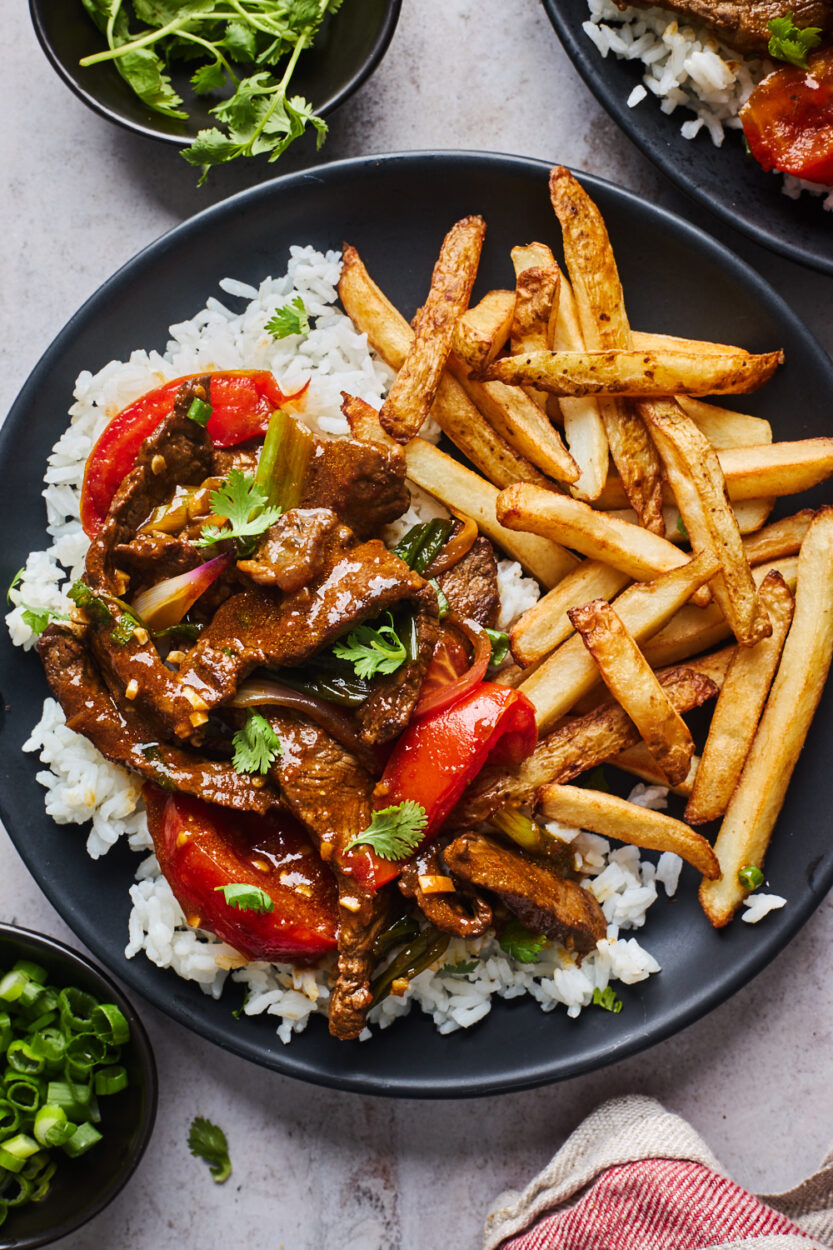
What makes Lomo Saltado so addictively satisfying is the contrast. You get silky, marinated beef with charred edges. Tomatoes that soften just enough to release their juices into the sauce without losing their shape. And then — in the most gloriously unexpected move in all of Latin cuisine — French fries, tossed right into the wok, soaking up that smoky, soy-kissed sauce until they become something entirely their own. This isn’t a side dish afterthought. The fries are the dish. They complete it. If you’ve ever loved our Mongolian Beef — Sticky, Saucy & Better Than Takeout, you already know the kind of magnetic, wok-fired energy we’re talking about here — but Lomo Saltado cranks everything up another level.
This recipe brings that restaurant-quality sizzle straight to your home kitchen. No special equipment beyond a very hot pan, no hard-to-find ingredients you can’t source, and absolutely no compromise on flavor. We’re talking about the kind of dish that makes your whole kitchen smell incredible, that earns you genuine compliments at the table, and that — once you make it — immediately earns a permanent spot in your weeknight rotation. Let’s get into it.
Why You’ll Love This Recipe
- One-pan, big-flavor cooking: Everything comes together in a single wok or skillet, and the flavor development happens fast and furiously — maximum reward for minimal effort.
- The sauce is genuinely addictive: A combination of soy sauce, oyster sauce, red wine vinegar, and cumin creates a complex, layered glaze that coats every ingredient beautifully.
- French fries IN the dish: Yes, really. Crispy fries tossed into the stir-fry absorb the sauce and become the most irresistible bite you’ve ever had.
- Ready in under 45 minutes: This is weeknight-friendly without feeling like a shortcut. It’s genuinely fast and genuinely impressive.
- A complete meal in one bowl: Served over white rice with fries already built in, Lomo Saltado is a full, satisfying meal that requires nothing else on the table.
- Infinitely craveable: The smoky, charred, saucy, citrusy combination hits every flavor receptor. You will absolutely make this again the following week.
Key Ingredients That Make This Dish Irresistible
Every component of Peruvian Lomo Saltado earns its place in the wok, and understanding why each one matters will make you a better cook — and help you appreciate just how intentional this dish really is.
Beef sirloin is the traditional cut of choice, and for good reason. It’s tender enough to cook quickly over high heat, has just enough fat to develop gorgeous charred edges in the wok, and holds its own against the bold sauce without getting lost. Slice it thin, against the grain, and you’ll get melt-in-your-mouth strips with caramelized, slightly crispy exteriors — the kind of texture that makes you close your eyes after the first bite. The beef is marinated briefly in soy sauce and cumin, which begins building the flavor profile before the pan even gets hot.
Ají amarillo paste is arguably the soul of this dish, and it’s the ingredient that separates an authentic Lomo Saltado from an approximation. This bright orange Peruvian chili paste brings a fruity, floral heat that’s distinct from any other pepper — not searingly hot, but warm and complex, with a slightly sweet finish that plays beautifully against the savory soy. You can find it at Latin grocery stores or online, and it’s worth seeking out. Serious Eats has a fantastic deep-dive into what makes ají amarillo so irreplaceable in Peruvian cooking if you want to geek out on the details.
Soy sauce and oyster sauce are the Chinese culinary inheritance in this dish — the legacy of Chinese immigrants who brought their wok techniques and pantry staples to Peru in the 1800s, creating what locals call Chifa cuisine. Together, they create a deeply savory, slightly sweet, glossy sauce base that coats the beef and vegetables in a way that feels almost luxurious. A splash of red wine vinegar cuts through the richness and adds that bright, acidic lift that keeps every bite from feeling heavy — it’s a small addition with an enormous impact on balance.
Tomatoes and red onion aren’t just vegetables tossed in for color — they’re structural to the dish. The tomatoes soften at the edges while retaining their shape, releasing their juices into the wok sauce and adding natural acidity. The red onion caramelizes slightly from the high heat, losing its sharpness and becoming almost jammy, adding sweetness and body. And then there’s the crowning glory: French fries. Crispy on the outside, soft in the center, tossed into the wok in the final moments so they soak up the sauce while somehow managing to hold just enough crunch to remind you what they are. They are not optional. They are the point.
Pro Tips & Variations
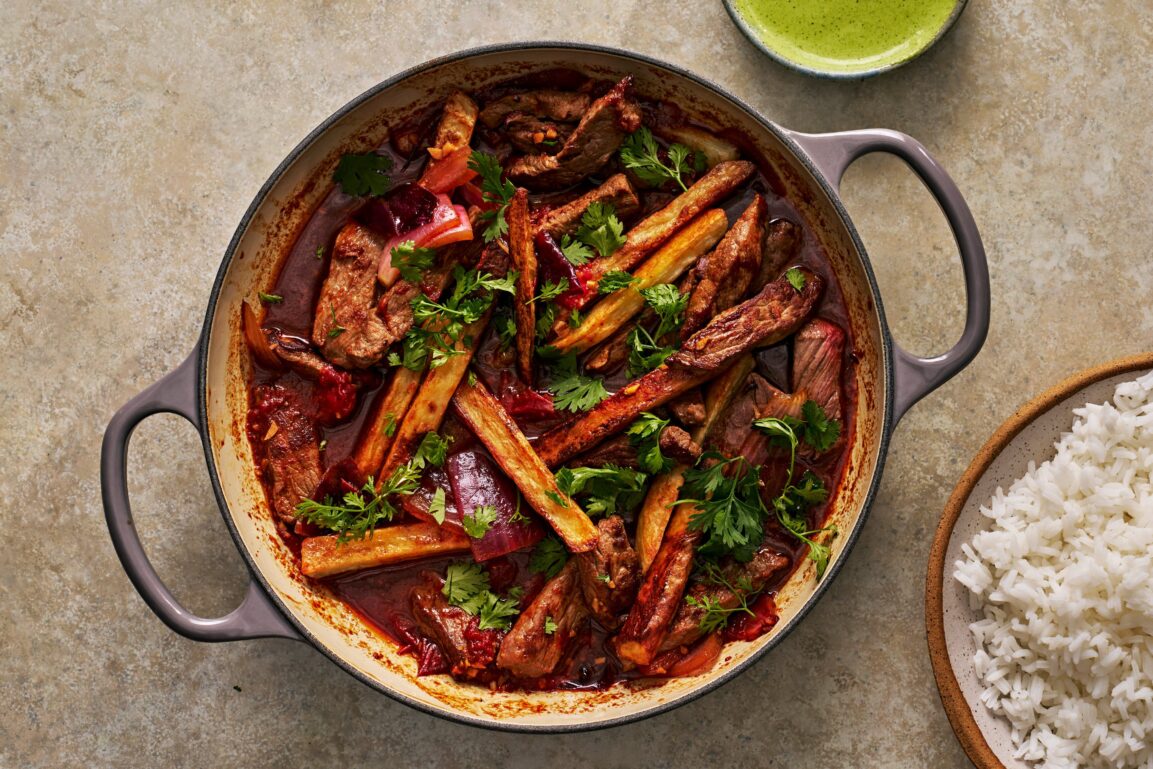
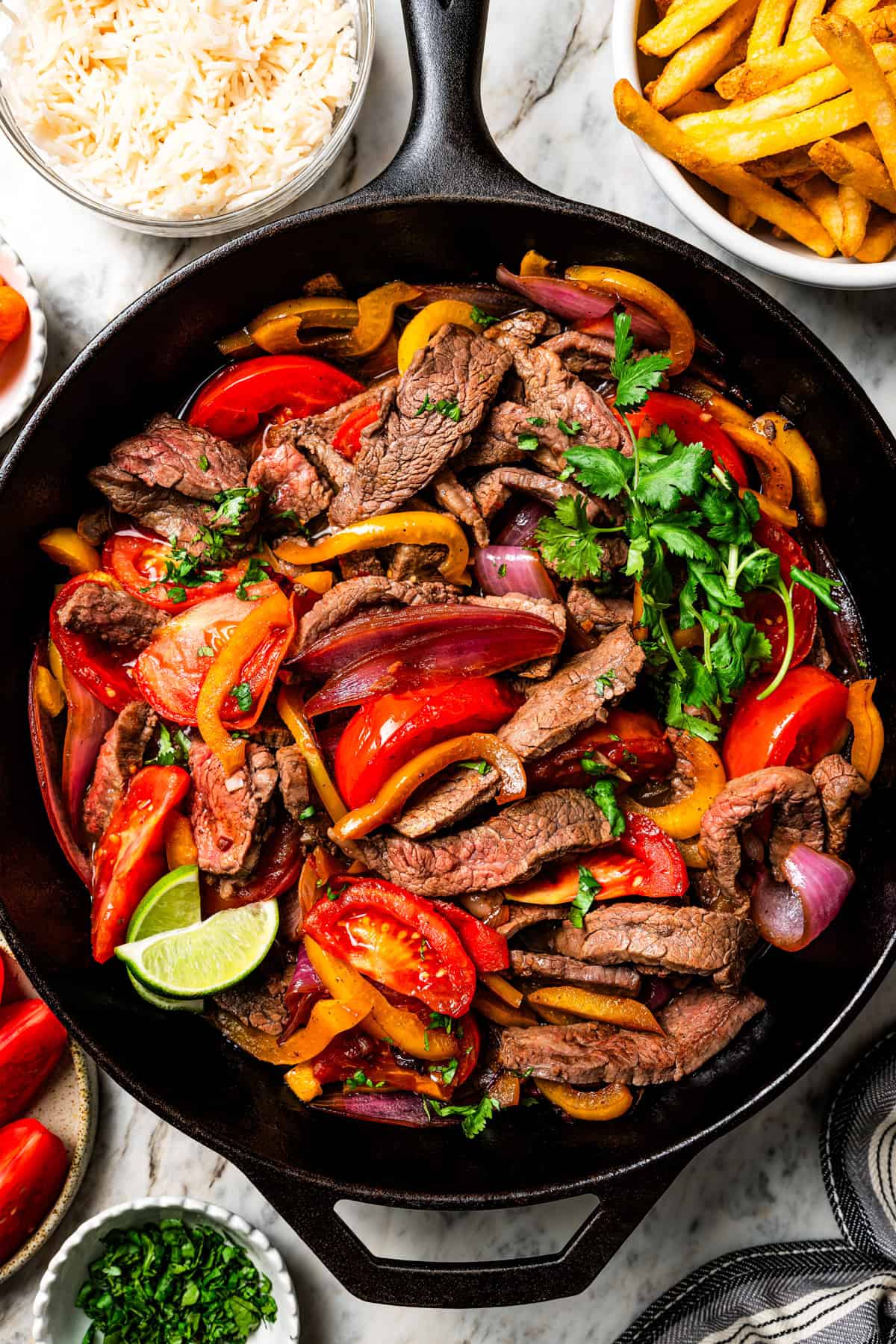
Get your pan SCREAMING hot: This is the single most important tip for authentic Lomo Saltado. You need high heat — properly high heat — to achieve the wok hei, that smoky, slightly charred quality that defines the dish. A cast iron skillet or carbon steel wok works best. Heat it empty over maximum heat for at least 2-3 minutes before adding oil. If your smoke alarm goes off, you’re probably doing it right. For more on high-heat stir-fry technique, Bon Appétit’s stir-fry guide breaks down the fundamentals beautifully.
Cook the beef in batches: Overcrowding the pan is the enemy of a good sear. If you dump all your beef in at once, the pan temperature drops and you steam the meat instead of charring it. Cook in two batches, giving each piece space to make proper contact with the hot surface. This takes an extra 90 seconds and makes an enormous difference.
Don’t skip the marinade time: Even 10-15 minutes of marinating the beef in soy sauce, cumin, and a touch of garlic makes a noticeable difference in depth of flavor. If you have 30 minutes, even better. The soy sauce begins a subtle curing process that seasons the meat all the way through rather than just on the surface.
For the fries: You have options here. Frozen fries cooked to package directions work perfectly and save time on a weeknight — there’s zero shame in this. For a more indulgent version, make your own thick-cut fries fried in neutral oil until golden and crispy. Either way, add them to the wok in the very last 60 seconds so they don’t turn soggy. You want them saucy but still with structural integrity.
Variations worth trying: Swap the beef for chicken thighs (cut thin, they cook fast and stay juicy), or go fully plant-based with firm tofu pressed dry and pan-seared until golden. For a heat lover’s version, double the ají amarillo paste and add a sliced fresh serrano pepper with the onions. You can also explore the broader world of bold, wok-fired dishes on this site — our Moroccan Lamb Tagine — Rich, Aromatic & Deeply Satisfying scratches a similar itch if you’re in the mood for deeply sauced, fork-tender meat with complex spicing.
Serving suggestions: Traditionally, Lomo Saltado is served with steamed white rice alongside the fries — yes, both starch, both necessary, both correct. The rice soaks up the extra sauce while the fries provide texture. A squeeze of fresh lime over the top right before serving wakes everything up. Garnish generously with fresh cilantro. This is not the dish for subtle presentation.
Nutritional Highlights
A generous serving of Peruvian Lomo Saltado provides approximately 520 calories with a strong protein hit of around 38 grams from the sirloin beef, making it a genuinely satisfying and muscle-fueling meal. The tomatoes and red onions add a respectable dose of vitamins C and B6, while the ají amarillo pepper contributes natural antioxidants and capsaicin, which has been linked to metabolism support. The dish does carry notable sodium from the soy and oyster sauces, so if you’re watching salt intake, opt for low-sodium soy sauce — it works just as well. The fat content is moderate, primarily coming from the beef and the cooking oil, and the overall carbohydrate load is influenced by the French fries and rice, so adjust your portion accordingly if you’re carb-conscious. As satisfying comfort meals go, Lomo Saltado offers a genuinely well-rounded nutritional profile anchored by real, whole ingredients and bold flavors that make every calorie feel entirely worth it.
Frequently Asked Questions
Can I make Peruvian Lomo Saltado ahead of time?
Lomo Saltado is best enjoyed fresh out of the wok — the high-heat cooking creates textures and charred edges that don’t fully survive refrigeration and reheating. That said, you can do significant prep work ahead of time: marinate the beef up to 24 hours in advance (covered in the fridge), slice all your vegetables, and mix your sauce ingredients in a jar. When you’re ready to eat, the actual cooking takes under 15 minutes. If you do have leftovers, reheat them in a very hot skillet rather than the microwave to revive some of that original sear. Store the fries separately if possible, and add fresh ones when reheating — soggy fries are the one part of this dish that doesn’t survive well.
What can I substitute for ají amarillo paste?
Ají amarillo is genuinely unique, but if you can’t find it, there are workable substitutions. A combination of yellow bell pepper puree with a small amount of habanero (for heat) and a pinch of turmeric (for color) gets you in the ballpark of the fruity, floral warmth. Some cooks use a mild yellow curry paste in a pinch — it’s not traditional, but it adds complexity and warmth. You can also find ají amarillo paste on Amazon or at most Latin grocery stores, so it’s worth seeking out before you substitute. The difference between an authentic Lomo Saltado and a generic beef stir-fry lives significantly in that paste.
What cut of beef is best for Lomo Saltado?
Sirloin is the classic choice and the gold standard for this dish — it has the right balance of tenderness and beefy flavor to hold up to the bold sauce and high-heat cooking. Strip loin (New York strip) is equally excellent. Tenderloin works beautifully if you want a more luxurious, melt-in-your-mouth result and don’t mind spending a bit more. Avoid tougher cuts like chuck or round, which need slow cooking to break down and will turn chewy and dry in a wok environment. Whatever cut you choose, slice it thin — about ¼ inch — against the grain, and the high heat will do the rest.
Make It, Share It, Save It
Peruvian Lomo Saltado is one of those rare dishes that manages to be simultaneously exotic and deeply comforting — a dish you want to make for yourself on a Tuesday night and show off at a dinner party on Saturday. The flavors are bold, the technique is satisfying, and the result is the kind of food people genuinely talk about after they’ve eaten it. If you make this recipe, we’d love to hear how it turned out. Leave a comment below, rate the recipe, and share your photos on social media — tag us so we can celebrate your wok skills. Pin this recipe for later so you always know where to find it, and share it with anyone in your life who needs more sizzle on their dinner table.
Find the complete recipe card below ↓
Peruvian Lomo Saltado
Equipment
- Large wok or cast iron skillet
- Tongs
- Small mixing bowl
- Whisk
- Cutting board
- Sharp chef's knife
Ingredients
For the Beef Marinade
- 1.5 lbs beef sirloin sliced ¼ inch thick against the grain
- 2 tbsp soy sauce low-sodium works great
- 1 tsp ground cumin
- 3 cloves garlic minced
- 1 tbsp vegetable oil for the marinade
For the Stir-Fry Sauce
- 3 tbsp soy sauce
- 1 tbsp oyster sauce
- 2 tbsp ají amarillo paste found at Latin grocery stores or online
- 1 tbsp red wine vinegar
- 1 tsp ground cumin
- 1 tsp sugar balances the sauce
For the Stir-Fry
- 2 tbsp vegetable oil divided, for cooking
- 1 large red onion cut into wedges
- 2 medium Roma tomatoes cut into wedges
- 1 jalapeño or yellow chili pepper sliced, optional for extra heat
- 3 cups French fries cooked until crispy, frozen fries work great
- 0.25 cup fresh cilantro roughly chopped, for garnish
- 2 tbsp fresh lime juice squeezed over at the end
For Serving
- 2 cups steamed white rice cooked according to package
Instructions
Marinate the Beef
- In a medium bowl, combine the sliced sirloin with soy sauce, cumin, minced garlic, and vegetable oil. Toss to coat evenly. Let marinate for at least 10-15 minutes at room temperature, or up to 24 hours covered in the refrigerator.
Mix the Sauce
- In a small bowl, whisk together soy sauce, oyster sauce, ají amarillo paste, red wine vinegar, cumin, and sugar until fully combined. Set aside.
Cook the French Fries
- Cook frozen French fries according to package directions until golden and crispy. If making from scratch, fry thick-cut potato strips in 375°F oil until golden brown. Set aside — they'll go into the wok at the very end.
Sear the Beef
- Heat a large wok or cast iron skillet over the highest heat possible for 2-3 minutes until smoking. Add 1 tablespoon of oil and swirl to coat. Add half the marinated beef in a single layer. Do not stir for 45-60 seconds — let it sear and char. Toss quickly, cook another 30 seconds, then remove to a plate. Repeat with remaining beef using another splash of oil. The beef should be slightly pink inside — it will finish cooking when you add it back later.
Stir-Fry the Vegetables
- Return the wok to high heat. Add remaining oil. Add the red onion wedges and cook, tossing, for about 90 seconds until they begin to soften and char at the edges. Add the tomato wedges and jalapeño if using. Toss for 60 seconds — you want the tomatoes to soften slightly but still hold their shape.
Bring It All Together
- Return the seared beef to the wok. Pour the sauce over everything. Toss vigorously over high heat for 1-2 minutes until the sauce coats all the ingredients and everything is glossy and fragrant. Add the crispy French fries and toss gently for 30-45 seconds — just enough to coat them in sauce while keeping some crunch.
Finish and Serve
- Remove from heat. Squeeze fresh lime juice over the top and toss once more. Transfer to serving bowls. Garnish generously with fresh cilantro. Serve immediately alongside steamed white rice.