

The Stuffing That Steals the Whole Show
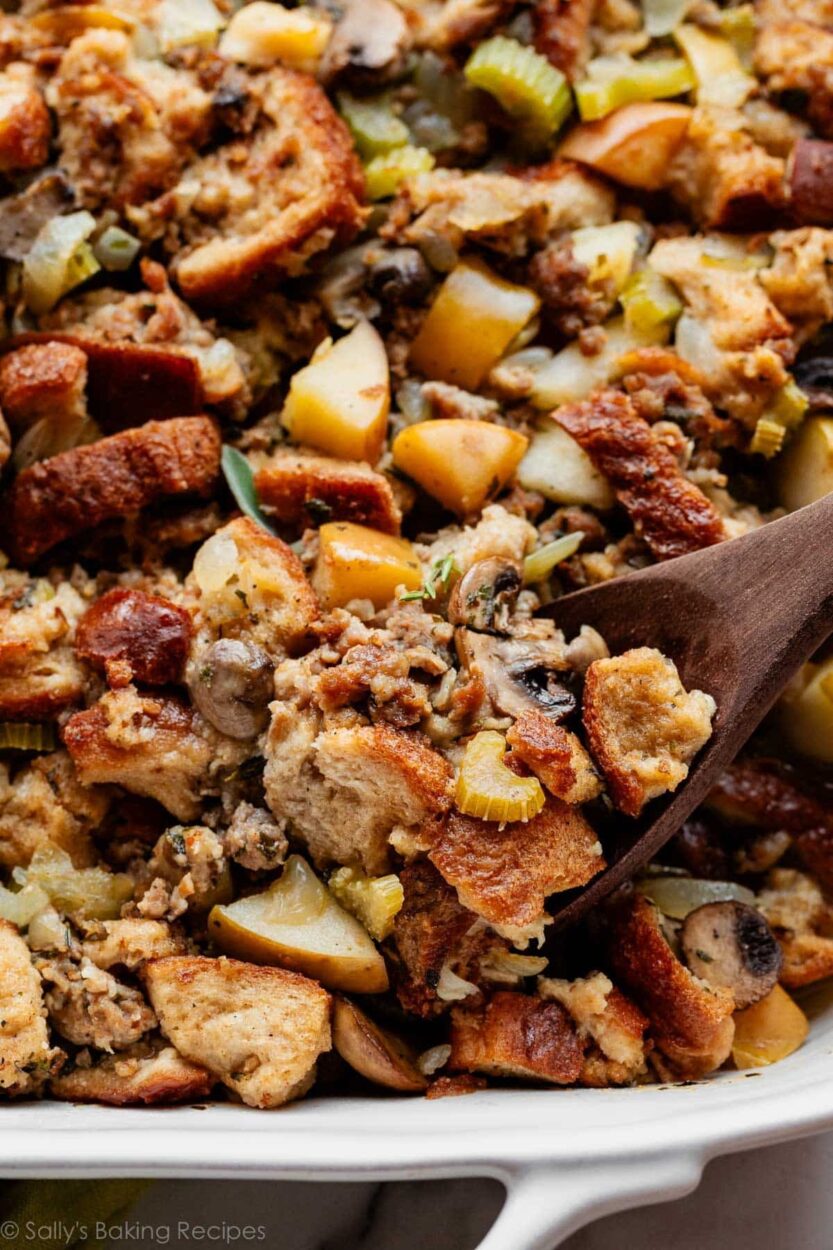
Let’s be honest — stuffing is the real reason people show up to Thanksgiving dinner. Not the turkey, not the pie, not the carefully arranged centerpiece. It’s the stuffing. And once you’ve made this Sausage and Herb Stuffing, you’ll understand exactly why it’s the dish people hover around before the meal even hits the table. The smell alone — Italian sausage browning in butter, fresh thyme blooming in the heat, golden onions going sweet and silky — is enough to make the whole house feel like a restaurant kitchen on its best night.
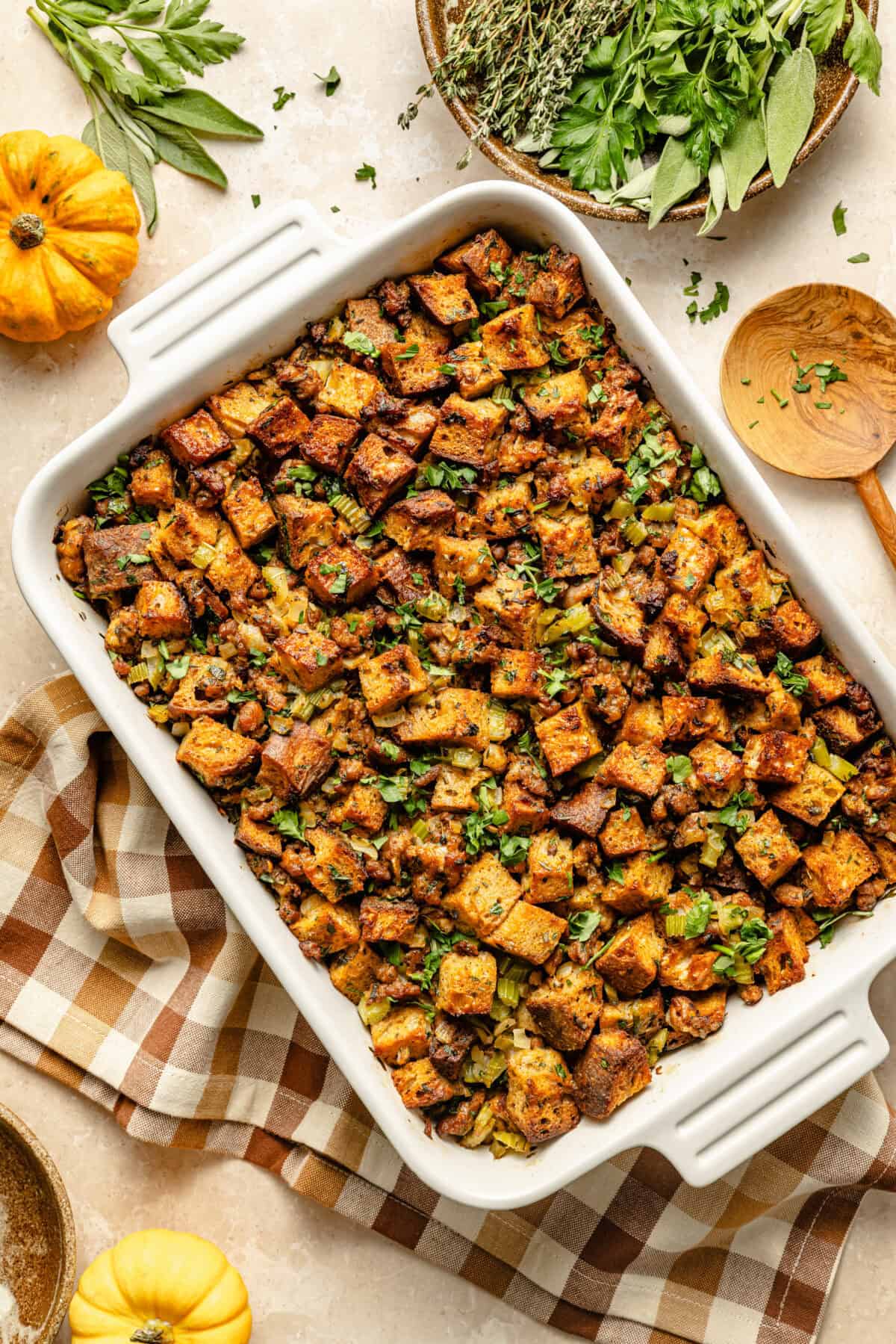
This recipe is built around everything that makes stuffing genuinely irresistible rather than just passable. We’re talking bold, fatty Italian sausage that perfumes every single bread cube with its rendered drippings. Fresh thyme and sage that cut through the richness with an herbal brightness you simply cannot get from a dried spice jar. And a generous pour of chicken broth mixed with eggs that soaks into the bread and bakes up into something magical: crispy and golden on the outside, almost custardy and yielding in the center. This is not the stuffing that sits untouched in a corner of the buffet. This is the one people go back for thirds of, scraping the pan clean.
Whether you’re anchoring a full holiday spread or just craving a deeply satisfying cold-weather bake, this sausage stuffing delivers that full-flavored, comfort-food experience that no one ever gets tired of. It pairs beautifully with our Dry Brine Turkey or our Spatchcock Turkey — and when you ladle a pour of Brown Butter Turkey Gravy over the top, you’re officially in holiday heaven.
Why You’ll Love This Sausage Stuffing
- Deeply savory and bold: Italian sausage renders its fat right into the bread — no bland bites, ever.
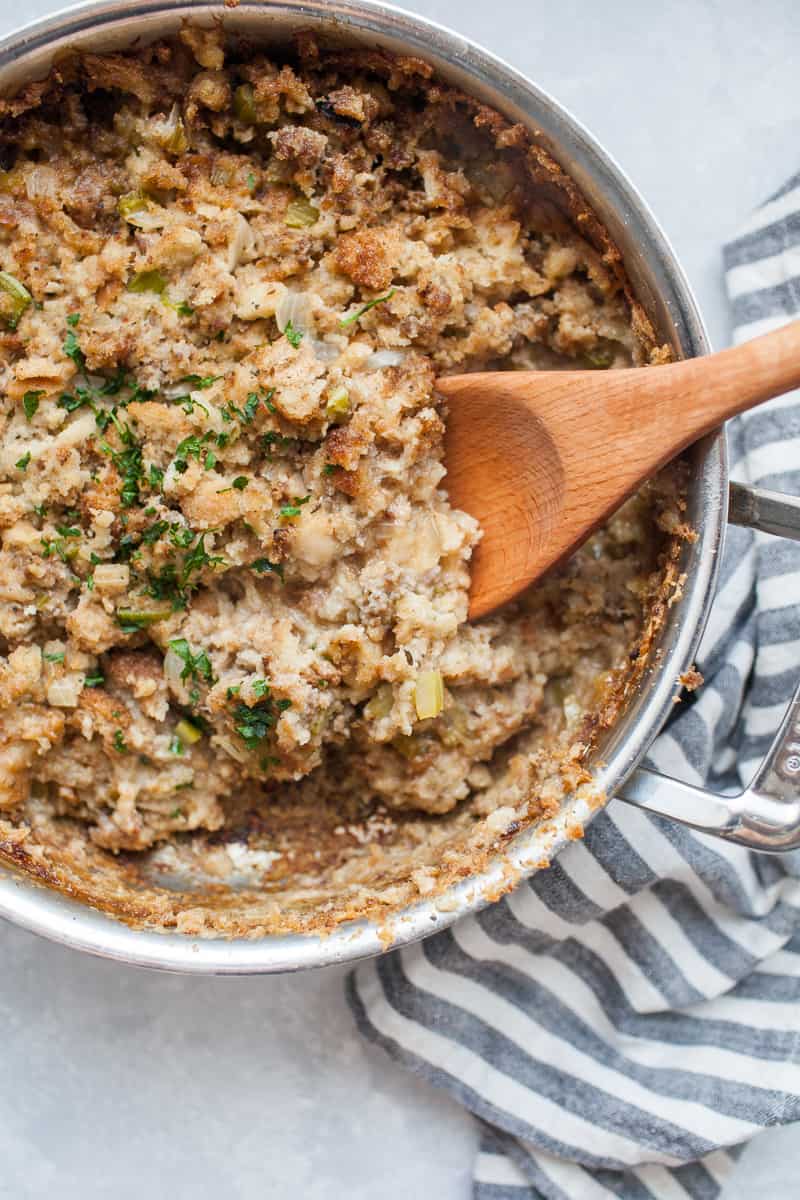
- Two incredible textures in one dish: The top is shatteringly crispy; the inside is soft, almost custard-like, and rich.
- Fresh herbs, not dried: Fresh thyme and sage make the aroma and flavor genuinely stunning.
- Make-ahead friendly: Assemble the night before and bake day-of — it actually gets better overnight.
- Crowd-scalable: Double the recipe in a large roasting pan for a crowd, or halve it for a cozy weeknight dinner.
- Pairs with everything: Turkey, roast chicken, pork loin — this stuffing is a universal powerhouse side.
Key Ingredients That Make This Stuffing Unforgettable
The foundation of any great sausage stuffing is the bread, and here, day-old Italian or sourdough loaf is the move. Stale bread has lost enough moisture to absorb the broth and egg mixture without turning to mush — it drinks up all that savory liquid and bakes into something with real structure and chew. Don’t rush this step by using fresh bread; the drying process is what separates a stuffing with body from one that falls apart on the plate.
The Italian sausage is the flavor engine of this entire dish. As it browns in the pan, it renders out a deeply seasoned fat loaded with fennel, garlic, and red pepper — and that fat gets poured right over your bread cubes, touching every single one. Mild sausage lets the herbs shine; hot sausage adds a gentle kick that plays beautifully against the butter and broth. Either direction is a winner, but do not skip the browning step. That crust on the sausage is flavor you cannot manufacture any other way, as Serious Eats explains in their deep-dive on building the best stuffing.
Fresh thyme is the herb this recipe is built around. Its piney, slightly floral notes cut through the richness of the sausage and butter without overwhelming anything. Fresh sage adds a woodsy, almost nutty dimension that has been synonymous with stuffing for centuries — it’s the smell that makes people close their eyes and exhale. Together, they create an aroma in the oven that is frankly unfair to anyone waiting at the table. Finally, a generous knob of unsalted butter sautéed with the onions and celery builds that sweet, savory allium base that every classic stuffing needs. Don’t reduce it — this is not the dish to go light on butter.
Pro Tips & Variations for the Best Sausage Stuffing
Dry your bread properly. Cut your bread into 3/4-inch cubes and spread them on a sheet pan the night before. Let them sit out uncovered at room temperature. If you’re short on time, toast them in a 300°F oven for 20–25 minutes until dry but not browned. Properly dried bread is non-negotiable for the right texture. Food Network’s stuffing guide echoes this — it’s the single most skipped step that tanks an otherwise great recipe.
Brown the sausage in batches. Crowding the pan steams the sausage instead of browning it. Work in two batches over medium-high heat, letting each piece get genuinely golden and caramelized before moving on. Those browned bits left in the pan? Deglaze with a splash of broth and scrape every last one into your stuffing.
Season your broth mixture. The egg and broth custard that soaks the bread is your last chance to season from the inside out. Taste it before you pour it — it should be well-seasoned and almost taste like a great soup on its own.
Variations to try:
- Add mushrooms: Sauté 8 oz of cremini mushrooms with the onions for an earthy, meaty depth that takes this over the top.
- Go cheesy: Fold in 1/2 cup of grated Parmesan right before baking for a salty, nutty crust on top.
- Make it spicy: Swap half the mild sausage for hot Italian sausage and add a pinch of red pepper flakes.
- Cornbread base: Swap half the Italian bread for crumbled cornbread for a Southern-inspired hybrid — or check out our dedicated Cornbread Dressing recipe if you want to go all-in on that direction.
- Add apples: A diced Honeycrisp apple sautéed with the onions adds a sweet-tart contrast that balances the sausage fat beautifully.
For extra-crispy top: Remove the foil for the last 20 minutes of baking and dot the top with small pieces of cold butter. It shatters into golden, crackling shards that people will fight over.
Nutritional Highlights
This sausage stuffing is unapologetically indulgent — and that’s exactly the point. A serving delivers a satisfying hit of protein from the Italian sausage, complex carbohydrates from the bread that provide lasting energy, and a rich fat content from the butter and sausage drippings that make every bite deeply satisfying. The fresh herbs aren’t just flavor — thyme and sage are both antioxidant-rich and have long been prized for their anti-inflammatory properties. The eggs in the custard mixture contribute additional protein and help bind the stuffing into that beautiful, sliceable texture. For a holiday side dish, it clocks in at a reasonable calorie count considering how filling and flavor-packed it is — a moderate serving genuinely satisfies without the need to pile your plate high with multiple sides.
Frequently Asked Questions
Can I make this sausage stuffing ahead of time?
Absolutely — and honestly, you should. Assemble the entire stuffing the night before: brown the sausage, sauté the vegetables, combine everything with the bread and broth mixture, and transfer it to your buttered baking dish. Cover tightly with plastic wrap and refrigerate overnight. The bread will absorb even more of the broth and seasoning, resulting in a more cohesive, deeply flavored stuffing. When you’re ready to bake, remove it from the fridge 30 minutes before it goes in the oven, cover with foil, and bake as directed. This make-ahead approach is a lifesaver on Thanksgiving morning when oven space and mental bandwidth are both at a premium.
What type of bread works best for sausage stuffing?
Day-old Italian bread or a hearty sourdough loaf are the gold standard here. Both have enough structure to hold their shape after absorbing the broth mixture without turning into a dense, gummy mass. Sourdough adds a slight tang that contrasts beautifully with the rich sausage fat. Brioche or challah will give you a richer, more tender crumb — almost like a bread pudding texture — which is absolutely luxurious if that’s your preference. Avoid pre-sliced sandwich bread: it’s too soft, too uniform, and will collapse into the liquid rather than absorb it with any integrity. Whatever you choose, make sure it’s properly dried out before you begin.
How do I store and reheat leftover stuffing?
Store leftover sausage stuffing in an airtight container in the refrigerator for up to 4 days. To reheat individual portions, transfer to an oven-safe dish, add a splash of chicken broth over the top to reintroduce moisture, cover with foil, and warm at 350°F for 15–20 minutes. For the last 5 minutes, remove the foil to re-crisp the top. Avoid the microwave if you can — it steams the stuffing and kills the crispy top entirely. Leftover stuffing also freezes well: portion it into freezer-safe containers and freeze for up to 2 months. Thaw overnight in the fridge before reheating in the oven.
Make This Stuffing the Star of Your Table
This Sausage and Herb Stuffing is the kind of recipe that earns a permanent spot in your holiday rotation — not because it’s flashy or complicated, but because it is simply, undeniably delicious. It’s the dish that goes quiet at the table because everyone is too busy eating to talk. The kind that gets requested in group texts weeks before the holiday. The kind you find yourself making in February just because you can. Build your whole holiday spread around it: pair it with the Slow Cooker Turkey Breast for a lower-effort main, stack your plate with our Green Bean Casserole from Scratch alongside it, and don’t you dare skip the Brown Butter Turkey Gravy draped over the top.
If you make this recipe, save it, share it, and leave a comment below — I want to hear how it turned out at your table. And if you snap a photo, tag us so we can see that golden, crispy top in all its glory. This is the stuffing people remember. Make it yours.
Find the complete recipe card below ↓
Sausage and Herb Stuffing
Equipment
- 9x13-inch baking dish
- Large skillet
- Large mixing bowl
- Slotted spoon
- Whisk
- Rimmed baking sheet
- Aluminum foil
Ingredients
- 1 lb Italian sausage mild or hot, casings removed
- 12 cups day-old Italian or sourdough bread cut into 3/4-inch cubes, dried overnight or toasted
- 6 tablespoons unsalted butter divided, plus more for the baking dish
- 1 large yellow onion diced
- 4 stalks celery diced, leaves included
- 4 cloves garlic minced
- 2 tablespoons fresh thyme leaves stems removed
- 2 tablespoons fresh sage finely chopped
- 2 tablespoons fresh flat-leaf parsley chopped, plus more for garnish
- 2.5 cups chicken broth low-sodium, warmed
- 3 large eggs beaten
- 1 teaspoon kosher salt plus more to taste
- 0.5 teaspoon black pepper freshly ground
- 0.25 teaspoon red pepper flakes optional, for heat
Instructions
- Preheat your oven to 375°F. Butter a 9x13-inch baking dish generously and set aside. If your bread isn't already dried, spread the cubes on a rimmed baking sheet and bake at 300°F for 20–25 minutes until dry but not browned. Transfer to a very large mixing bowl.
- In a large skillet over medium-high heat, cook the Italian sausage, breaking it into small crumbles, until deeply browned and cooked through — about 7–9 minutes. Work in batches if needed to avoid crowding. Using a slotted spoon, transfer the sausage to the bowl with the bread, leaving the drippings in the pan.
- Reduce the heat to medium. Add 4 tablespoons of butter to the sausage drippings in the skillet. Once melted, add the diced onion and celery and cook, stirring occasionally, until softened and golden — about 8–10 minutes. Add the garlic and cook 1 minute more until fragrant.
- Add the fresh thyme, sage, and parsley to the skillet, stir to combine, and cook for 1 minute. Season with salt, pepper, and red pepper flakes if using. Pour the entire skillet contents — vegetables, herbs, and all the fat — over the bread and sausage in the bowl. Toss gently to combine.
- In a separate bowl or large measuring cup, whisk together the warm chicken broth and beaten eggs until fully combined. Season with a pinch of salt. Pour the broth mixture over the bread mixture in a steady stream, tossing gently as you pour so the bread absorbs evenly. The mixture should be moist but not soupy — the bread should hold its shape.
- Transfer the stuffing mixture to the prepared baking dish, spreading it into an even layer. Dot the top with the remaining 2 tablespoons of cold butter, cut into small pieces. Cover tightly with aluminum foil.
- Bake covered for 35 minutes, then remove the foil and bake for an additional 20–25 minutes until the top is deeply golden and crispy and the center is set. A knife inserted in the center should come out clean with no raw egg.
- Remove from the oven and let rest for 5 minutes. Garnish with fresh parsley and serve hot directly from the baking dish.