

The Turkey That Finally Lives Up to the Hype
Let’s be honest: most Thanksgiving turkeys are a disappointment. They look stunning on the table, carved tableside with great ceremony — and then you bite in and the breast is chalky, the skin is pale and rubbery, and the whole thing needs to be drowned in gravy just to be edible. For years, home cooks were told the solution was a wet brine — a giant bucket of salt water that takes up your entire refrigerator shelf, soaks your turkey for 24 hours, and leaves you wrestling a slippery 15-pound bird in your kitchen sink on the busiest cooking day of the year. There had to be a better way.
There is. A dry brine turkey is the technique that professional chefs and serious home cooks have quietly known about for years, and once you try it, you will never go back. No bucket. No soaking. No fuss. You simply rub the bird generously with seasoned salt, let it sit uncovered in the refrigerator overnight, and let the science of osmosis do the heavy lifting. The salt draws out a small amount of moisture, dissolves into a concentrated brine, and is then reabsorbed deep into the muscle fibers — seasoning the meat from the inside out. The uncovered air-drying meanwhile transforms the skin into something extraordinary: golden, lacquered, and so shatteringly crisp it practically crackles when you press it with your finger.
This is the turkey recipe that makes people lean across the table and ask you what you did differently. The one where people go back for seconds of the breast — the breast — because it’s that juicy. It’s indulgent, deeply savory, and produces drippings so rich and flavorful that your gravy will be the star of the table. This is the kind of centerpiece dish that turns Thanksgiving into a genuine craving, not just an obligation.
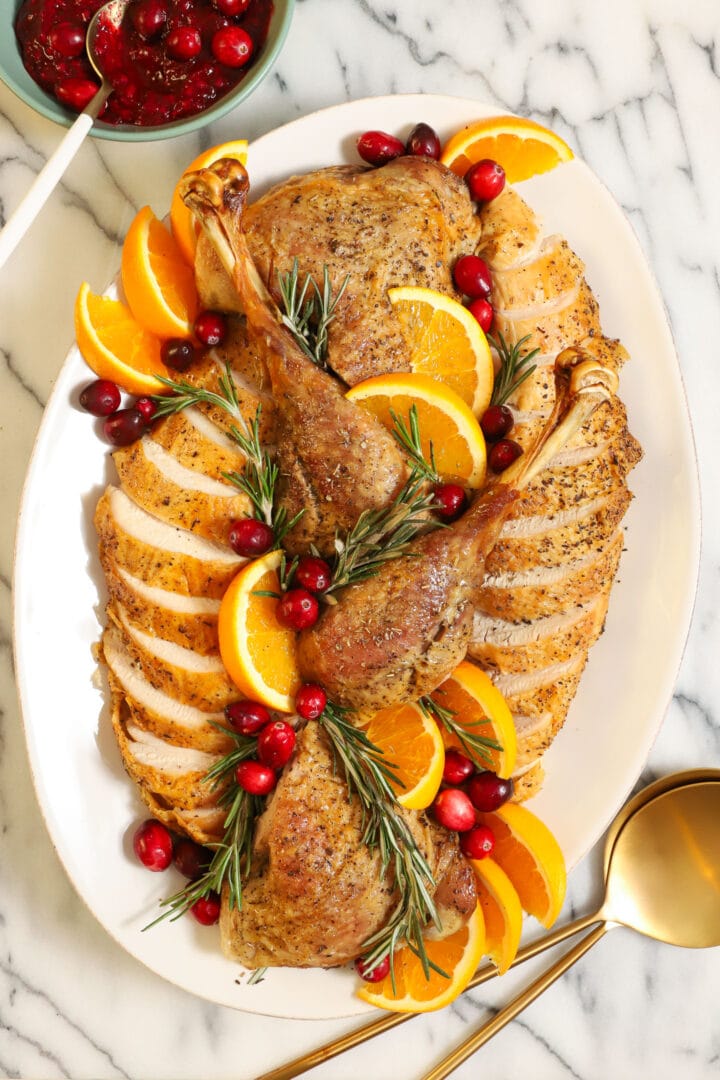
Why You’ll Love This Recipe
- No wet brine bucket: Skip the 5-gallon bucket, the sink wrestling match, and the refrigerator tetris. A dry brine is cleaner, easier, and takes up almost no space.
- Shatteringly crisp skin: Overnight air-drying in the refrigerator evaporates surface moisture so the skin crisps dramatically in the oven — the kind of crisp that makes everyone reach for the skin first.
- Deeply seasoned meat: The salt penetrates all the way through, so every single bite — including the very center of the breast — tastes properly seasoned, not bland.
- Rich, gorgeous drippings: Because you’re not adding water to the pan, the drippings concentrate beautifully into liquid gold. Your gravy will taste like it came from a restaurant kitchen.
- Hands-off technique: Most of the work happens overnight while you sleep. On the day itself, you just roast and rest.
- Works on any size bird: Whether you’re roasting a 12-pound bird or a 20-pound showstopper, the same technique applies — just scale the salt and resting time accordingly.
Key Ingredients
The foundation of this recipe is kosher salt, and it’s non-negotiable. Diamond Crystal kosher salt is the gold standard here because its coarse, flaky crystals cling to the skin and distribute evenly without over-salting — if you use table salt or Morton’s kosher salt, use about half the amount since they are denser. The salt does almost all the work, so don’t be shy with it. Baking powder is the secret weapon that makes the skin transcendently crisp — just a small amount mixed into the salt rub raises the pH of the skin’s surface and promotes Maillard browning at a deeper level, producing that restaurant-quality crackling texture. Unsalted butter, rubbed generously under the skin directly onto the breast meat, bastes the turkey from the inside out as it melts, keeping the white meat impossibly moist and adding a rich, nutty depth of flavor to every bite. Fresh herbs — specifically rosemary, thyme, and sage — tucked under the skin and into the cavity perfume the entire bird as it roasts, filling your kitchen with the intoxicating aroma that says Thanksgiving is here. Finally, garlic and lemon go into the cavity, aromatics that steam gently from the inside and subtly lift the flavor profile so the turkey tastes bright and complex rather than flat.
Pro Tips & Variations
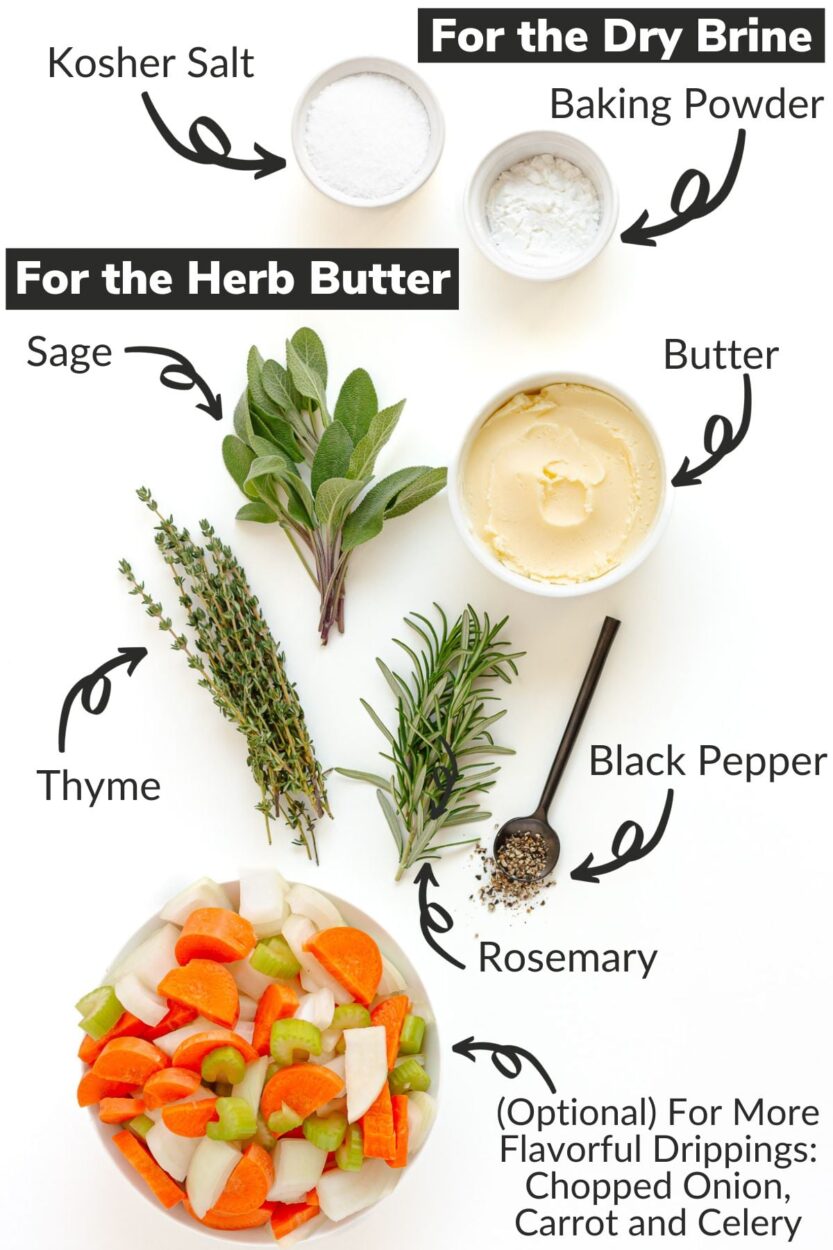
- Timing is everything: The ideal dry brine window is 24 to 72 hours. A full three days in the refrigerator will give you the most intensely seasoned, deeply flavored meat and the crispest skin imaginable. If you only have overnight (12–16 hours), that still works beautifully — just don’t go under 12 hours or the salt won’t have time to fully reabsorb.
- Don’t cover it: Leave the turkey uncovered in the refrigerator. This is critical. Air circulation dries out the skin surface, which is exactly what you want. A loosely draped piece of paper towel underneath is fine, but no plastic wrap over the top.
- Spatchcock for speed: Remove the backbone and flatten the bird before dry brining and you’ll cut your roasting time nearly in half while achieving even more uniformly crisp skin across the entire surface. If you want to go deep on spatchcocking technique, Serious Eats has an outstanding breakdown of dry brining science that’s worth reading before your first attempt.
- Flavor the butter: Mix your softened butter with minced garlic, lemon zest, fresh thyme, and a pinch of smoked paprika before going under the skin. This compound butter melts into the breast meat as it roasts and the flavor payoff is extraordinary.
- Roasting rack matters: Always roast on a wire rack set inside a roasting pan. Elevating the bird allows hot air to circulate underneath, crisping the bottom skin and preventing it from steaming in its own juices.
- Rest aggressively: A large turkey needs at least 45 minutes to rest before carving — ideally a full hour tented loosely with foil. This is not optional. The resting period allows the juices to redistribute through the meat, and cutting too early means all that liquid runs onto your carving board instead of staying in the meat where it belongs.
- Make the most of the drippings: After roasting, you’ll have a pan full of deeply concentrated, golden drippings that are the foundation of the most incredible turkey gravy you’ve ever tasted. Don’t pour them out — pour them into a fat separator, skim the fat, and build your gravy directly from that liquid.
- Variation — Herb and Citrus: Add orange zest and fresh tarragon to the butter for a bright, French-inspired flavor profile. If you love deeply braised, slow-cooked poultry flavors, our Coq au Vin — The Ultimate French Braised Chicken channels that same deeply savory energy in a weeknight-friendly format.
- Variation — Smoky and Bold: Add 1 tablespoon of smoked paprika, 1 teaspoon of garlic powder, and ½ teaspoon of chipotle powder to the salt rub for a turkey with a beautifully bronzed, mildly smoky crust that works brilliantly for anyone who wants something a little less traditional.
What to Serve with Dry Brine Turkey
A bird this good deserves sides that can keep up. Classic mashed potatoes with brown butter, a proper green bean casserole made from scratch, and buttery dinner rolls are always crowd-pleasers. If you’re hosting a smaller crowd and want to round out the table with something deeply comforting, our Slow Cooker Pot Roast with Rich, Savory Pan Gravy makes an incredible secondary centerpiece that requires almost no active effort — it practically cooks itself while you tend to the turkey. The gravy from both dishes together on the table is sheer excess in the best possible way.
The Science of Why This Works
Understanding the why behind dry brining makes you a better cook and helps you troubleshoot if anything goes sideways. When you apply salt to raw meat, osmosis initially draws liquid out of the cells toward the higher concentration of salt on the surface. Within a few hours, that liquid dissolves the salt into a hyper-concentrated brine, and then — this is the key step — the process reverses. The brine is reabsorbed back into the muscle fibers through a process that partially denatures the proteins, allowing them to hold onto more moisture during cooking. The result is meat that is seasoned all the way through and physically more capable of staying juicy even when roasted to the higher internal temperatures that food safety requires. Bon Appétit’s guide to dry brining explains this protein science in greater detail if you want to go deeper. Meanwhile, the uncovered refrigerator rest dehydrates the outer skin layer so that when it hits the heat of a hot oven, it doesn’t steam — it fries, essentially, in the rendered fat beneath it. The result is that glorious, crackling, golden-brown skin that makes everyone reach across the table.
Nutritional Highlights
Turkey is one of the leanest and most protein-rich centerpiece proteins you can put on a table — a generous serving of roast turkey (roughly 6 ounces of mixed white and dark meat with skin) delivers approximately 38–42 grams of protein alongside B vitamins, selenium, and zinc. The dry brine method adds almost no additional calories compared to a traditional unseasoned roast — the butter under the skin adds richness and fat but in modest, controlled amounts. Dark meat is naturally higher in fat than white meat, which is precisely why it stays juicier and more flavorful. Neither cut is something to feel guilty about, especially on a holiday centered around gathering and abundance. This is a dish built for pure, unapologetic enjoyment.
FAQ
How far in advance can I dry brine a turkey?
You can dry brine a turkey anywhere from 12 hours to 3 full days before roasting. The sweet spot for maximum flavor and crispness is 48 to 72 hours. The longer the bird sits, the more deeply the salt penetrates and the drier the skin gets — both of which translate directly to better results. If you’re preparing for Thanksgiving, salt the bird on Sunday or Monday and it will be perfectly ready by Thursday with virtually no day-of prep beyond getting it into the oven.
Do I need to rinse the turkey after dry brining?
Absolutely not — do not rinse the turkey. Rinsing defeats the entire purpose of the dry brine. All that salt you applied has been fully reabsorbed into the meat, so there’s nothing sitting on the surface that needs to be washed off. Rinsing also spreads raw turkey bacteria around your sink and countertops, which is a genuine food safety hazard. Just pull the turkey out of the refrigerator, let it come toward room temperature for about an hour, apply your butter, and roast it as-is.
My turkey skin isn’t getting as crispy as I’d hoped — what went wrong?
There are a few likely culprits. First, make sure the turkey was left completely uncovered in the refrigerator — any plastic wrap or covering traps moisture against the skin and prevents it from drying properly. Second, confirm that your oven is fully preheated and that you’re starting the turkey at a high temperature (425–450°F) for the first 30 minutes before reducing the heat to finish cooking through. Third, make sure the turkey is on a wire rack inside the roasting pan — direct contact with the pan bottom causes steaming rather than roasting. Finally, verify that your baking powder was fresh — old baking powder loses its effectiveness and won’t provide the skin-crisping pH boost the recipe relies on.
The Turkey Worth Craving All Year
This dry brine turkey is the recipe that redeems every mediocre bird you’ve ever suffered through at a Thanksgiving table. It’s the centerpiece that earns genuine compliments, the technique that people ask you to explain, the turkey that makes the whole table go quiet for a moment when it arrives because it just looks that good. The skin shatters. The meat is juicy from edge to center. The drippings make the gravy of your dreams. And the best part? The hardest work happened days ago while you were sleeping. Save this recipe, share it with anyone you know who’s been let down by turkey before, and tag us when that golden bird comes out of the oven — we want to see it.
Find the complete recipe card below ↓
Dry Brined Roast Turkey
Equipment
- Large roasting pan
- Wire roasting rack
- Instant-read meat thermometer
- Fat separator
- Kitchen twine
- Rimmed baking sheet
- Pastry brush
Ingredients
The Turkey
- 1 whole turkey 12–15 lbs, thawed completely, giblets and neck removed
Dry Brine Rub
- 3 tablespoons Diamond Crystal kosher salt use 1½ tbsp if using Morton's kosher salt or table salt
- 1 teaspoon baking powder key for ultra-crispy skin
- 1 teaspoon black pepper freshly ground
- 1 teaspoon garlic powder
- 1 teaspoon onion powder
- 1 teaspoon smoked paprika optional, for color and subtle smokiness
Herb Butter (Under the Skin)
- 6 tablespoons unsalted butter softened to room temperature
- 4 cloves garlic minced
- 1 tablespoon fresh rosemary finely chopped
- 1 tablespoon fresh thyme leaves
- 1 tablespoon fresh sage finely chopped
- 1 teaspoon lemon zest
Cavity Aromatics
- 1 whole lemon halved
- 1 whole head of garlic halved crosswise
- 4 sprigs fresh rosemary
- 4 sprigs fresh thyme
Roasting
- 2 tablespoons olive oil or melted butter for brushing the skin before roasting
- 2 cups chicken or turkey broth for the bottom of the roasting pan
Instructions
Dry Brine (1–3 Days Before Roasting)
- Pat the turkey completely dry inside and out with paper towels — the drier the surface, the better the results. Remove any remaining feather quills with tweezers or kitchen pliers.
- In a small bowl, combine the kosher salt, baking powder, black pepper, garlic powder, onion powder, and smoked paprika (if using). Mix well.
- Separate the skin from the breast meat and thighs by carefully sliding your hand underneath, working gently to avoid tearing the skin. Rub about one-third of the salt mixture directly onto the meat under the skin.
- Rub the remaining salt mixture all over the outside of the turkey — the breast, legs, thighs, wings, and inside the cavity. Be generous and thorough.
- Place the turkey breast-side up on a wire rack set inside a rimmed baking sheet or roasting pan. Leave it completely uncovered — this is essential for skin-drying.
- Refrigerate uncovered for a minimum of 12 hours and up to 72 hours. The longer it rests, the crispier the skin and the deeper the seasoning.
Prep Before Roasting
- Remove the turkey from the refrigerator 60–90 minutes before roasting to take the chill off. A cold bird straight from the fridge roasts unevenly.
- Preheat your oven to 425°F (220°C) with a rack in the lowest position.
- In a small bowl, mix together the softened butter, minced garlic, rosemary, thyme, sage, and lemon zest until well combined.
- Slide the herb butter under the loosened skin, spreading it as evenly as possible over the breast and upper thigh meat. Rub any remaining butter over the outside of the skin.
- Stuff the cavity loosely with the halved lemon, halved garlic head, rosemary sprigs, and thyme sprigs. Do not pack tightly — you want airflow.
- Tuck the wing tips back and under the body of the bird. Tie the legs together loosely with kitchen twine if desired.
- Transfer the turkey to a roasting rack set inside a large roasting pan. Pour the broth into the bottom of the pan (not over the turkey). Brush the skin all over with olive oil or melted butter.
Roasting
- Roast at 425°F for 30 minutes to develop color and begin crisping the skin.
- Reduce oven temperature to 325°F (165°C) and continue roasting, basting with pan drippings every 45 minutes. A 12–13 lb turkey will need roughly 2.5–3 more hours at 325°F; a 15 lb bird needs closer to 3–3.5 hours.
- If the skin is browning too quickly, tent the breast loosely with foil. Remove the foil for the final 30 minutes to re-crisp.
- The turkey is done when an instant-read thermometer inserted into the thickest part of the thigh (not touching bone) reads 165°F and the breast reads 160°F. The temperature will continue to rise during resting.
Rest and Carve
- Transfer the turkey to a carving board and tent loosely with foil. Rest for 45 minutes to 1 hour — do not skip this step. The resting time is when the juices redistribute through the meat.
- While the turkey rests, pour the pan drippings through a fine-mesh strainer into a fat separator. Use the defatted drippings as the base for your gravy.
- Carve the turkey and serve immediately. Offer the crispy skin to your most appreciative guest — they've earned it.