

When Chicken Becomes Something Extraordinary
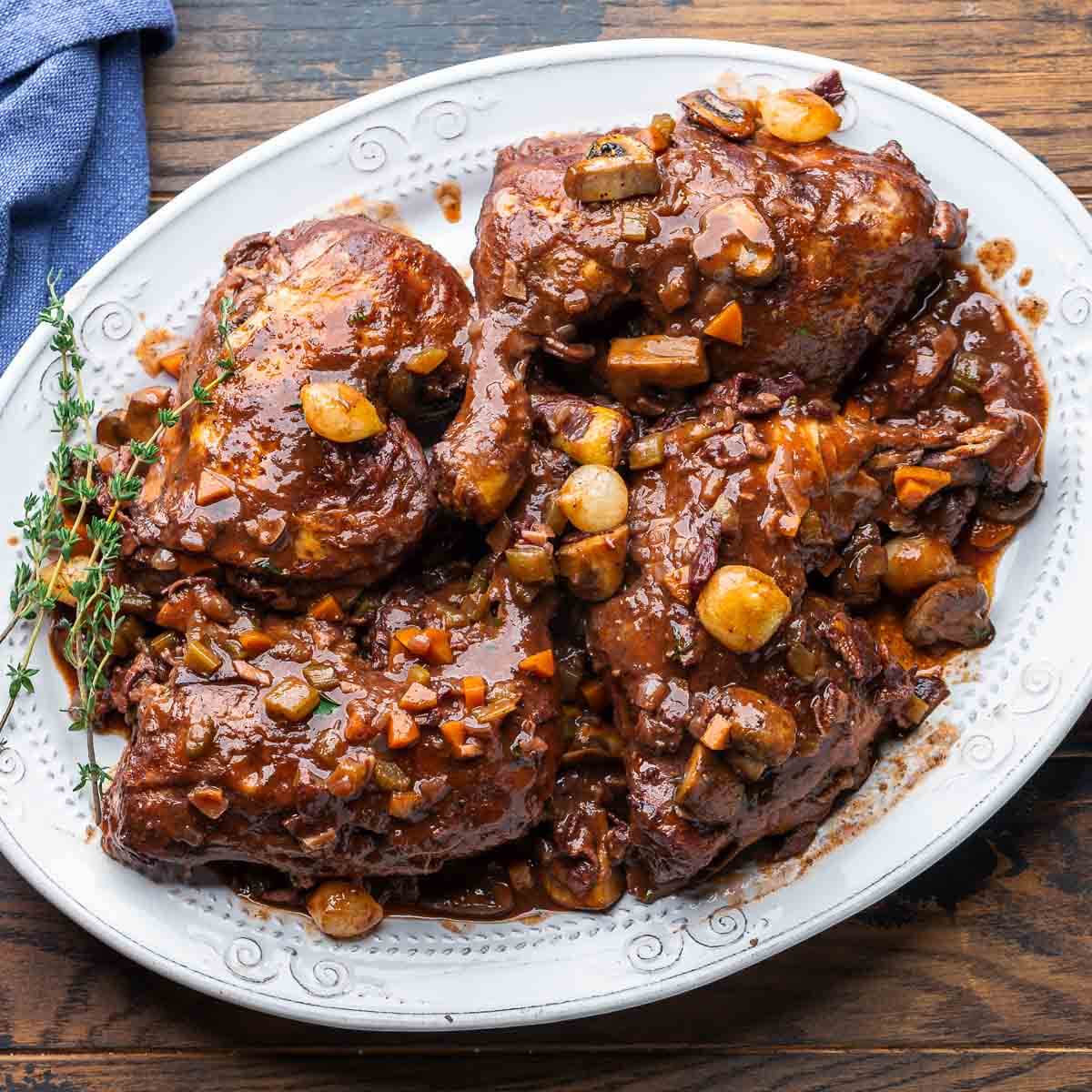
There are dishes that feed you, and then there are dishes that stop you mid-bite and make you close your eyes. Coq au Vin is unequivocally the latter. This legendary French braise — chicken slow-cooked in a deep, glossy red wine sauce with smoky lardons, earthy mushrooms, and sweet pearl onions — is the kind of meal that turns an ordinary Tuesday into a dinner party memory. It’s the dish French grandmothers made to stretch a tough old rooster into something magnificent, and it’s the dish that has seduced every food lover who’s ever encountered it at a bistro table in Lyon or a cozy kitchen in the countryside.
What makes Coq au Vin so irresistible isn’t just the flavor — though the flavor is extraordinary — it’s the transformation. Raw, humble chicken pieces go into a pot with a bottle of good red wine, a handful of aromatics, and some pork fat, and what emerges hours later is something deeply complex, almost impossibly savory, with a sauce so silky and concentrated it clings to the back of a spoon like velvet. The wine cooks down into something entirely its own — no longer boozy, but rich and layered, carrying notes of dark fruit, earth, and smoke. This is bold, restaurant-quality cooking that belongs in your regular rotation.
The best part? Coq au Vin is more forgiving than it looks. Once everything is in the pot, the oven does the heavy lifting. You’re not standing over a stove, anxiously stirring. You’re pouring yourself a glass of the wine you’re using to cook with and letting the aromas fill your kitchen with something that smells like pure, unapologetic indulgence. This is the recipe that will make your guests ask if you trained in Paris.
Why You’ll Love This Recipe
- Flavor that is genuinely unforgettable: The combination of red wine, chicken fat, smoky bacon, and earthy mushrooms creates a sauce so complex and savory it tastes like it took days.
- Fall-off-the-bone tender chicken: Low-and-slow braising means the chicken becomes impossibly juicy and practically melts into the sauce.
- A true one-pot showstopper: Everything builds in a single Dutch oven — less mess, maximum payoff.
- Even better the next day: Like all great braises, the flavors deepen overnight. Make it ahead for stress-free entertaining.
- Endlessly impressive: This is a dinner-party centerpiece that looks and tastes like a restaurant dish but is totally achievable at home.
Key Ingredients That Make This Dish
The soul of a proper Coq au Vin starts with bone-in, skin-on chicken thighs and drumsticks. You want skin and bone here — not for health reasons, but because that’s where the fat and collagen live. As they braise, they release gelatin into the sauce, giving it that glossy, almost sticky richness that makes this dish so crave-worthy. Boneless, skinless chicken simply cannot do what this cut does.
Next is the red wine, and it deserves a real conversation. This isn’t a dish where you reach for whatever bottle has been open on the counter for four days. A good Burgundy or Pinot Noir is traditional, and a Côtes du Rhône works beautifully too. The wine is a foundational flavor here — it reduces into a concentrated, slightly fruity, deeply savory base. As Serious Eats notes in their deep dive on Coq au Vin, the quality of the wine directly affects the final flavor of the sauce, so cook with something you’d actually drink.
Lardons — thick-cut bacon or pancetta cut into small batons — are non-negotiable. They’re rendered first, flooding the pot with smoky pork fat that becomes the foundation everything else is cooked in. Their salty, smoky character threads through every element of the dish. Pearl onions bring a gentle sweetness that balances the wine’s acidity, while cremini or button mushrooms soak up the braising liquid and become intensely savory little flavor bombs. Finally, a bouquet garni of fresh thyme, bay leaves, and parsley works quietly in the background, adding herbal complexity that keeps the sauce from feeling heavy. These aren’t background players — every single ingredient is pulling serious weight in this pot.
Pro Tips & Variations
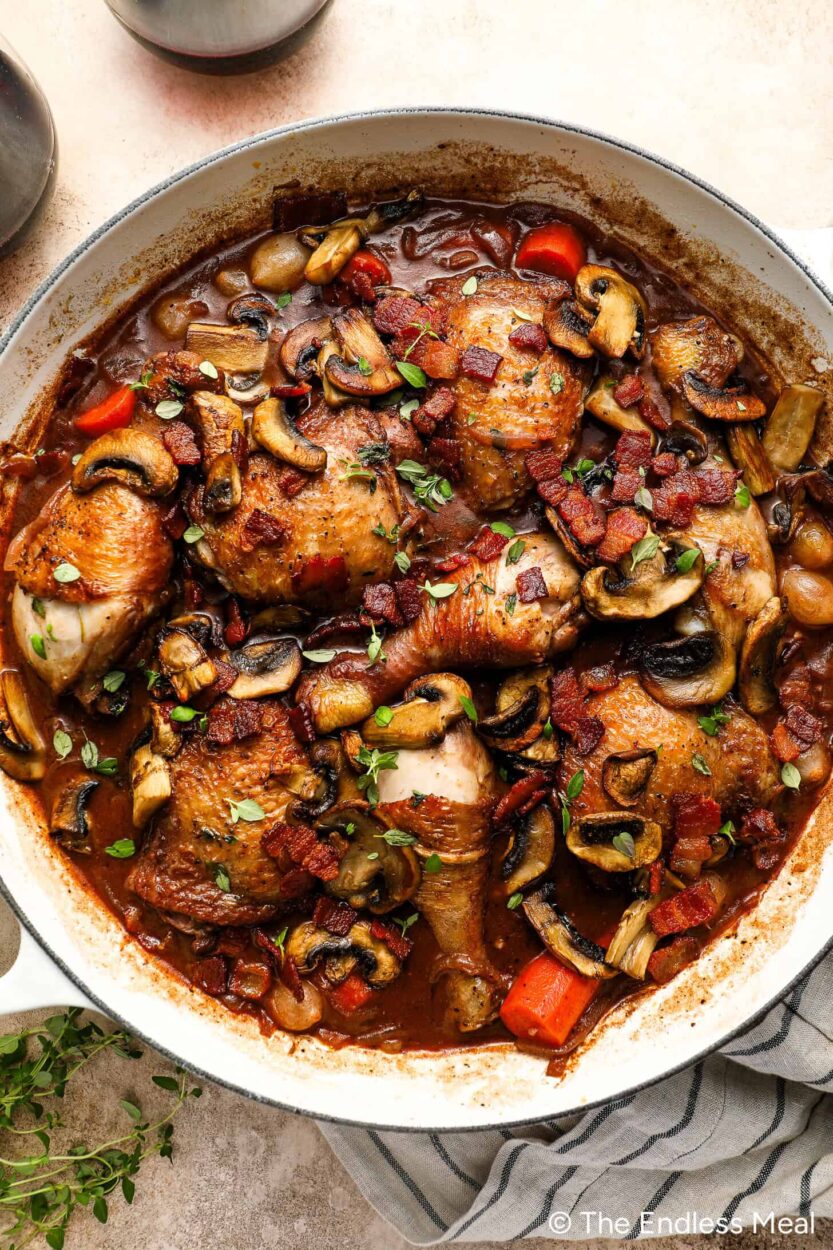
Sear hard and don’t rush it. The most important step in this recipe is getting a deep, golden-brown crust on every piece of chicken before anything else goes in the pot. This isn’t just about color — the Maillard reaction happening in that fond at the bottom of the pan is pure concentrated flavor. It will dissolve into the sauce and make everything taste richer. Don’t crowd the pan. Work in batches if you need to.
Use a whole bottle of wine. Yes, the whole bottle. Coq au Vin is not a place for timid pours. The wine reduces significantly during cooking, and what you’re left with is intensely flavored, not boozy. This is what separates a truly great Coq au Vin from a thin, underwhelming version.
Finish with cold butter. Just before serving, swirl 2 tablespoons of cold unsalted butter into the sauce off the heat. This classic French technique — called monter au beurre — gives the sauce an incredible gloss and a velvety, restaurant-worthy texture.
Marinate overnight for maximum depth. If you have the time, marinate the chicken in the wine, aromatics, and herbs for up to 24 hours before cooking. The wine penetrates the meat and the final flavor is noticeably deeper. Bon Appétit’s take on the recipe highlights this marinade step as a game-changer for weekend cooks who want to maximize flavor.
Variations worth trying:
- Coq au Vin Blanc: Swap the red wine for a dry white wine like Chardonnay or Riesling. The flavor is lighter and more delicate — stunning with spring vegetables.
- Add tomato paste: A tablespoon of tomato paste stirred in with the aromatics adds another layer of umami depth and deepens the color of the sauce beautifully.
- Make it richer: Add a splash of cognac or brandy when the vegetables are softening and let it flame off before adding the wine. It adds a complexity that feels deeply indulgent.
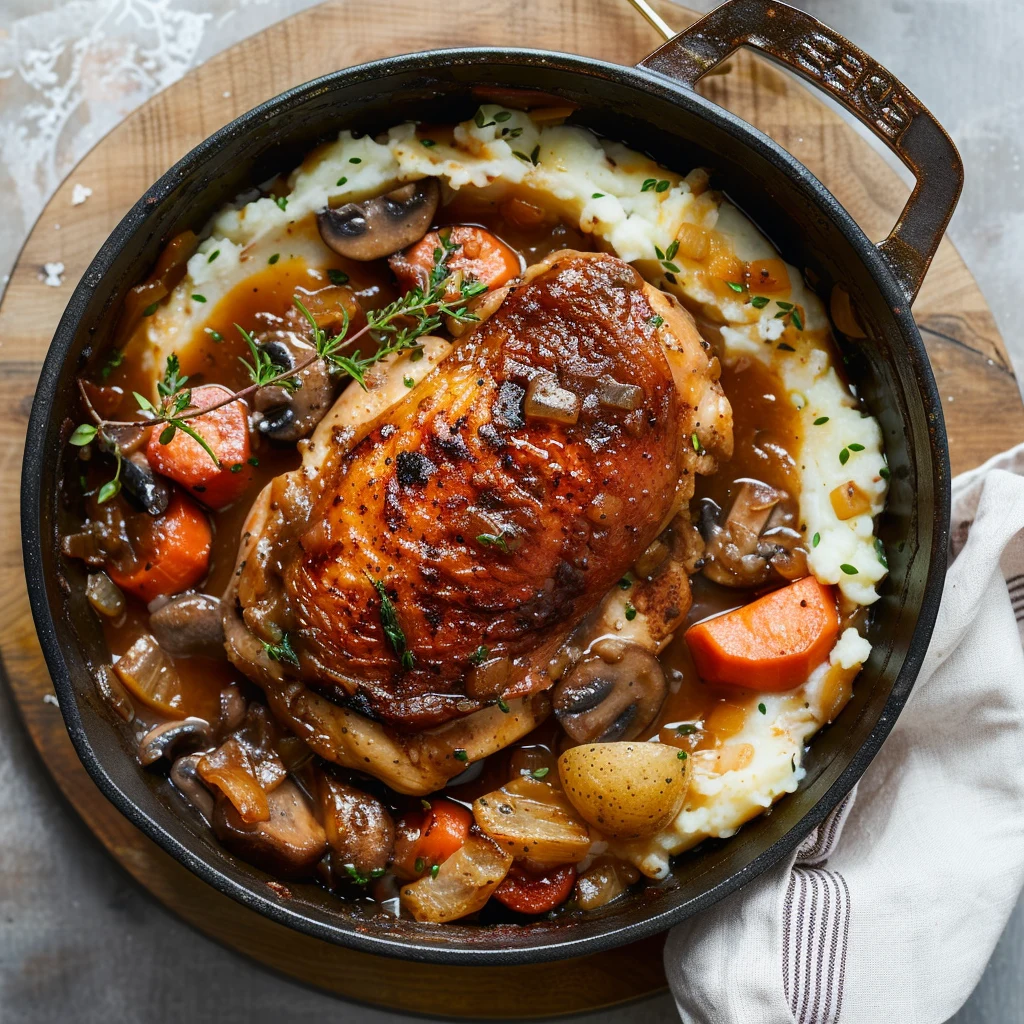
- Serve over creamy mashed potatoes or buttered egg noodles to soak up every drop of that extraordinary sauce. If you want something lighter alongside this rich braise, a bright Caprese Salad with fresh tomato, mozzarella, and balsamic glaze cuts through the richness perfectly.
If you love deeply aromatic braised dishes like this one, you’ll also want to explore our Moroccan Lamb Tagine — it’s the same slow-cooked, richly sauced philosophy applied to spiced lamb with dried fruit, and it’s absolutely stunning.
Nutritional Highlights
Coq au Vin is rich and indulgent — and that’s exactly the point — but it also delivers serious nutritional substance alongside all that flavor. Bone-in chicken thighs are a powerhouse of protein, with each serving contributing roughly 38 to 42 grams of high-quality protein that keeps you genuinely satisfied. The mushrooms provide B vitamins and antioxidants, while the wine-based sauce — once the alcohol cooks off completely — contributes polyphenols from the red wine. The lardons and chicken skin do bring saturated fat to the table, but in context of a balanced meal this is celebratory, soul-satisfying eating at its most honest. Each serving clocks in around 480 to 520 calories depending on your cut sizes and how much sauce you spoon over the top — which, let’s be honest, is always going to be a generous amount. Pair with a crisp green salad or simple steamed vegetables to round the plate beautifully.
Frequently Asked Questions
Can I make Coq au Vin ahead of time?
Absolutely — and honestly, you should. Coq au Vin is one of those rare dishes that genuinely improves with time. The flavors meld and deepen as it sits, and the chicken continues to absorb the sauce overnight in the refrigerator. Make it up to 2 days ahead, cool it completely, store it covered in the fridge, and reheat it gently over low heat on the stovetop. You may need to add a small splash of chicken stock to loosen the sauce when reheating, as it will thicken as it chills. This also makes it perfect for entertaining — all the work is done before your guests arrive.
What is the best wine for Coq au Vin?
Traditionally, Burgundy — made from Pinot Noir grapes — is the wine of choice, and for good reason. It has the right combination of acidity, red fruit character, and earthiness that becomes absolutely gorgeous when reduced. That said, any medium-bodied, dry red wine with good acidity will work well: Côtes du Rhône, a French country wine, or even a lighter Merlot. The rule of thumb is simple: if you wouldn’t drink it in a glass, don’t cook with it. Avoid anything labeled “cooking wine” — those are loaded with salt and preservatives and will ruin the flavor of your sauce. Spend at least $10 to $15 on the bottle; you’re using most of it, and the investment pays off dramatically in the final dish.
Can I make Coq au Vin without a Dutch oven?
Yes, though a heavy-bottomed Dutch oven is truly the ideal vessel for this recipe because it distributes heat evenly and transitions seamlessly from stovetop searing to oven braising. If you don’t have one, you can use a large, deep, oven-safe skillet with a tight-fitting lid, or even a roasting pan covered tightly with heavy-duty aluminum foil. Alternatively, you can do the entire braise on the stovetop over very low heat — just make sure to check it every 20 minutes or so and give everything a gentle stir to prevent sticking. The key is maintaining a low, steady simmer, not a full boil, which would toughen the chicken.
Make It, Share It, Save It
Coq au Vin is the kind of recipe that deserves to be in your permanent rotation — the one you pull out when you want to cook something that genuinely impresses, something that fills the house with an aroma so intoxicating that people wander into the kitchen just to get closer to the pot. It’s French comfort food at its most elemental and most magnificent. Once you make this, you’ll understand why this dish has been beloved for centuries — and why it will never go out of style.
If you try this recipe, please save it to your Pinterest boards, share it with a friend who loves to cook, and leave a comment below telling me what wine you used in your pot. I’d love to hear how yours turned out. Great food is better when it’s shared, and this one is absolutely worth sharing.
Find the complete recipe card below ↓
Coq au Vin
Equipment
- Large Dutch oven (at least 6 quarts)
- Slotted spoon
- Wooden spoon
- Medium skillet
- Paper towels
- Tongs
Ingredients
Chicken
- 3.5 lbs bone-in, skin-on chicken thighs and drumsticks about 4 thighs and 4 drumsticks
- 1 tsp kosher salt plus more to taste
- 0.5 tsp black pepper freshly ground
For the Braise
- 6 oz lardons or thick-cut bacon cut into 1-inch batons
- 1 bottle dry red wine 750ml — Burgundy or Pinot Noir preferred
- 1 cup chicken stock low sodium
- 2 tbsp tomato paste
- 3 cloves garlic smashed and peeled
- 1 medium yellow onion roughly chopped
- 2 medium carrots peeled and cut into 1-inch pieces
- 2 tbsp all-purpose flour for dredging
- 2 tbsp olive oil
- 2 tbsp unsalted butter cold, for finishing
Mushrooms & Pearl Onions
- 10 oz cremini mushrooms halved or quartered if large
- 1 cup pearl onions fresh or frozen, peeled
- 1 tbsp unsalted butter for sautéing mushrooms
Bouquet Garni
- 4 sprigs fresh thyme
- 2 bay leaves
- 4 sprigs fresh flat-leaf parsley
Instructions
Sear the Chicken
- Preheat your oven to 325°F (165°C). Pat the chicken pieces completely dry with paper towels — this is essential for a good sear. Season all over with salt and pepper, then lightly dredge each piece in flour, shaking off the excess.
- In a large Dutch oven over medium heat, cook the lardons until the fat is rendered and they are golden and crispy, about 6 to 8 minutes. Remove with a slotted spoon and set aside, leaving the fat in the pot.
- Increase heat to medium-high. Working in batches to avoid crowding, sear the chicken pieces skin-side down for 4 to 5 minutes until deeply golden brown. Flip and sear the other side for 3 minutes. Remove and set aside. Do not skip this step — the fond that builds in the pot is pure flavor.
Build the Braise
- Pour off all but 1 tablespoon of fat from the pot. Add the chopped onion, carrots, and garlic. Cook over medium heat, stirring occasionally, until softened, about 5 minutes.
- Stir in the tomato paste and cook for 1 to 2 minutes until it darkens slightly and begins to stick to the bottom of the pot — this caramelization adds enormous depth.
- Pour in the entire bottle of red wine, scraping up all the browned bits from the bottom of the pot with a wooden spoon. Add the chicken stock and nestle in the bouquet garni.
- Return the seared chicken pieces and the cooked lardons to the pot. The liquid should come about two-thirds of the way up the chicken. Bring to a gentle simmer on the stovetop, then cover and transfer to the preheated oven.
Braise & Finish
- Braise in the oven for 1 hour to 1 hour 15 minutes, until the chicken is completely fall-off-the-bone tender and the sauce has reduced and deepened in color.
- While the chicken braises, melt 1 tablespoon butter in a skillet over medium-high heat. Sauté the mushrooms and pearl onions with a pinch of salt until golden brown, about 8 minutes. Set aside.
- Remove the pot from the oven. Discard the bouquet garni. Transfer the chicken to a plate. If the sauce is thin, bring it to a boil on the stovetop and reduce for 5 to 10 minutes until it coats a spoon. Stir in the sautéed mushrooms and pearl onions.
- Return the chicken to the pot. Just before serving, remove from heat and swirl in 2 tablespoons of cold butter until the sauce is glossy and silky. Taste and adjust seasoning. Serve immediately over mashed potatoes, egg noodles, or crusty bread, garnished with fresh thyme or parsley.