

When a Dish Becomes an Event
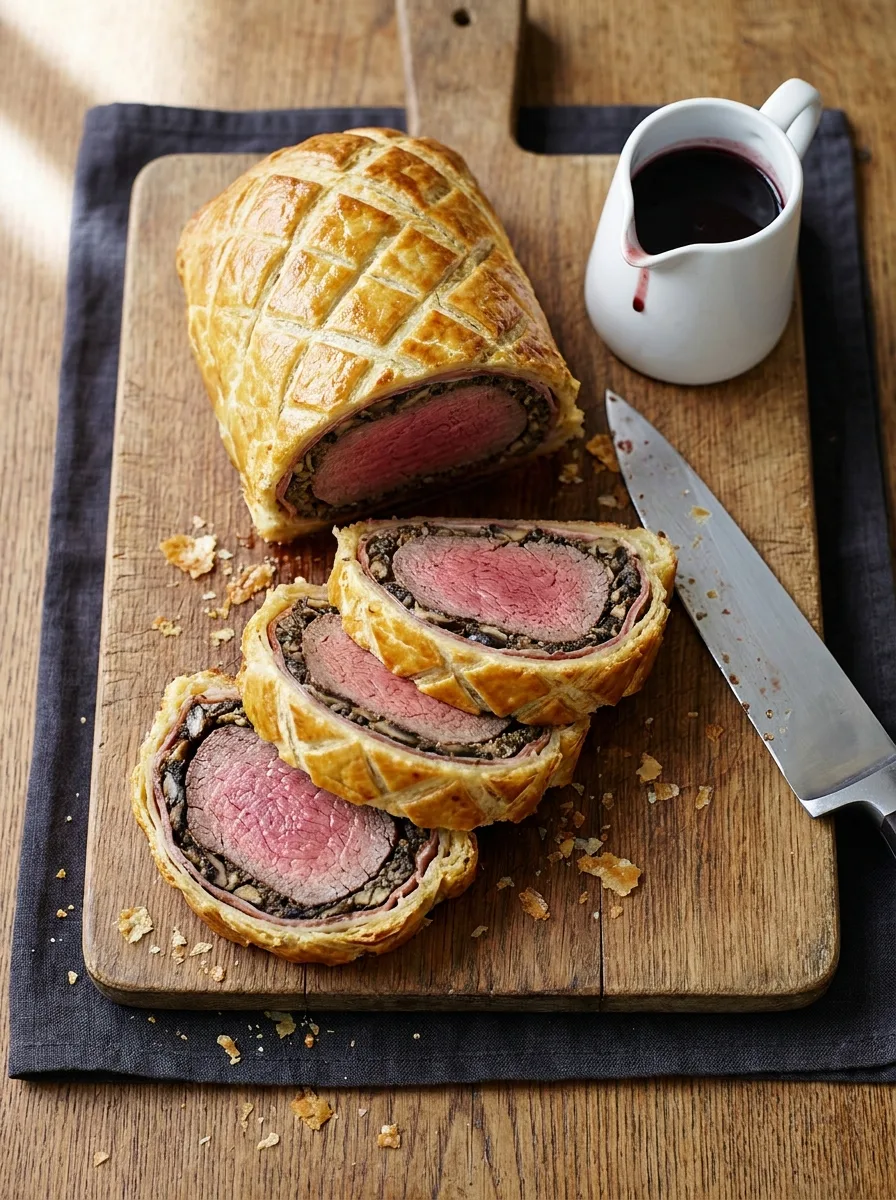
There are recipes you cook on a Tuesday, and then there are recipes that make people go quiet the moment they see it on the table. British Beef Wellington is unequivocally the latter. The moment that deeply golden, shatteringly crisp pastry shell gets sliced open to reveal a perfectly pink center of tenderloin wrapped in a savory, earthy duxelles — the room holds its breath. It is, without question, one of the most dramatic and deeply satisfying dishes in all of British culinary tradition, and once you’ve made it, you will understand exactly why it has earned its legendary status.
What makes British Beef Wellington so utterly irresistible goes far beyond the spectacle. It is a masterclass in layered flavor and contrasting texture: the rich, buttery puff pastry gives way to an intensely savory mushroom duxelles that has been cooked down until almost paste-like and bursting with umami. Beneath that sits a thin, silky layer of prosciutto that adds saltiness and helps keep the pastry from getting soggy. And at the very center — the crown jewel — is a whole beef tenderloin fillet, seared hard on the outside to create a caramelized crust, then encased and baked to a luscious medium-rare. Every single bite is a symphony. This is comfort food elevated to its absolute highest form.
Whether you’re making this for a holiday dinner, a special anniversary meal, or simply because you believe that a weekend is reason enough to go all in, this recipe delivers the full restaurant experience right in your own kitchen. It is a project, yes — but it is a deeply rewarding one, and this guide will walk you through every step to make sure your Wellington comes out flawless: golden, juicy, and impossibly impressive. If you love bold, indulgent beef dishes, you’ll also want to check out our Mongolian Beef — Sticky, Saucy & Better Than Takeout for your next weeknight beef fix.
Why You’ll Love This Recipe
- Restaurant-quality drama at home — this is the dish that earns a standing ovation at the dinner table, every single time.
- Layered, complex flavor — every component adds something: umami from the duxelles, salt from the prosciutto, richness from the pastry, and pure beefy luxury from the tenderloin.
- Perfect for special occasions — elegant enough for Christmas, New Year’s Eve, or a milestone dinner, yet totally achievable with the right technique.
- Make-ahead friendly — the Wellington can be assembled, wrapped, and refrigerated overnight before baking, making your hosting life significantly easier.
- Crowd-pleasing centerpiece — one beautiful roll serves 4-6 people and photographs like a dream.
- A true celebration of British culinary heritage — honoring a classic that has stood the test of time for very good reason.
Key Ingredients
At the heart of this dish is a center-cut beef tenderloin fillet — ideally 2 to 2.5 pounds, trimmed of any sinew and as uniform in shape as possible so it cooks evenly. The tenderloin is the most tender cut of beef there is, and its mild, buttery flavor is the perfect canvas for everything layered around it. It must be seared aggressively before it goes anywhere near the pastry — that hard, dark crust developed in a screaming-hot pan is not just for flavor, it also creates a moisture barrier that protects the pastry from becoming soggy during baking.
The mushroom duxelles is arguably the soul of the Wellington. Made from finely chopped cremini or chestnut mushrooms — sometimes with a handful of dried porcini stirred in for extra depth — the mushrooms are cooked in butter with shallots, garlic, and fresh thyme until absolutely every drop of moisture has been driven out, leaving behind a deeply savory, almost pâté-like paste. This step is non-negotiable; watery duxelles is the number one enemy of crisp pastry. Prosciutto di Parma is laid out in overlapping slices to wrap the duxelles-coated beef before it goes into the pastry — it adds a whisper of saltiness and cured pork richness while also acting as a moisture barrier, keeping the inside perfectly contained.
The all-butter puff pastry is your golden armor. Store-bought is perfectly acceptable here — and honestly, what the pros use when they want reliability — but make sure it’s the all-butter variety for maximum flavor and flakiness. A generous egg wash brushed over the surface before baking ensures that deep, lacquered mahogany color that makes this dish look like it came straight out of a five-star kitchen. Finally, English mustard — brushed directly onto the seared tenderloin before the duxelles go on — adds a pungent, sharp layer that cuts through the richness beautifully and is absolutely essential to the authentic flavor profile of a classic British Beef Wellington. For another show-stopping slow-cooked centerpiece, our Moroccan Lamb Tagine — Rich, Aromatic & Deeply Satisfying is equally worth your time.
Pro Tips & Variations
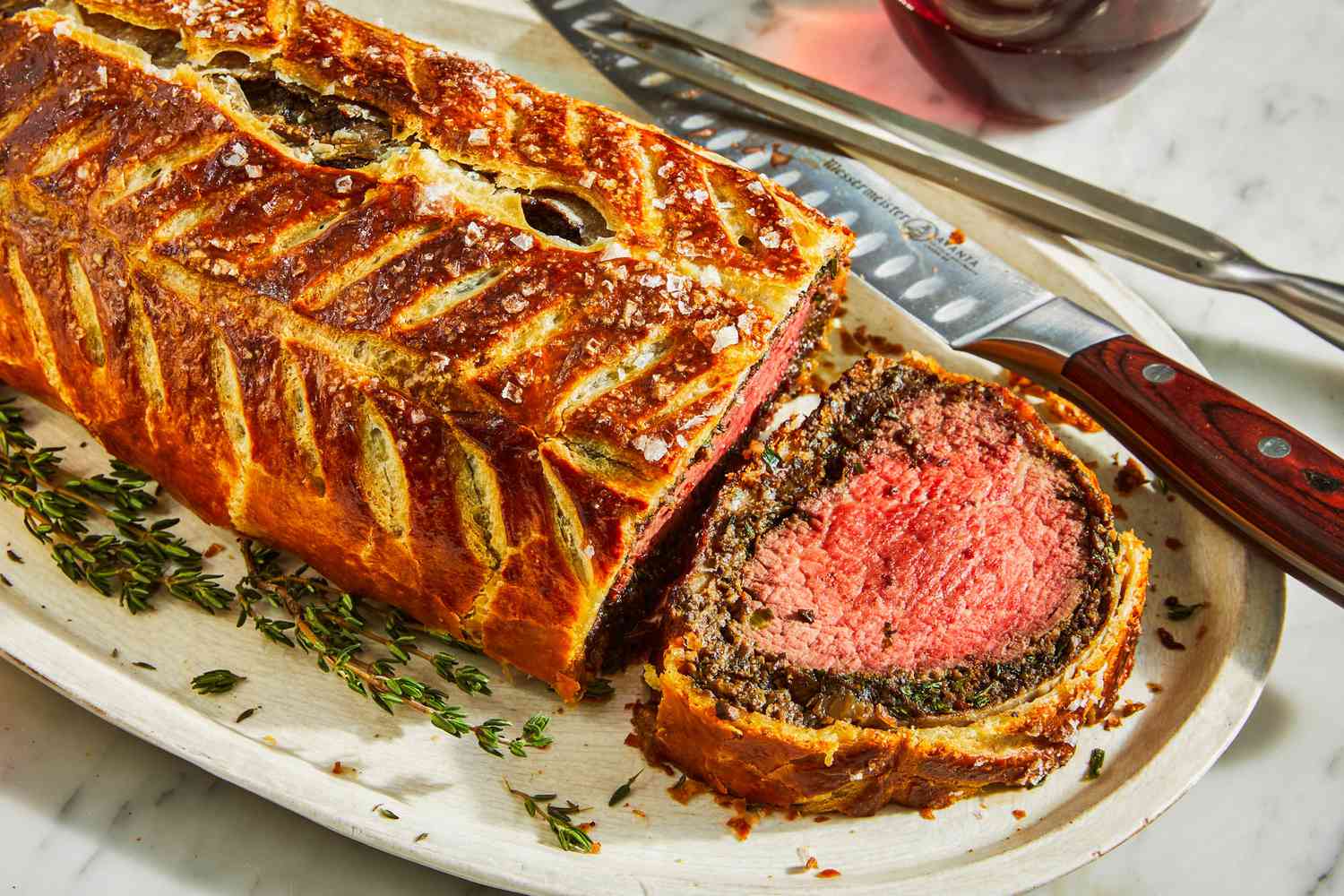
- Chill between every step. This is the most important tip of all. After searing, chill the beef. After spreading with mustard and duxelles, chill it again. After wrapping in prosciutto, chill again before rolling in pastry. Cold temperatures are what keep everything tight, structured, and properly sealed — and they prevent the pastry from turning greasy.
- Use a meat thermometer. There is no eyeballing a Wellington. For a perfect medium-rare, pull it at an internal temperature of 125°F (52°C) and let it rest — it will carry over to 130°F. This is the make-or-break step. Serious Eats has an excellent deep-dive on Wellington temperature science that is worth reading before your first attempt.
- Score the pastry lightly. Use the back of a knife to draw a crosshatch or diagonal pattern on the top of the Wellington before baking. It doesn’t go all the way through — it’s purely decorative and makes it look extraordinarily professional.
- Dry your mushrooms thoroughly. If your duxelles is still releasing moisture when you spread it, keep cooking. It should look dry and hold its shape. Any residual water will steam the pastry from the inside and you’ll lose that essential crunch.
- Variation — Individual Wellingtons: Instead of one large roll, divide the tenderloin into 4-6 portions and wrap each individual steak. They cook faster (about 15-18 minutes) and allow you to hit different doneness levels for different guests — ideal for dinner parties.
- Variation — Add a pâté layer: Some traditional British recipes spread a thin layer of chicken liver pâté or foie gras between the prosciutto and the duxelles for even more richness and depth. It is utterly luxurious and very much worth trying if you want to go full indulgent.
- Variation — Mushroom swap: Swap a portion of the cremini mushrooms for wild mushrooms — chanterelles, shiitakes, or morels — to give the duxelles a more complex, earthy, almost forest-floor quality. Gordon Ramsay’s Beef Wellington on Food Network is a great reference for how the pros approach this technique.
Nutritional Highlights
British Beef Wellington is an unabashedly indulgent dish, and that is precisely what makes it so magnificent. A generous serving clocks in at approximately 680-720 calories, delivering around 45-50 grams of high-quality protein from the tenderloin — one of the leanest yet most tender cuts of beef available. The puff pastry contributes a significant portion of the fat and carbohydrates, making this a true celebration meal rather than an everyday dinner. The mushroom duxelles adds meaningful amounts of B vitamins, potassium, and dietary fiber. If you’re looking to balance the richness of the Wellington at the table, a bright, fresh side can do wonders — something like our Caprese Salad — Fresh Tomato, Mozzarella & Basil with Balsamic Glaze cuts through the richness beautifully and adds a pop of color to the plate.
Frequently Asked Questions
Can I make British Beef Wellington ahead of time?
Absolutely — and in fact, making it ahead is actually encouraged. You can fully assemble the Wellington (sear the beef, coat in mustard and duxelles, wrap in prosciutto and pastry), wrap it tightly in plastic wrap, and refrigerate it for up to 24 hours before baking. This actually improves the result because everything sets up firmly and holds its shape better during baking. Just add the egg wash right before it goes into the oven. Do not freeze an assembled Wellington, as the pastry texture suffers significantly.
How do I prevent the pastry from getting soggy on the bottom?
Soggy pastry is the most common Wellington complaint, and it comes down to moisture management at every layer. First, cook your duxelles until bone dry — this cannot be overstated. Second, make sure the seared beef is completely chilled and patted dry before assembly. Third, the prosciutto layer acts as a moisture shield between the duxelles and the pastry. Fourth, bake on a preheated baking sheet or a rack set over a tray to allow airflow underneath. Finally, rest the Wellington on a wire rack after baking — not directly on a board — so steam can escape rather than condensing back into the base.
What is the best internal temperature for Beef Wellington?
For a classic medium-rare Wellington — which is the intended serving temperature and what makes the tenderloin most luscious — you want to pull it from the oven when the internal temperature reads 125°F (52°C) at the thickest point. Let it rest uncovered for at least 10 minutes (ideally 15), during which the temperature will carry over to approximately 130-135°F (54-57°C), landing you perfectly in medium-rare territory. If you prefer medium, pull at 130°F and rest to 140°F. Anything above medium will result in a drier, less tender center, which would be a heartbreaking outcome for such a beautiful piece of beef — so invest in a reliable instant-read thermometer and use it without hesitation.
Make It, Share It, Save It
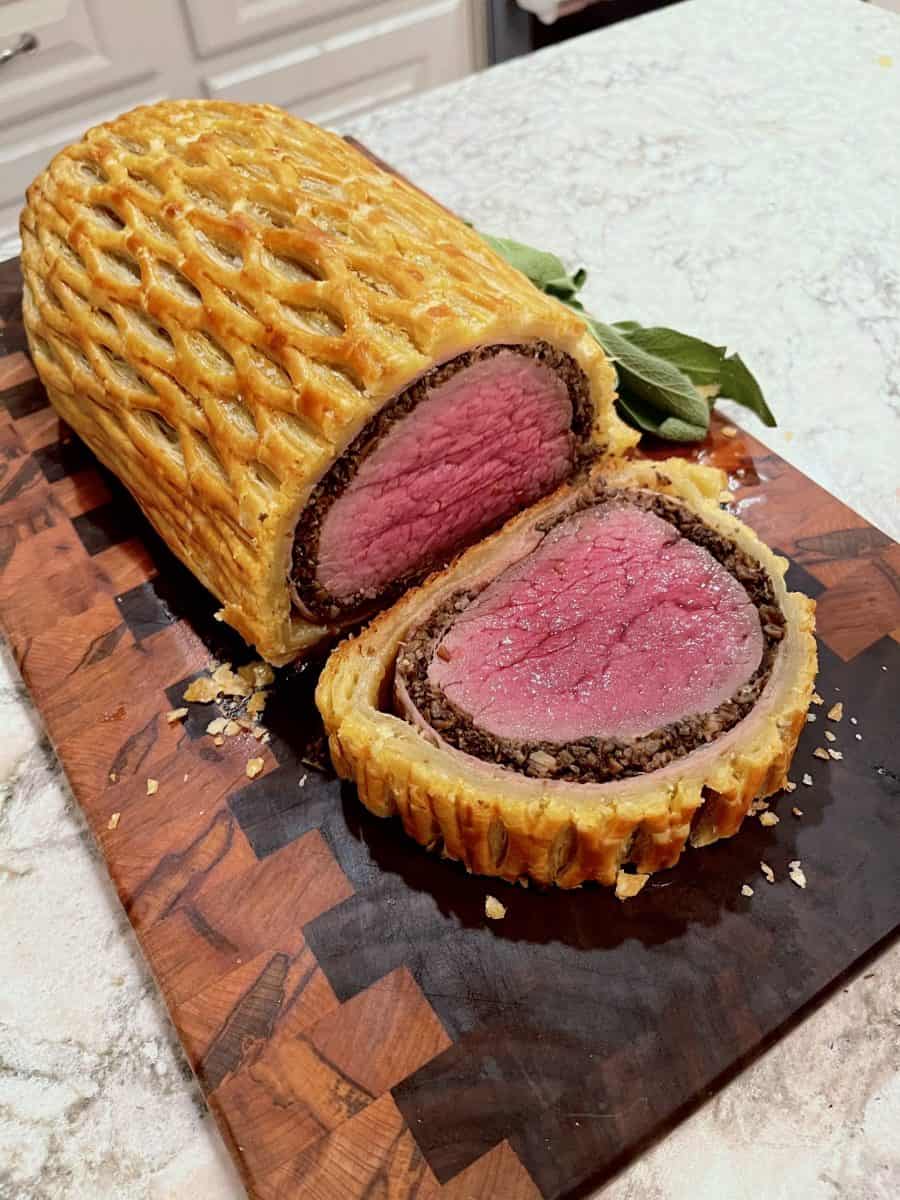
British Beef Wellington is one of those recipes that genuinely changes how you think about cooking at home. The moment you pull that deeply burnished, perfectly golden log from the oven, slice it open at the table, and watch the steam rise from that rosy, perfectly cooked tenderloin center — you will feel like a chef. And you will have earned it. Every step of the process, from building the duxelles to rolling the pastry to nailing the temperature, is a skill that compounds the second time you make it. And there will absolutely be a second time.
If this recipe inspired you, please save it to Pinterest, share it with someone who deserves a spectacular dinner, and leave a comment below letting us know how your Wellington turned out. Your photos and feedback genuinely make our day — and we’d love to see your finished masterpiece. Tag us and show the world what you built in your own kitchen.
Find the complete recipe card below ↓

British Beef Wellington
Equipment
- Large cast iron skillet or heavy-bottomed pan
- Food processor
- Meat thermometer (instant-read)
- Large baking sheet
- Parchment paper
- Plastic wrap
- Wire rack
- Sharp carving knife
- Pastry brush
Ingredients
For the Beef
- 2.5 lbs center-cut beef tenderloin fillet trimmed of all sinew and silverskin, tied if uneven
- 2 tbsp olive oil for searing
- 2 tbsp English mustard or Dijon mustard
- 1 tsp flaky sea salt
- 1 tsp freshly cracked black pepper
For the Mushroom Duxelles
- 1 lb cremini or chestnut mushrooms finely chopped in a food processor
- 2 tbsp unsalted butter
- 3 cloves garlic minced
- 2 shallots finely minced
- 2 sprigs fresh thyme leaves only
- 2 tbsp dry sherry or white wine optional, for deglazing
- 0.5 tsp fine sea salt
- 0.25 tsp black pepper
For Assembly
- 12 slices prosciutto di Parma thinly sliced, enough to cover a large rectangle
- 1 sheet all-butter puff pastry approximately 14x10 inches, thawed if frozen
- 2 large egg yolks beaten with 1 tbsp water for egg wash
- 1 tbsp flaky sea salt for sprinkling on top before baking
For the Red Wine Jus (Optional but Recommended)
- 1 cup good-quality red wine Cabernet Sauvignon or Merlot
- 2 cups beef stock preferably homemade or good-quality store-bought
- 1 shallot thinly sliced
- 1 sprig fresh thyme
- 1 tbsp unsalted butter cold, to finish
- 1 tsp Worcestershire sauce
Instructions
Sear the Beef
- Remove the beef tenderloin from the refrigerator 30 minutes before cooking. Pat it completely dry with paper towels — this is essential for a proper sear. Season generously all over with salt and pepper.
- Heat olive oil in a large heavy-bottomed skillet (cast iron preferred) over the highest heat possible until it is smoking. Add the beef and sear for 1-2 minutes per side, including the ends, until a deep mahogany crust forms all over. This should take about 4-5 minutes total. Do not move the beef while each side sears.
- Transfer the seared beef to a plate. Brush it all over with English mustard while it is still warm. Transfer to the refrigerator uncovered and chill for at least 30 minutes, until completely cold.
Make the Mushroom Duxelles
- Pulse the mushrooms in a food processor until very finely chopped — almost minced. Work in batches if necessary.
- Melt butter in a large skillet over medium-high heat. Add the shallots and garlic and sauté for 2 minutes until softened. Add the chopped mushrooms and thyme leaves.
- Cook, stirring frequently, for 15-20 minutes until all the moisture has completely evaporated and the mushrooms look dry and almost paste-like. If using sherry or wine, add it halfway through and let it cook off. Season with salt and pepper. Spread on a plate and refrigerate until completely cold, at least 20 minutes.
Assemble the Wellington
- Lay a large sheet of plastic wrap on your work surface. Arrange the prosciutto slices in a rectangle, overlapping them slightly, large enough to completely wrap the beef — roughly 12x10 inches.
- Spread the cold duxelles evenly over the prosciutto in a thin, even layer, leaving a 1-inch border around the edges.
- Place the chilled, mustard-coated beef at the near edge of the prosciutto. Use the plastic wrap to roll the prosciutto tightly around the beef, twisting the ends of the plastic wrap to form a tight log shape. Refrigerate for at least 20 minutes to set its shape.
- Roll out the puff pastry on a lightly floured surface. Brush the pastry with egg wash. Place the prosciutto-wrapped beef log at the near edge of the pastry and roll tightly, sealing the seam underneath and pressing the ends in firmly. Trim any excess pastry from the ends and crimp to seal.
- Wrap the assembled Wellington tightly in plastic wrap and refrigerate for at least 30 minutes (or up to 24 hours). This resting period is crucial for the pastry to stay flaky and hold its shape during baking.
Bake the Wellington
- Preheat your oven to 425°F (220°C). Line a baking sheet with parchment paper and place it in the oven to preheat as well.
- Remove the Wellington from the refrigerator and unwrap it. Brush generously all over with egg wash. Use the back of a knife to score a light decorative pattern on top (do not cut through). Sprinkle with flaky sea salt.
- Place the Wellington seam-side down on the hot preheated baking sheet. Bake for 25-30 minutes until the pastry is deeply golden all over and an instant-read thermometer inserted into the center reads 125°F (52°C) for medium-rare.
- Transfer the Wellington to a wire rack and rest uncovered for 10-15 minutes. Do not skip this step — it allows the juices to redistribute and the temperature to carry over to a perfect medium-rare. Slice with a sharp carving knife into 1.5-inch rounds and serve immediately with red wine jus.
Make the Red Wine Jus (Optional)
- While the Wellington bakes, sauté the sliced shallot in a small saucepan over medium heat for 2 minutes. Add the red wine and thyme and simmer until reduced by half, about 5 minutes.
- Add the beef stock and Worcestershire sauce and continue to simmer until reduced by half again and lightly syrupy, about 10-12 minutes. Strain through a fine-mesh sieve, return to the pan, and swirl in the cold butter off the heat to finish. Season to taste. Keep warm until serving.