

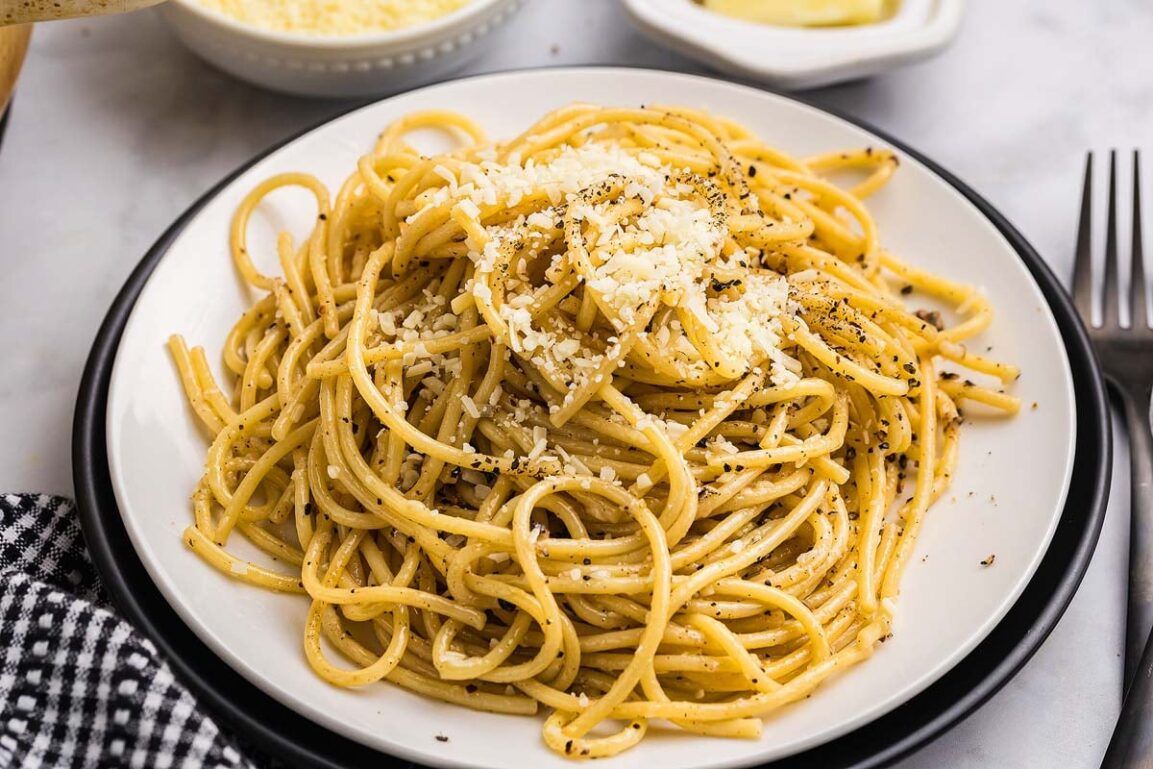
There’s something almost magical about watching a handful of humble ingredients transform into one of Rome’s most celebrated dishes. Cacio e Pepe—literally “cheese and pepper”—is the kind of recipe that separates confident home cooks from culinary magicians. With just pasta, Pecorino Romano, and freshly cracked black pepper, this deceptively simple dish creates a silky, luxurious sauce that clings to every strand of spaghetti like liquid gold.
The first time I nailed this recipe, after several failed attempts that resulted in clumpy cheese disasters, I understood why Roman trattorias have built their reputations on this three-ingredient wonder. The key isn’t just technique—it’s understanding that the starchy pasta water becomes the fourth essential ingredient, binding everything into that glossy, restaurant-quality emulsion that makes your mouth water just thinking about it. When done right, each forkful delivers an intoxicating hit of sharp, salty cheese balanced by the warming bite of coarsely ground pepper.
This isn’t just pasta with cheese melted on top—this is alchemy. The marriage of hot pasta water with finely grated cheese creates a creamy sauce without a drop of cream, while the pepper provides an aromatic backdrop that makes the dish absolutely irresistible. Once you master this technique, you’ll have a showstopper dinner ready in less time than it takes to order takeout.
Why You’ll Love This Recipe
This Cacio e Pepe delivers restaurant-quality indulgence with pantry staples you probably already have on hand. Unlike heavy cream-based pasta dishes, this Roman classic achieves its luxurious texture through pure technique, creating a silky sauce that coats every strand without feeling heavy or overwhelming. The bold, unapologetic flavors—sharp aged cheese and aromatic cracked pepper—create an intensely satisfying dish that feels both rustic and refined.
What makes this recipe particularly irresistible is its versatility as a foundation for endless variations, while still honoring the traditional simplicity that has made it a staple in Roman kitchens for generations. The cooking process itself becomes almost meditative, requiring your full attention as you coax the ingredients into that perfect, glossy emulsion. Plus, at under 20 minutes from start to finish, it’s the kind of impressive weeknight dinner that makes you feel like a culinary genius.
Key Ingredients
The beauty of Cacio e Pepe lies in its minimalist ingredient list, where each component plays a crucial role in the final dish. Pecorino Romano is absolutely non-negotiable here—this aged sheep’s milk cheese brings the sharp, salty intensity that defines the dish, and its texture melts more smoothly than Parmesan when properly emulsified. Freshly cracked black pepper isn’t just seasoning; it’s a starring player that should be coarsely ground to release maximum aroma and provide textural contrast against the silky sauce. The pasta itself—traditionally spaghetti or tonnarelli—becomes a vehicle for the sauce while contributing essential starch to create that glossy emulsion. Finally, high-quality pasta water acts as your binding agent, with its starch content being the secret to achieving that restaurant-quality consistency. Some recipes call for a touch of butter to help stabilize the emulsion, adding richness without compromising the dish’s elegant simplicity. Each ingredient must be at its peak quality because there’s nowhere for mediocre components to hide in this stripped-down masterpiece.
Pro Tips & Variations
The secret to perfect Cacio e Pepe lies in temperature control and timing. Always reserve at least two cups of starchy pasta water before draining—you’ll need more than you think to achieve that glossy emulsion. The key moment comes when you combine the hot pasta with cheese off the heat; the residual warmth should be just enough to melt the cheese without scrambling it. If the sauce breaks or looks clumpy, don’t panic—whisk in more hot pasta water, one tablespoon at a time, until it comes back together.
For the most authentic experience, invest in a good pepper mill and crack your pepper just before cooking. The difference in aroma is remarkable. Professional chefs recommend using a coarse grind that provides both flavor and textural interest. If you want to elevate the dish further, try toasting whole peppercorns in a dry pan for 30 seconds before grinding—this intensifies their fragrance dramatically.
While purists might object, subtle variations can be spectacular. A handful of crispy guanciale transforms this into a bridge between Cacio e Pepe and Carbonara, while a splash of white wine added to the pepper creates additional complexity. For those who enjoy bold fusion flavors like our Korean Fried Chicken, consider finishing with a drizzle of good olive oil and red pepper flakes for a gentle heat that complements the cheese beautifully.
The pasta shape matters more than you might think—long strands like spaghetti, bucatini, or tonnarelli work best because they provide maximum surface area for the sauce to cling to. Short pasta shapes simply don’t deliver the same luxurious eating experience. Food scientists have shown that the starch content varies between pasta brands, so don’t be afraid to adjust your water quantities based on how your specific pasta behaves.
Nutritional Highlights
Despite its indulgent taste, Cacio e Pepe offers surprising nutritional benefits thanks to its simple, whole-food ingredients. Pecorino Romano provides high-quality protein and calcium, essential for bone health, while also delivering beneficial probiotics from the traditional aging process. The pasta contributes complex carbohydrates for sustained energy, and when you choose whole grain varieties, you’ll add fiber and B vitamins to the mix. Black pepper isn’t just flavorful—it contains piperine, a compound that may aid digestion and enhance nutrient absorption. Unlike cream-heavy pasta dishes, this Roman classic achieves its richness through technique rather than excessive dairy, making it a more balanced indulgence that satisfies without leaving you feeling overly heavy.
FAQ
Can I make Cacio e Pepe ahead of time?
Cacio e Pepe is best served immediately after preparation, as the delicate cheese emulsion can break when reheated. However, you can prep ingredients in advance—grate the cheese, crack the pepper, and have your pasta water ready. If you must reheat leftovers, do so gently in a skillet with a splash of hot pasta water or milk, whisking constantly to re-emulsify the sauce. The texture won’t be quite as perfect as fresh, but it will still be delicious.
What can I substitute for Pecorino Romano?
While Pecorino Romano is traditional and provides the authentic sharp, salty flavor, you can substitute with aged Parmesan (Parmigiano-Reggiano) in a pinch. The result will be milder and slightly different in character, but still delicious. Avoid pre-shredded cheeses, as they contain anti-caking agents that prevent proper melting. For the best results, always grate hard cheese fresh from the block just before cooking.
Why does my sauce keep breaking or becoming clumpy?
A broken sauce usually results from temperature issues—either the pasta is too hot when you add the cheese, or you’re not adding enough starchy pasta water. The key is working off the heat with residual warmth from the pasta. If your sauce breaks, don’t discard it—whisk in hot pasta water one tablespoon at a time until it becomes smooth again. Using finely grated cheese and adding it gradually while tossing constantly also helps prevent clumping.
Conclusion
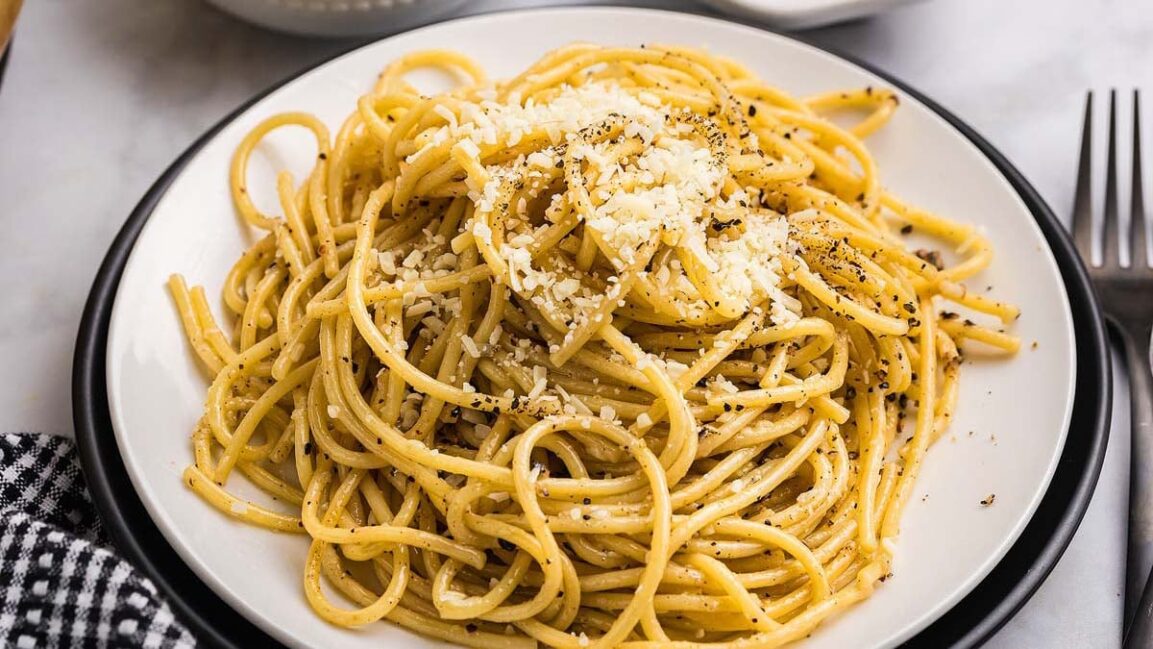
Mastering Cacio e Pepe is like unlocking a culinary superpower—once you understand the technique, you’ll have an elegant, restaurant-quality dish ready whenever you need to impress or simply treat yourself to something extraordinary. This Roman classic proves that the most memorable dishes often come from the simplest ingredients, handled with care and respect for tradition. The silky, cheese-laden sauce and aromatic pepper create a combination that’s both comforting and sophisticated, perfect for everything from intimate dinners to impressive entertaining.
Don’t forget to save this recipe and share it with fellow pasta lovers who appreciate the magic of authentic Italian cooking. Once you’ve mastered this foundational technique, you’ll find yourself returning to it again and again, each time discovering new nuances in this deceptively simple masterpiece.
Find the complete recipe card below ↓
Authentic Cacio e Pepe
Equipment
- Large pot
- Large skillet
- Tongs
- Pepper mill
- Fine grater
Ingredients
- 1 lb spaghetti or tonnarelli
- 2 cups Pecorino Romano cheese finely grated, plus extra for serving
- 2 teaspoons black peppercorns freshly cracked, coarsely ground
- 2 tablespoons unsalted butter optional, for extra richness
- 1 tablespoon kosher salt for pasta water
Instructions
- Bring a large pot of water to boil. Add salt generously—the water should taste like seawater. Add pasta and cook according to package directions until just shy of al dente (about 1 minute less than package instructions).
- While pasta cooks, toast the cracked peppercorns in a large skillet over medium heat for 1-2 minutes until fragrant. Remove from heat.
- Reserve 2 cups of starchy pasta water before draining. Drain pasta but do not rinse.
- Return the skillet with pepper to medium-low heat. Add 1 cup of hot pasta water to the pepper and bring to a gentle simmer.
- Add the drained pasta to the skillet and toss vigorously for 1 minute, allowing the pasta to absorb some water and release starch.
- Remove the pan from heat completely. Add butter (if using) and half the grated cheese. Toss rapidly with tongs, adding pasta water gradually until a creamy, glossy sauce forms that coats each strand.
- Add remaining cheese gradually, tossing constantly. If the sauce looks too thick, add more pasta water 1 tablespoon at a time. If too thin, add more cheese.
- Taste and adjust seasoning with additional pepper if desired. The sauce should be creamy and silky, not clumpy or broken.
- Serve immediately in warmed bowls, topped with extra grated Pecorino Romano and freshly cracked black pepper.