

The Crown Jewel of the Dinner Table
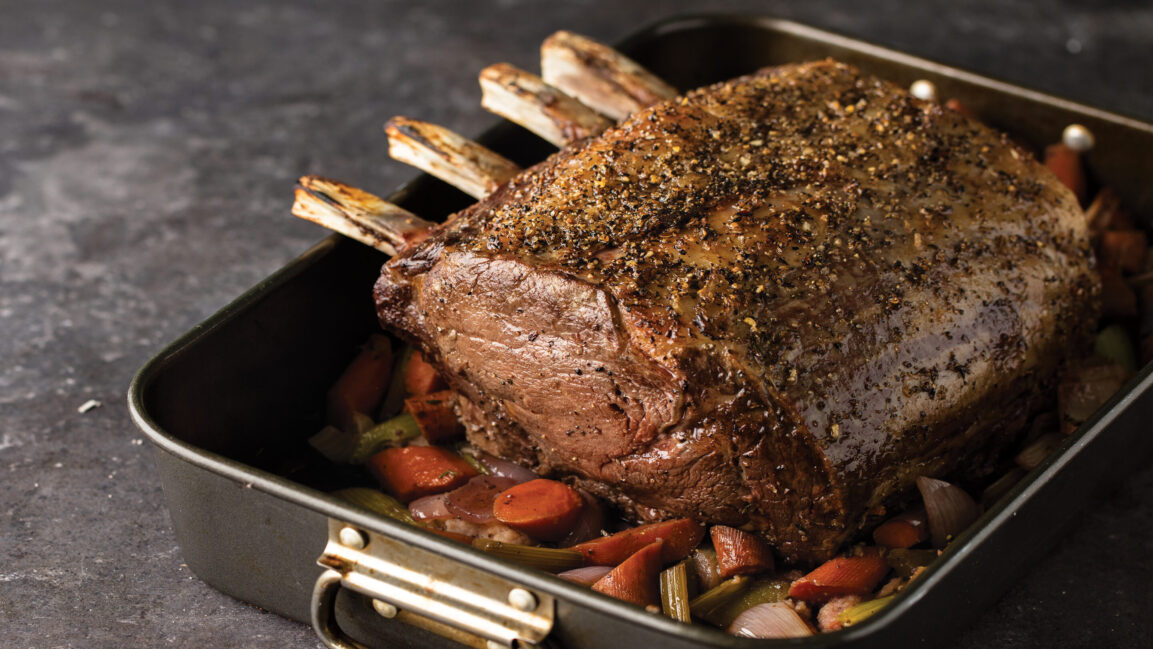
There is a moment — and every seasoned home cook knows it — when a dish comes out of the oven and the entire room goes silent. That is exactly what happens when you set a prime rib roast on the table. The deep mahogany crust, glistening with rendered fat and fragrant with garlic and rosemary, commands attention before you even pick up the carving knife. This is not a weeknight dinner. This is the centerpiece of a celebration, the dish people talk about for years, the reason your holiday table becomes legendary.
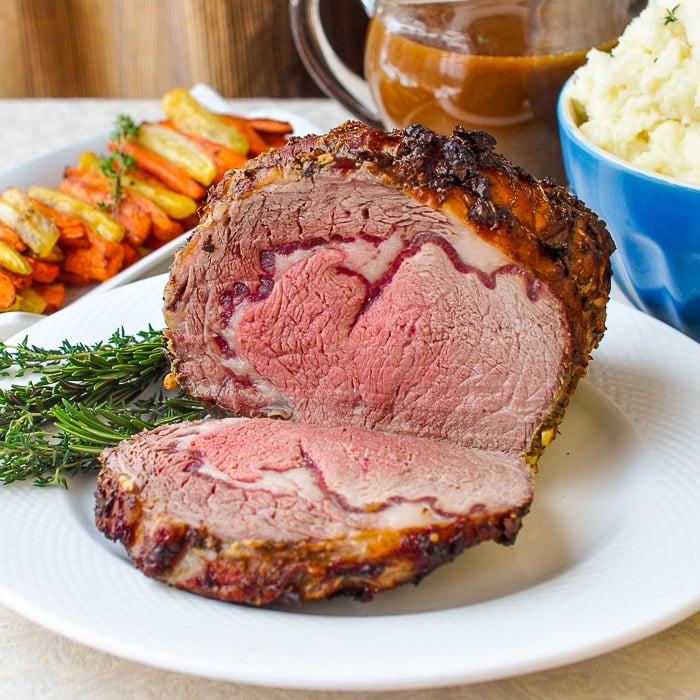
What makes this version extraordinary is the reverse-sear method — the game-changing technique that has quietly revolutionized how serious cooks approach large cuts of beef. Instead of blasting the roast with high heat from the start and hoping for the best, you coax it low and slow through a gentle oven until the interior reaches a precise, rosy-pink temperature from edge to edge. Then — and only then — you unleash screaming-hot heat for a final sear that builds a crust so crackling, so deeply caramelized, it shatters faintly under the knife. The result is a roast that is impossibly juicy in the middle, dramatically crusted on the outside, and utterly impossible to resist.
Whether you are cooking this for Christmas dinner, New Year’s Eve, or a Sunday that simply deserves something spectacular, this recipe delivers restaurant-quality results with foolproof confidence. Pair it with a knockout dessert like our Pecan Pie Bars for a holiday spread that will absolutely steal the show.
Why You’ll Love This Recipe
- Edge-to-edge perfect doneness. The reverse-sear method eliminates the dreaded gray band of overcooked meat you get with traditional roasting. Every single slice is blushing pink and tender.
- A crust that steals the show. The garlic herb paste — loaded with roasted garlic, fresh rosemary, thyme, Dijon, and black pepper — forms a bark-like crust during the final high-heat sear that is outrageously flavorful.
- Hands-off cooking. The low-temperature roasting phase is almost entirely passive. You set it and walk away, giving you time to prepare sides, set the table, or simply enjoy a glass of wine.
- Scales beautifully. Whether you are feeding six or twelve, this recipe adapts seamlessly — the technique and timing scale with the weight of the roast.
- Makes incredible leftovers. Cold prime rib carved thin for sandwiches, warmed in au jus, or chopped into a hash — this is one of those rare dishes that is arguably better the next day.
- Total showstopper presentation. A bone-in standing rib roast is one of the most dramatic things you can bring to a table. It earns applause before you even cut into it.
Key Ingredients That Make This Prime Rib Unforgettable
At the heart of this roast is, of course, a bone-in standing rib roast — ideally a 3-bone or 4-bone roast from the loin end (ribs 10–12), which is more tender and well-marbled than the chuck end. Ask your butcher to dry-age it if possible, and have them trim the fat cap to about three-quarters of an inch — enough to baste the meat as it renders without overwhelming it. Kosher salt is non-negotiable here: a generous dry brine applied 24 to 48 hours in advance draws moisture to the surface, dissolves back in, and deeply seasons the meat all the way through the center. Fresh rosemary and thyme bring an intensely herbal, piney aroma that is synonymous with holiday roasting — dried herbs simply cannot replicate the fragrance of fresh. The whole head of garlic used in the herb crust is not minced — it is roasted until sweet and caramelized, then mashed into a paste that clings to every surface of the roast and builds into something deeply savory during the final high-heat blast. Finally, Dijon mustard acts as both a binder for the herb paste and a flavor amplifier, its sharpness cutting through the richness of the beef and adding a subtle tang that keeps every bite from feeling heavy.
Pro Tips & Variations
The Dry Brine Is Non-Negotiable
Salt your roast 24 to 48 hours before cooking. Place it uncovered on a rack in the refrigerator. The salt draws out surface moisture, which then reabsorbs into the meat, seasoning it deeply and helping the exterior dry out — which is exactly what you want for the most spectacular crust. Do not skip this step. It is the single biggest difference between a good prime rib and a transcendent one.
Use a Reliable Instant-Read Thermometer
The reverse-sear method lives and dies by temperature, not time. Pull the roast from the low oven when the thickest part registers 120°F for rare, 125°F for medium-rare (the internal temp will rise slightly during the rest and the final sear). An instant-read thermometer like a Thermapen is the best kitchen investment you can make for any large-format roast. Serious Eats has a brilliant deep-dive on the reverse-sear method that is worth reading before your first attempt.
Rest the Roast Properly
After the low-and-slow phase, rest the roast at least 30 minutes (up to 1 hour is fine and actually preferable) before the final high-heat sear. This allows the juices to redistribute and the surface to dry out further, which means a more explosive sear in those final 15 minutes.
Make a Killer Au Jus from the Drippings
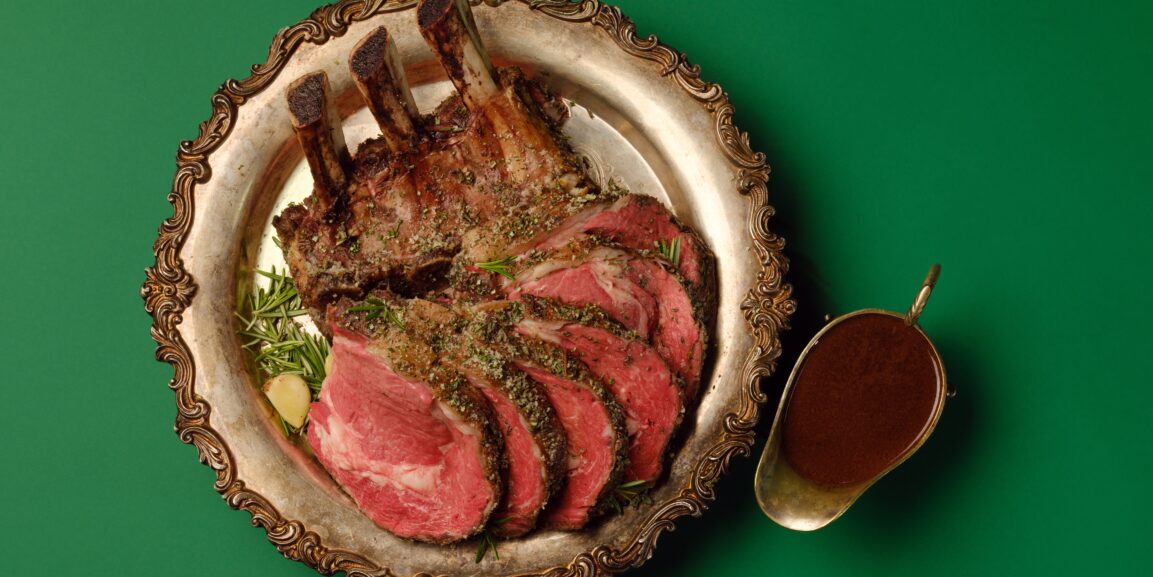
Do not discard the drippings in the roasting pan. Deglaze with dry red wine, scrape up all those caramelized bits, add beef stock, a sprig of thyme, and reduce until deeply flavored. A silky, savory au jus turns every slice into something that feels like fine dining. Serve it in a warm pitcher alongside the roast and watch it disappear instantly.
Variations Worth Trying
- Horseradish crust: Swap the Dijon for prepared horseradish in the herb paste for a punchy, spicy bark that is incredible with the richness of the beef.
- Smoked prime rib: If you have a smoker, run the roast through the low-temp phase at 225°F on the smoker with oak or hickory wood instead of the oven. The smoke ring and flavor are absolutely stunning.
- No bones: A boneless ribeye roast works perfectly with this method — reduce cooking time slightly and use a roasting rack to elevate the meat for even air circulation.
What to Serve with Prime Rib
Prime rib deserves sides that are equally indulgent and deeply comforting. Creamy horseradish sauce, Yorkshire pudding, garlic mashed potatoes, roasted asparagus, and a rich, glossy au jus are the classic companions. For a holiday feast, round out the meal with a warming bowl of our Clam Chowder as a starter — the creamy, briny richness makes a stunning first course before the roast arrives. And if you are feeding a crowd and need a show-stopping dessert that is just as impressive, our Apple Slab Pie is the perfect finish — buttery, warmly spiced, and built to feed a crowd.
Nutritional Highlights
Prime rib is an inherently rich, indulgent cut — and that richness is a feature, not a bug. A serving of this roast delivers an impressive 45–50 grams of high-quality protein, making it genuinely satisfying in small portions. The fat content comes primarily from the beautiful intramuscular marbling of a well-sourced rib roast, which is where the flavor lives. While this is certainly not an everyday dish, it is a meal worth savoring on special occasions. Food Network notes that rib roast is one of the most nutrient-dense cuts of beef, offering zinc, iron, and B vitamins in meaningful amounts. When you are eating this well, you are eating intentionally — and every bite is worth it.
The Bottom Line
This reverse-seared prime rib roast is the kind of recipe that earns you a permanent spot in the family rotation of holiday traditions. Once people taste a roast with this level of crust, this depth of flavor, and this edge-to-edge tenderness, no other method will ever feel acceptable again. It is the dish that makes guests fall quiet mid-conversation, look down at their plate, and say — with complete sincerity — “This might be the best thing I have ever eaten.” That is the power of doing it right. Take your time, trust the thermometer, and do not skip the dry brine. You have got this.
If you make this prime rib, we would absolutely love to see it. Share your photos in the comments below, pin it for your holiday menu, and send it to anyone who deserves a truly spectacular dinner this season.
Find the complete recipe card below ↓
Prime Rib Roast
Equipment
- Roasting pan with rack
- Instant-read thermometer or leave-in probe thermometer
- Aluminum foil
- Small mixing bowl
- Carving knife and fork
- Fine-mesh strainer
Ingredients
The Roast
- 1 bone-in standing rib roast (3-bone, about 7–8 lbs) preferably from the loin end, fat cap trimmed to ¾ inch
- 2 tbsp kosher salt for dry brine — applied 24–48 hours ahead
- 1 tbsp coarsely ground black pepper
Garlic Herb Crust Paste
- 1 whole head garlic roasted until caramelized, then mashed into a paste
- 2 tbsp fresh rosemary finely chopped
- 1 tbsp fresh thyme leaves finely chopped
- 2 tbsp Dijon mustard
- 3 tbsp extra-virgin olive oil
- 1 tsp kosher salt
- 1 tsp black pepper
Au Jus
- ½ cup dry red wine such as Cabernet Sauvignon
- 2 cups beef stock low-sodium
- 1 sprig fresh thyme
- drippings from the roasting pan
Instructions
Dry Brine (24–48 Hours Ahead)
- Pat the roast thoroughly dry with paper towels. Rub all surfaces — including between bones if accessible — with kosher salt and coarsely ground black pepper. Place the roast bone-side down on a wire rack set inside a rimmed baking sheet. Refrigerate uncovered for 24 to 48 hours. This dry brine deeply seasons the meat and dries the surface for a superior crust.
- About 1 hour before you plan to start cooking, remove the roast from the refrigerator and let it sit at room temperature. This helps it cook more evenly.
Make the Garlic Herb Paste
- Preheat your oven to 250°F. Slice the top off a whole head of garlic, drizzle with olive oil, wrap in foil, and roast at 400°F for 45 minutes until the cloves are soft and golden. Squeeze the caramelized cloves out into a small bowl and mash into a paste.
- Combine the roasted garlic paste with finely chopped fresh rosemary, thyme, Dijon mustard, olive oil, kosher salt, and black pepper. Mix until you have a thick, fragrant paste.
Low-Temperature Roast (Reverse Sear Phase 1)
- Preheat oven to 250°F. Place the roast bone-side down on a wire rack in a roasting pan. Apply the garlic herb paste evenly all over the top and sides of the roast, pressing gently to adhere.
- Insert a leave-in oven-safe probe thermometer into the thickest part of the roast, away from any bones. Roast in the 250°F oven until the internal temperature reaches 120°F for rare, 125°F for medium-rare, or 130°F for medium. This will take approximately 3 to 3½ hours for a 7–8 lb roast — but always go by temperature, not time.
- Remove the roast from the oven. Tent loosely with foil and rest for a minimum of 30 minutes and up to 1 hour. This redistributes juices and allows the surface to dry further for the best sear.
High-Heat Sear (Reverse Sear Phase 2)
- Crank the oven to its highest setting — 500°F to 550°F. If you have a convection roast setting, use it. Remove the foil from the rested roast.
- Return the roast to the oven and blast it at high heat for 10 to 15 minutes, until the exterior herb crust is deeply browned, caramelized, and crackling. Watch carefully to avoid burning.
- Remove the roast from the oven and let it rest uncovered for 10 minutes before carving.
Make the Au Jus
- While the roast rests, place the roasting pan over medium-high heat on the stovetop. Pour off all but 1 tablespoon of fat.
- Add the red wine and scrape up all the caramelized bits from the bottom of the pan. Cook for 2 minutes, then add the beef stock and thyme sprig. Simmer for 8–10 minutes until the liquid reduces slightly and is deeply flavored. Season with salt and pepper. Strain into a warm pitcher.
- Carve the roast by cutting along the bones to remove them in one piece, then slice the roast to your desired thickness. Serve immediately with warm au jus alongside.
Carve & Serve
- To carve, stand the roast upright and slice along the rib bones to detach them cleanly. Lay the roast flat and carve into slices of your desired thickness — about ½ inch to ¾ inch is ideal for a beautiful presentation. Arrange on a warmed platter, ladle some au jus over the top, and garnish with fresh rosemary sprigs. Serve remaining au jus in a pitcher on the side.