

The Lasagna That Ruins All Other Lasagnas
There are lasagnas, and then there is Lasagna Bolognese — and once you’ve had the real thing, you will never look at the ricotta-stuffed American version the same way again. This is the dish that has been simmering on Italian stovetops for centuries, born in the kitchens of Bologna, a city so serious about its food that they literally have a notarized recipe locked in a chamber of commerce. We’re talking deeply savory, slow-cooked beef and pork ragù layered with hand-whisked béchamel — silky, buttery, and rich enough to make your knees weak — all tucked between sheets of tender pasta and finished with a generous blanket of freshly grated Parmigiano-Reggiano. This is not a weeknight dash. This is a Sunday project, a labor of love, and it pays back every single minute you give it.
The secret that separates an extraordinary Lasagna Bolognese from a merely good one is patience. The ragù needs time — low heat, a slow bubble, and enough liquid to cook off gradually so the meat becomes impossibly tender and the sauce concentrates into something almost jammy and deeply complex. The béchamel needs to be whisked carefully, seasoned generously, and spread lavishly. No skimping here. This is Desire Recipes, and we are firmly in the camp that bold, rich, unapologetically indulgent food is worth every second of effort. If you love big, deeply flavored beef dishes the way we do, you’ll also want to check out our Beef Stroganoff — Classic Creamy Beef & Mushroom Recipe Over Noodles for another soul-satisfying plate.
This recipe serves a crowd, fills your kitchen with the most intoxicating aroma imaginable, and produces a lasagna that slices cleanly, holds its layers beautifully, and delivers a forkful of pure restaurant-quality bliss every single time. Make it for a dinner party, make it for your family on a cold Sunday, make it for yourself because you deserve something extraordinary. Let’s build something special.
Why You’ll Love This Recipe
- Restaurant-quality at home: This is the kind of lasagna you’d pay $30 for at a proper Italian trattoria — and you can make it in your own kitchen.
- Deeply layered flavor: The slow-cooked Bolognese ragù builds complexity that no shortcut sauce can replicate. Every bite is rich, savory, and satisfying.
- The béchamel is a game-changer: Forget ricotta — this creamy, buttery white sauce is what makes authentic Lasagna Bolognese so luxuriously different.
- Make-ahead friendly: The ragù actually tastes better the next day, making this perfect for entertaining without day-of stress.
- Feeds a crowd: One generous pan serves 8 to 10 people, making it the ultimate dinner party showstopper.
- Freezer-friendly: It freezes beautifully, so you can always have a slice of something magnificent ready to go.
Key Ingredients
At the heart of this dish is the Bolognese ragù, which relies on a combination of ground beef and ground pork. The beef brings boldness and body while the pork adds fat, sweetness, and that characteristic silkiness that makes a true Bolognese feel so lush on the palate. Using both is non-negotiable — don’t swap in all beef and expect the same result. The soffritto — a slow-cooked base of finely diced onion, carrot, and celery — is what gives the ragù its aromatic foundation, so take your time cooking it down until it’s truly soft and fragrant. A splash of whole milk or heavy cream added to the meat early in cooking is a classic Bolognese move that tenderizes the meat and adds a subtle richness you won’t be able to put your finger on, but you will absolutely taste.
For the béchamel sauce, quality butter and whole milk are essential — this sauce should be thick enough to hold its layers but poured gently enough to seep into every fold of pasta. Season it assertively with salt, white pepper, and a pinch of freshly grated nutmeg, which is the traditional Italian touch that elevates it from plain white sauce to something genuinely aromatic. Finally, Parmigiano-Reggiano — real, aged, nutty, crystalline Parmigiano — is the only cheese worth using here. It goes into the ragù, into the béchamel, between every layer, and lavishly on top where it will brown into a golden, slightly crispy crown that is honestly the best part of the whole pan. Serious Eats has an excellent deep dive into Bolognese technique if you want to geek out on the science behind why slow cooking transforms this sauce so dramatically.
Pro Tips & Variations
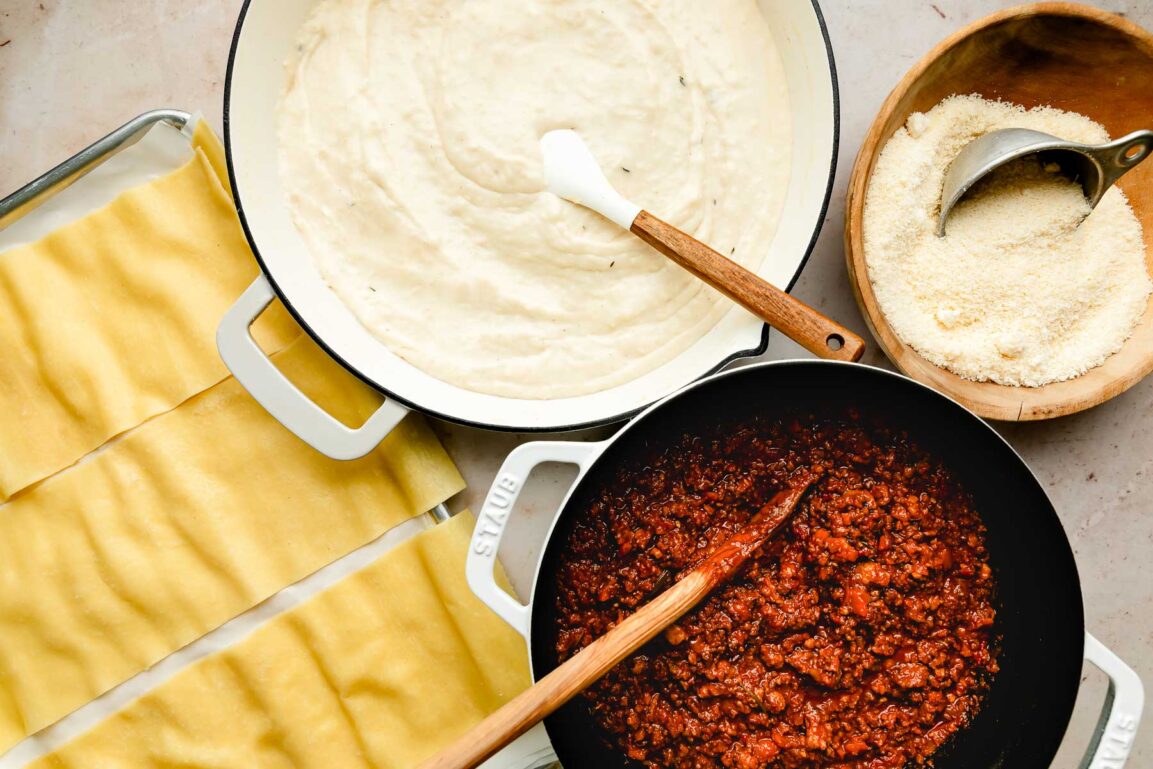
- Use fresh pasta sheets if you can. Dried lasagna noodles work beautifully in a pinch, but fresh pasta sheets (store-bought or homemade) create a silkier, more delicate texture that melts into the layers in the most extraordinary way.
- Don’t rush the ragù. Two hours of low, slow simmering is the minimum. Three is even better. The sauce should be thick, glossy, and deeply reduced before you build your lasagna.
- Cook your pasta al dente. If using dried noodles, undercook them slightly — they’ll continue cooking in the oven and absorb moisture from the sauces. Overcooked noodles lead to a mushy layer situation.
- Make the ragù a day ahead. Like a great Beef Chili, this Bolognese ragù tastes even more complex and deeply flavored the next day after the flavors have had time to marry overnight in the fridge. It’s practically a cheat code for a better lasagna.
- Rest before slicing. Let the lasagna sit for at least 15-20 minutes after pulling it from the oven. This allows the layers to set so you get clean, beautiful slices instead of a molten slide.
- Variation — add chicken livers: For an ultra-traditional Bolognese, finely mince a few chicken livers and add them to the meat mixture. They dissolve into the sauce and add an incredible depth of flavor without tasting livery at all.
- Variation — white wine vs. red wine: Traditional Bolognese actually uses white wine, which keeps the sauce lighter and more delicate. Red wine (Chianti or Sangiovese) gives a deeper, more robust flavor. Both are delicious — choose your adventure.
- Broil at the end: For an extra-golden, slightly crispy Parmigiano crust on top, pop the lasagna under the broiler for 2-3 minutes after baking. Watch it closely — it goes from perfect to burnt fast.
Nutritional Highlights
Lasagna Bolognese is a genuinely hearty, protein-packed meal — each serving delivers around 520 calories with approximately 34 grams of protein, primarily from the slow-cooked beef and pork ragù. The béchamel contributes healthy fats from real butter and whole milk, along with a solid dose of calcium. Parmigiano-Reggiano is naturally lower in lactose than most cheeses and is rich in protein and calcium as well. While this is absolutely a rich, indulgent dish, it’s made from whole, real ingredients — no preservatives, no mystery fillers — and a single generous serving is genuinely satisfying, meaning you won’t need seconds to feel happy. If you’re a fan of comforting, deeply flavored soups and stews to round out your weekly menu, our Loaded Baked Potato Soup — Creamy, Cheesy & Better Than a Restaurant pairs beautifully with a lighter weeknight when you’re saving your appetite for the next Lasagna Bolognese session.
For a well-rounded meal, serve alongside a crisp green salad dressed with lemon and extra virgin olive oil, and a glass of Sangiovese or Chianti Classico. According to Bon Appétit’s guide to authentic Bolognese, the key to a truly great ragù is choosing quality meat and letting time do the work — advice we wholeheartedly agree with. Whether you’re cooking for a special occasion or simply refusing to settle for anything less than extraordinary on a Sunday afternoon, this Lasagna Bolognese is the definition of food worth making.
A Dish Worth Every Minute
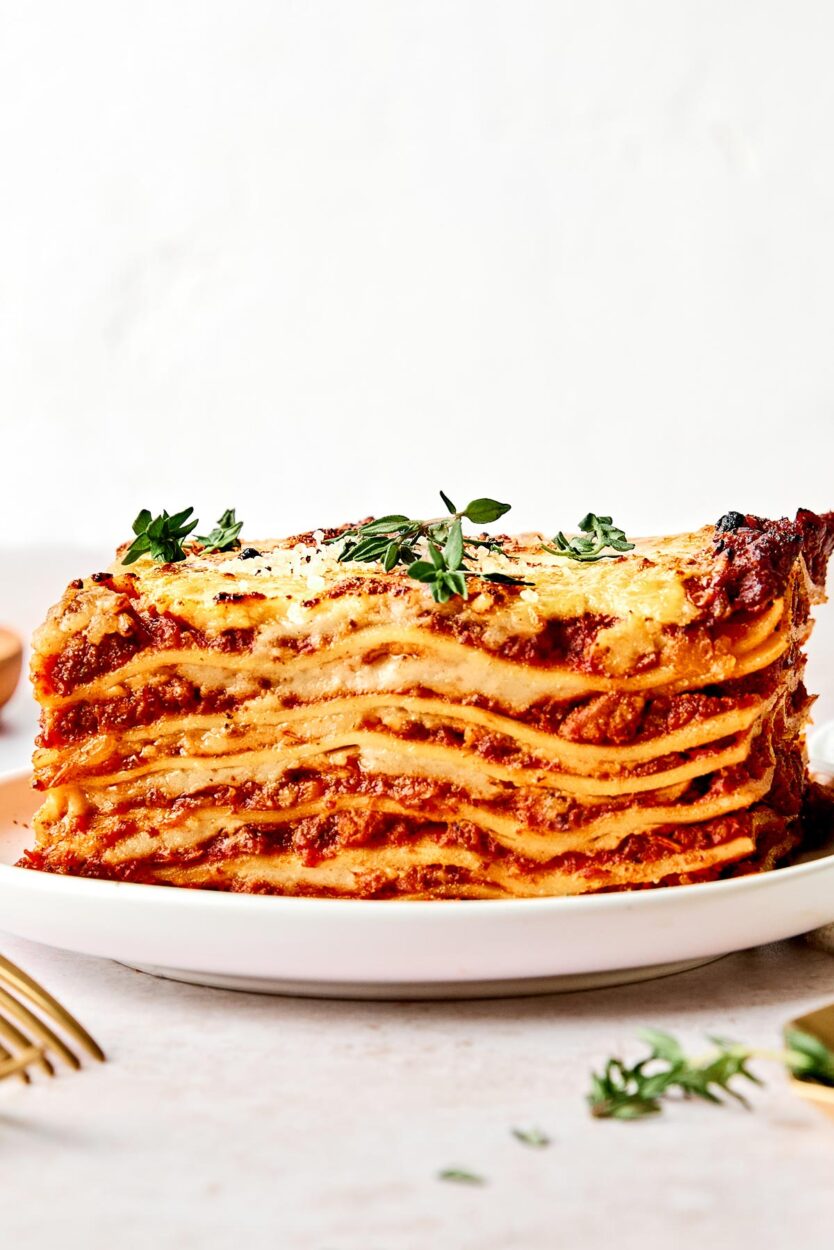
Lasagna Bolognese isn’t just dinner — it’s an event. It’s the dish that draws people to the table before you’ve even called them, pulled in by the deep, meaty, herby aroma drifting from the kitchen. It’s the kind of food that makes people stop mid-bite and say something. It demands time, quality ingredients, and a willingness to do things properly — and it rewards you with the most spectacular pan of comfort food you’ve ever put on a table.
If you make this recipe, we’d absolutely love to hear about it. Leave a comment below, share your photos, tag us on social media, and save this recipe to your Pinterest boards so you can come back to it again and again. This is the kind of dish that becomes a tradition — and traditions are always worth sharing.
Find the complete recipe card below ↓
Lasagna Bolognese
Equipment
- Large Dutch oven or heavy-bottomed pot
- Medium saucepan
- 9x13 inch baking dish
- Whisk
- Large pot for boiling pasta
- Wooden spoon
- Ladle
- Aluminum foil
Ingredients
Bolognese Ragù
- 2 tbsp olive oil
- 2 tbsp unsalted butter
- 1 medium yellow onion finely diced
- 2 medium carrots finely diced
- 2 stalks celery finely diced
- 4 cloves garlic minced
- 1 lb ground beef 80/20 for best flavor
- 1 lb ground pork
- 1 cup dry white wine or red wine for deeper flavor
- 1/2 cup whole milk
- 1 can (28 oz) crushed San Marzano tomatoes
- 2 tbsp tomato paste
- 1 tsp kosher salt plus more to taste
- 1/2 tsp black pepper
- 1/4 tsp freshly grated nutmeg
- 2 bay leaves
Béchamel Sauce
- 6 tbsp unsalted butter
- 1/2 cup all-purpose flour
- 4 cups whole milk warmed
- 1/2 tsp kosher salt
- 1/4 tsp white pepper
- 1/4 tsp freshly grated nutmeg
- 1/2 cup Parmigiano-Reggiano freshly grated, stirred into sauce
Assembly
- 12-15 lasagna noodles fresh pasta sheets preferred, or dried cooked al dente
- 1 1/2 cups Parmigiano-Reggiano freshly grated, for layering and topping
- 2 tbsp unsalted butter small pieces for dotting the top
Instructions
Make the Bolognese Ragù
- Heat olive oil and butter in a large Dutch oven or heavy-bottomed pot over medium heat. Add the onion, carrot, and celery and cook, stirring occasionally, for 10-12 minutes until softened and lightly golden. Add the garlic and cook for another 1 minute until fragrant.
- Add the ground beef and ground pork to the pot. Break up the meat with a wooden spoon and cook over medium-high heat, stirring frequently, until fully browned and any liquid has evaporated, about 10 minutes.
- Pour in the white wine and stir, scraping up any browned bits from the bottom of the pot. Let the wine cook off completely, about 5 minutes.
- Pour in the whole milk and stir to combine. Let the milk absorb into the meat over medium heat, about 5 minutes.
- Stir in the crushed tomatoes, tomato paste, salt, pepper, nutmeg, and bay leaves. Bring to a gentle boil, then reduce the heat to the lowest setting. Partially cover and simmer, stirring occasionally, for at least 1.5 to 2 hours until the sauce is thick, glossy, and deeply reduced. Remove bay leaves and adjust seasoning.
- For best results, let the ragù cool and refrigerate overnight — the flavor deepens significantly.
Make the Béchamel Sauce
- In a medium saucepan, melt the butter over medium heat. Add the flour all at once and whisk constantly for 1-2 minutes to cook out the raw flour taste (it should smell faintly nutty but not brown).
- Slowly pour in the warmed milk a little at a time, whisking constantly to prevent lumps. Continue adding milk and whisking until all the milk is incorporated and the sauce is smooth.
- Continue cooking over medium heat, whisking frequently, until the béchamel thickens enough to coat the back of a spoon, about 8-10 minutes. Season with salt, white pepper, and nutmeg. Remove from heat and stir in the Parmigiano-Reggiano. Cover with plastic wrap pressed directly against the surface to prevent a skin from forming.
Cook the Pasta
- If using dried lasagna noodles, bring a large pot of heavily salted water to a boil. Cook the noodles 2 minutes less than the package directions (al dente). Drain and lay flat on a lightly oiled baking sheet to prevent sticking. If using fresh pasta sheets, no pre-cooking is needed.
Assemble the Lasagna
- Preheat your oven to 375°F (190°C). Lightly butter the bottom and sides of a 9x13 inch baking dish.
- Spread a thin layer of béchamel across the bottom of the dish. Lay down a layer of pasta sheets, slightly overlapping to cover the bottom completely.
- Spread an even layer of Bolognese ragù over the pasta, followed by a generous layer of béchamel. Sprinkle with a handful of Parmigiano-Reggiano.
- Repeat the layers — pasta, ragù, béchamel, Parmigiano — until you have 4 to 5 layers, ending with a final layer of pasta topped with the remaining béchamel. Sprinkle generously with the remaining Parmigiano-Reggiano and dot the top with small pieces of butter.
- Cover tightly with aluminum foil (tent it slightly so it doesn't stick to the cheese) and bake for 35 minutes. Remove the foil and bake for an additional 20-25 minutes until the top is deeply golden and the edges are bubbling vigorously.
- For an extra-crispy Parmigiano crust, broil on high for 2-3 minutes at the very end — watch carefully. Remove from the oven and let rest for at least 15-20 minutes before slicing and serving.
Serve
- Use a sharp spatula to cut and lift clean slices. Serve with a simple green salad and a glass of Sangiovese or Chianti. Finish with an extra grating of Parmigiano-Reggiano at the table.