

The Little Cheese Bread That Stopped Me in My Tracks
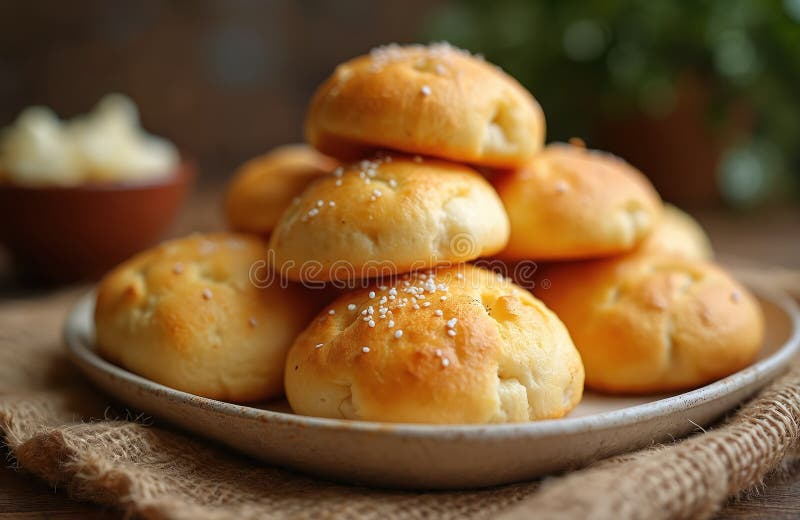
There are foods that politely introduce themselves, and then there are foods that grab you by the collar. Brazilian Pão de Queijo is firmly in the second category. The first time I pulled a tray of these golden, puffed little spheres from the oven, the smell alone — warm, toasty, deeply cheesy — made it impossible to wait the requisite two minutes before burning my fingers on one. That first bite was a revelation: a thin, crisp shell giving way to a center so stretchy, so molten, so impossibly chewy that I genuinely stopped mid-chew just to appreciate what was happening in my mouth. This is not a polite snack. This is an experience.
Pão de Queijo (pronounced roughly as “pow deh KAY-zho”) translates simply to “cheese bread,” but that name does it no justice. Originating from the state of Minas Gerais in Brazil, these little buns have been a staple of Brazilian breakfast culture and afternoon snacking for centuries. Made from tapioca starch rather than wheat flour, they are naturally gluten-free, but that is almost beside the point — the tapioca is what creates that signature chew that no ordinary cheese biscuit or roll can replicate. Every element of this recipe exists to serve that singular, addictive texture: stretchy, bouncy, and utterly unlike anything else in the bread world.
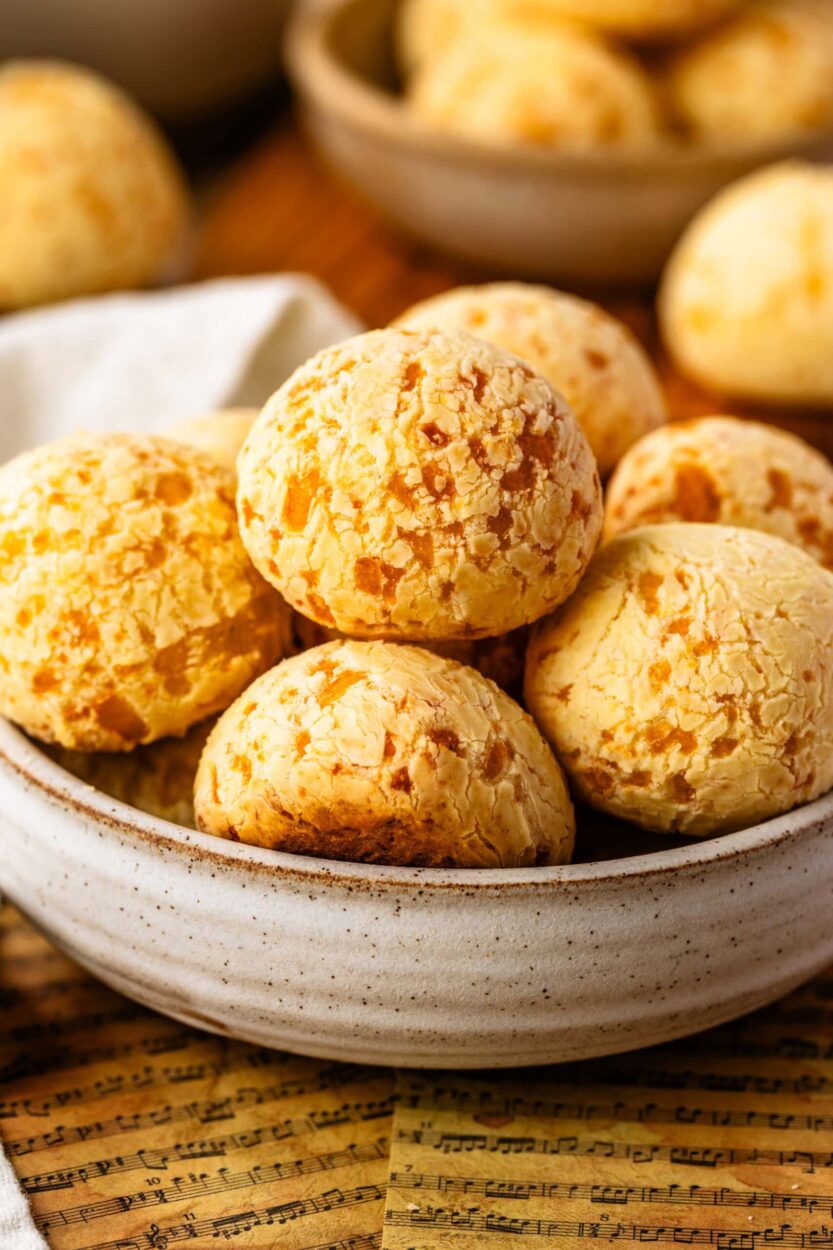
What makes Brazilian Pão de Queijo so craveable is that it operates on multiple sensory levels simultaneously. The outside crisps and browns into something almost cracker-like. The inside stays soft and gooey, with pockets of melted cheese creating little flavor bombs throughout. The whole thing is rich with dairy — both the cheese and the milk and eggs that bind it all together — and there is a subtle tang that deepens with every bite. If you love bold, indulgent, comfort-forward food (and if you are here, you do), this recipe belongs in your permanent rotation. It is the kind of thing you make once and then find yourself making every single weekend.
Why You’ll Love This Recipe
- Insanely addictive texture: The tapioca starch creates a chew that is completely unique — crispy outside, stretchy and gooey inside. Once you try it, you will understand why Brazilians eat these every single morning.
- Naturally gluten-free: No wheat flour means people with gluten sensitivities can enjoy these without a single compromise on flavor or texture.
- Shockingly simple: The batter comes together in a blender in under five minutes. You are mostly just waiting for the oven to do its work.
- Restaurant-quality results at home: These taste like something from a high-end Brazilian steakhouse side spread — but you made them in your kitchen in 45 minutes.
- Endlessly versatile: Serve them at breakfast, as a party appetizer, alongside soups and stews, or as a snack with a cold beer. They fit everywhere.
- Crowd-stopping impressive: Pull these out of the oven at a dinner party and watch the conversation stop. Golden, puffed, and gorgeous, they look like you spent hours.
Key Ingredients That Make This Recipe Irresistible
The backbone of Brazilian Pão de Queijo is tapioca starch (also sold as tapioca flour), and it is non-negotiable. This is what gives the rolls their legendary chew and their gluten-free status. Tapioca starch behaves completely differently from wheat flour — it gelatinizes with heat and liquid to create a dough that is elastic and stretchy in a way that cannot be replicated with any other starch. Do not attempt to substitute all-purpose flour here; you will end up with a completely different product.
The cheese is where the deep, savory soul of the recipe lives. Traditional Brazilian Pão de Queijo uses queijo Minas, a mild, slightly salty fresh cheese native to Brazil’s Minas Gerais region, but since that can be hard to source outside Brazil, a combination of Parmesan and low-moisture mozzarella is a widely accepted and genuinely delicious substitute. The Parmesan brings sharpness, saltiness, and that nutty umami depth, while the mozzarella provides the stretchy, melty interior that makes each bite so rewarding. Together, they create a flavor profile that is bold without being overwhelming. As Serious Eats notes in their deep dive on cheese bread, the fat content and moisture level of the cheese dramatically affect the final texture, which is why using a mix works so well.
Whole milk and neutral oil (or melted butter, if you want to go richer) are heated together before being added to the tapioca starch, and this scalding step is crucial — it partially cooks the starch and creates the chewy, sticky base dough. Eggs are added to bring structure and richness, binding everything together and helping the rolls puff dramatically in the oven. The result is a dough that looks almost alarming — glossy, wet, and sticky — but bakes into something spectacular. A pinch of salt rounds it all out, letting the cheese flavor shine without competition.
Pro Tips & Variations
Use a blender for the easiest dough. While you can mix this by hand, a blender creates a perfectly smooth, lump-free batter in about 60 seconds. Add the wet ingredients first, then the starch and cheese, and blend until silky. This method also makes pouring into a muffin tin or dropping onto a baking sheet effortless.
Scald the milk and oil properly. You want the liquid to be very hot — nearly simmering — when it hits the tapioca starch. This heat activates the starch and is the key to getting that signature chewy, sticky dough. If the liquid is lukewarm, the texture suffers.
Do not overbake. The rolls should be deeply golden on the outside but still have a slight jiggle when you shake the pan. They firm up as they cool, and if you overbake them, you lose that gooey, stretchy center that makes them magical. Start checking at the 20-minute mark.
Make a double batch and freeze them. Pão de Queijo freezes beautifully raw. Portion the batter into a greased mini muffin tin, freeze until solid, then pop them out and store in a zip-lock bag. Bake directly from frozen — just add 5 extra minutes to the bake time. This is a game-changer for weekday mornings.
Experiment with cheese add-ins. Once you have mastered the classic, try mixing in a tablespoon of cream cheese for extra richness, a small handful of crumbled cotija for saltiness, or even a bit of smoked gouda for a deeper, more complex flavor. Bon Appétit’s variation guide is an excellent resource for exploring different cheese combinations.
Add herbs or spice. A teaspoon of dried rosemary, a pinch of cayenne, or some finely minced fresh chives folded into the batter takes these from classic to extraordinary without disrupting the core recipe.
Size matters. Standard-size muffin tins give you larger, more bread-like rolls. Mini muffin tins (the two-tablespoon size) give you perfect bite-sized poppers ideal for party appetizers. Both are equally delicious; just adjust the bake time accordingly — mini ones cook in about 15-18 minutes.
If you love exploring global bread and grain traditions, you might also enjoy our Spanish Paella — a bold, saffron-kissed one-pan masterpiece that channels the same spirit of bold, proud, regional cooking. And if you are building out a globally inspired dinner spread, our Cuban Ropa Vieja makes an absolutely stunning pairing with these rolls — the braised, saucy beef and the chewy, cheesy bread are a combination that belongs together.
Nutritional Highlights
Each serving of Brazilian Pão de Queijo (approximately 3-4 rolls) delivers a satisfying combination of protein from the eggs and cheese, along with healthy fats that keep you full and fueled. Because tapioca starch is the base rather than wheat flour, these rolls are naturally free of gluten and significantly lower in complex carbohydrates than traditional wheat-based bread. The cheese contributes a meaningful amount of calcium and phosphorus, while the eggs provide essential amino acids and fat-soluble vitamins. That said, these are unapologetically indulgent — this is not a diet food and it does not pretend to be. The calorie count per serving sits comfortably in the range of a satisfying snack or side, and every single one of those calories is absolutely worth it. For those watching sodium, using a lower-sodium Parmesan or reducing the added salt slightly can bring the numbers down without meaningfully affecting flavor.
Frequently Asked Questions
Can I make Brazilian Pão de Queijo ahead of time?
Absolutely, and in fact this is one of the most make-ahead-friendly recipes you will find. The raw batter can be refrigerated in an airtight container for up to 48 hours before baking — just give it a stir before portioning, since it may thicken slightly in the fridge. Even better, you can portion the batter into a greased muffin tin, freeze the individual portions solid, then transfer them to a freezer bag and store for up to 2 months. Bake straight from frozen at the same temperature, adding 5-6 extra minutes to the bake time. Already-baked rolls reheat beautifully in a 350°F oven for 5-8 minutes, though they are genuinely best fresh from the oven when the contrast between the crispy exterior and the stretchy interior is at its peak.
What is the best substitute for tapioca starch in Pão de Queijo?
Here is the honest answer: there is no perfect substitute for tapioca starch in this recipe. It is the single ingredient responsible for that trademark chewy, stretchy, bouncy texture. Arrowroot powder can be used in a pinch and will produce a similar (though slightly less elastic) result — use it in a 1:1 ratio. Some recipes online suggest using cassava flour, which is the whole dried and ground cassava root rather than just the extracted starch, and it can work but produces a denser, less chewy roll. Potato starch is another option in an emergency, but again, the texture will be noticeably different. If you are committed to making authentic Brazilian Pão de Queijo, tapioca starch is worth seeking out — most well-stocked grocery stores carry it in the gluten-free or baking aisle, and it is widely available online.
Why did my Pão de Queijo not puff up?
A few culprits are worth investigating if your rolls came out flat or dense. First, check that your oven temperature is accurate — these rolls need real heat to puff properly, and an oven running 25 degrees cool will give you flat, sad results. An inexpensive oven thermometer is a worthwhile investment. Second, make sure your batter was smooth and well-combined with no lumps of unstirred starch — lumps create weak spots that prevent even puffing. Third, and most commonly, the milk and oil mixture was not hot enough when added to the starch. The liquid needs to be very hot to partially cook the starch and create the elastic dough that puffs in the oven. Finally, make sure you are using tapioca starch specifically, not a different starch or flour, as the gelatinization properties are unique to tapioca.
Make a Batch Tonight — You Will Not Regret It
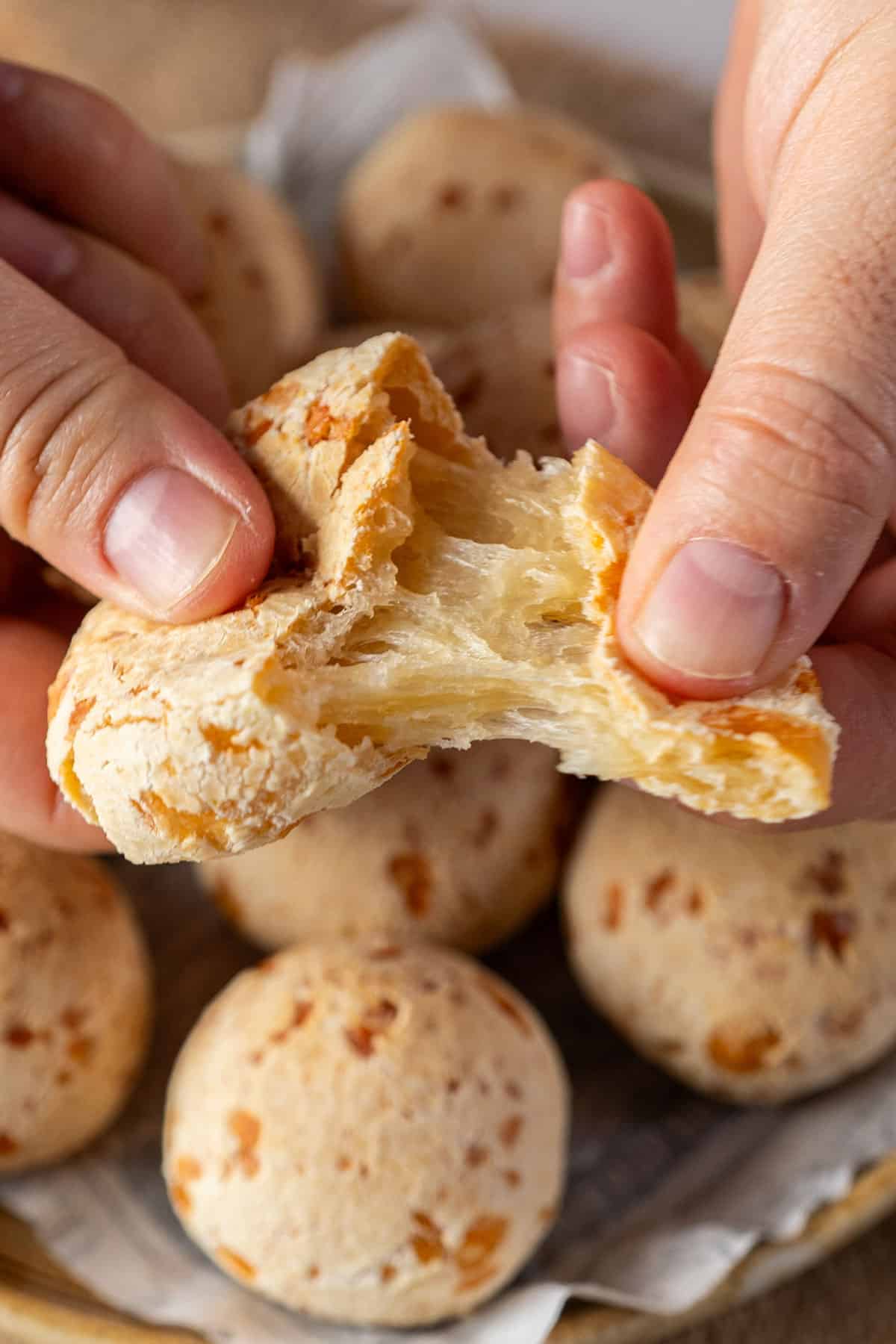
Brazilian Pão de Queijo is one of those recipes that earns a permanent spot in your repertoire not because it is complicated or impressive in a technical sense, but because it delivers something deeply, genuinely pleasurable every single time. The smell when they come out of the oven. The sound of that thin crust crackling when you pull one apart. The stretch of warm, melted cheese inside. These are the sensory moments that make cooking worthwhile, and this recipe delivers all of them with minimal effort and maximum reward.
Whether you are serving them at a weekend brunch, bringing them to a dinner party, pairing them alongside a bold, saucy dish like our creamy Palak Paneer, or simply eating six of them standing over the kitchen counter at 8am on a Tuesday (no judgment, we have all been there), these little cheese bombs will not let you down. Make them once and watch them disappear. Then make them again the following weekend.
If this recipe moved you — and we suspect it will — save it, share it, and tag us when you make it. Drop a comment below telling us what cheese combination you used, because we genuinely love hearing how you make this your own. And do not forget to pin this one for later, because this is exactly the kind of recipe you will want to find quickly on a lazy Saturday morning when the cheese craving hits hard and without warning.
Find the complete recipe card below ↓
Brazilian Pão de Queijo
Equipment
- Mini muffin tin or baking sheets
- Blender or large mixing bowl
- Small saucepan
- Measuring cups and spoons
- Cookie scoop or spoon
Ingredients
- 2 cups tapioca starch also sold as tapioca flour
- 1/2 cup whole milk
- 1/4 cup neutral oil or melted butter for richer flavor
- 1 tsp fine sea salt
- 2 large eggs room temperature
- 3/4 cup Parmesan cheese finely grated
- 3/4 cup low-moisture mozzarella shredded
Instructions
- Preheat your oven to 400°F (200°C). Grease a 24-cup mini muffin tin generously with oil or cooking spray, or line two baking sheets with parchment paper.
- In a small saucepan, combine the milk, oil, and salt. Heat over medium heat, stirring occasionally, until the mixture just begins to simmer and steam rises — about 3-4 minutes. Do not let it boil.
- Place the tapioca starch in a large bowl or the jar of a blender. Pour the hot milk mixture over the starch all at once and stir vigorously (or blend) until combined. The mixture will look clumpy and shaggy at first — this is normal.
- Allow the dough to cool for 5 minutes until it is warm but not scalding hot. Add the eggs one at a time, beating well after each addition (or blending between additions) until the dough is smooth and glossy.
- Add the grated Parmesan and shredded mozzarella to the dough. Stir or blend until fully incorporated. The dough will be sticky, wet, and pourable — this is correct.
- Using a spoon, small cookie scoop, or squeeze bottle, fill each mini muffin cup about three-quarters full. Alternatively, drop tablespoon-sized mounds onto the prepared baking sheets, spacing them 2 inches apart.
- Bake for 20-25 minutes, until the rolls are deeply golden and puffed. They should feel set on the outside but still have a very slight jiggle in the center. Do not overbake — you want the inside to stay stretchy and gooey.
- Remove from the oven and allow to cool for 3-5 minutes before serving. Serve warm for the best texture and maximum cheese pull.