

The Creamiest Pasta You’ll Ever Make Without Draining a Single Drop
There’s a moment in every home cook’s life when they realize the kitchen shortcuts they’ve been avoiding are actually the secret to better food. This is one of those moments. One pot cheesy orzo with asparagus isn’t just a convenient weeknight workaround — it’s a genuinely superior way to cook pasta. By letting the orzo absorb its cooking liquid directly in the pot, the starches stay right where they belong: thickening the sauce, binding to the butter and cheese, and creating a silky, luscious coating that no drained, rinsed, colander-shocked pasta can ever replicate. This is the dish that makes you wonder why you ever cooked pasta any other way.
What makes this recipe truly irresistible is the combination of textures and flavors that come together in one pot without any fuss. The orzo turns creamy and almost risotto-like — tender and plush, suspended in a golden, garlicky broth that gets thickened by starchy pasta water and finished with a generous handful of freshly grated Parmesan. Then comes the asparagus: bright, slightly crisp, and grassy in the best possible way, cutting through the richness like a breath of spring air. It’s comfort food with elegance, and it comes together in under 35 minutes from the time you set a pot on the stove.
This recipe lives in that rare sweet spot between weeknight practicality and dinner-party worthiness. You don’t need a second pot, a colander, or even a lot of culinary skill — just one wide pan, some quality ingredients, and the willingness to stir occasionally while something incredible happens. Whether you’re feeding the family on a Tuesday or impressing guests on a Friday, this one pot cheesy orzo is the kind of dish people ask about. They’ll want to know what restaurant taught you this. Tell them it was your kitchen.
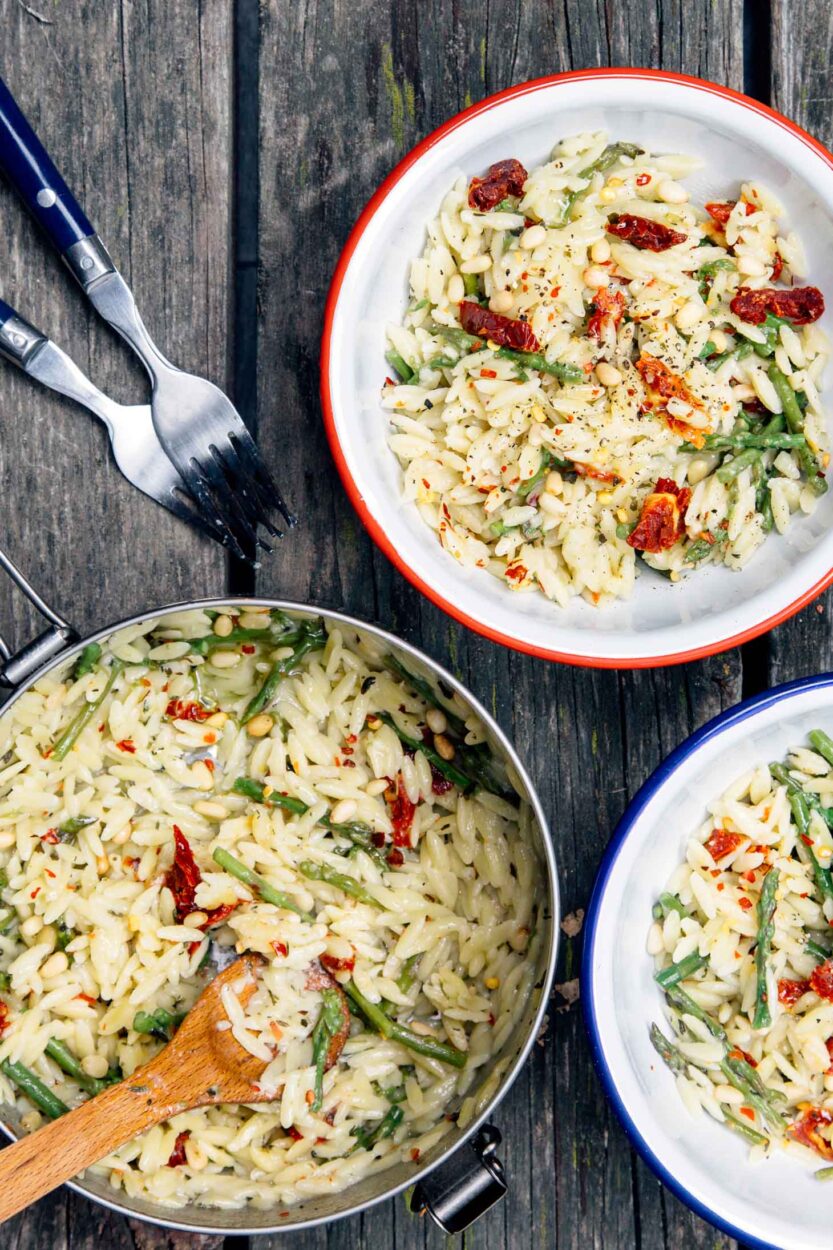
Why You’ll Love This Recipe
- No colander needed — ever. The pasta cooks directly in measured broth, absorbing every drop of flavor. No draining, no rinsing, no lost starch.
- One pot, one cleanup. Everything happens in a single wide pot or deep skillet. Weeknights just got a whole lot easier.
- Risotto vibes without the risotto effort. You get that creamy, restaurant-style texture without standing over the stove stirring for 40 minutes. The orzo does the work.
- Bold, cheesy flavor in every bite. Real Parmesan, garlic, butter, and a hit of lemon zest make this sing. This is not a bland, beige pasta situation.
- Flexible and seasonal. Asparagus is the star here, but this base works beautifully with whatever vegetables are peaking in your fridge or at the market.
- Ready in about 30 minutes. From cold pan to plated dish, you’re looking at a fast, satisfying meal that tastes like you spent twice the time.
Key Ingredients That Make This Dish Irresistible
The magic of this dish starts with orzo — that small, rice-shaped pasta that absorbs liquid like a dream and releases starch as it cooks, naturally thickening whatever it’s swimming in. Unlike spaghetti or penne, orzo behaves almost like a grain, making it the perfect candidate for this no-drain, one-pot method. The liquid it cooks in matters enormously, which is why good quality chicken or vegetable broth is non-negotiable here — it becomes the sauce, so the more flavorful it is going in, the more intensely savory the finished dish will be. If you have homemade broth, this is the moment to use it.
The cheese component is where this recipe goes from good to genuinely craveable. Freshly grated Parmesan Reggiano melts into the hot orzo with a nutty, salty depth that pre-shredded cheese simply cannot match — the anti-caking agents in bagged cheese actively fight against a smooth, creamy sauce. For an extra layer of richness, a tablespoon or two of cream cheese stirred in at the end creates a velvety consistency that makes the whole pot feel almost impossibly luxurious. Then there’s the asparagus — sliced into bite-sized pieces and added toward the end of cooking so it stays crisp-tender and vibrantly green, bringing freshness and a slight bitterness that keeps every bite from feeling too heavy. Finally, lemon zest and fresh garlic do the quiet heavy lifting in the background, brightening the richness of the cheese and adding an aromatic base that makes the whole kitchen smell incredible.
Pro Tips & Variations
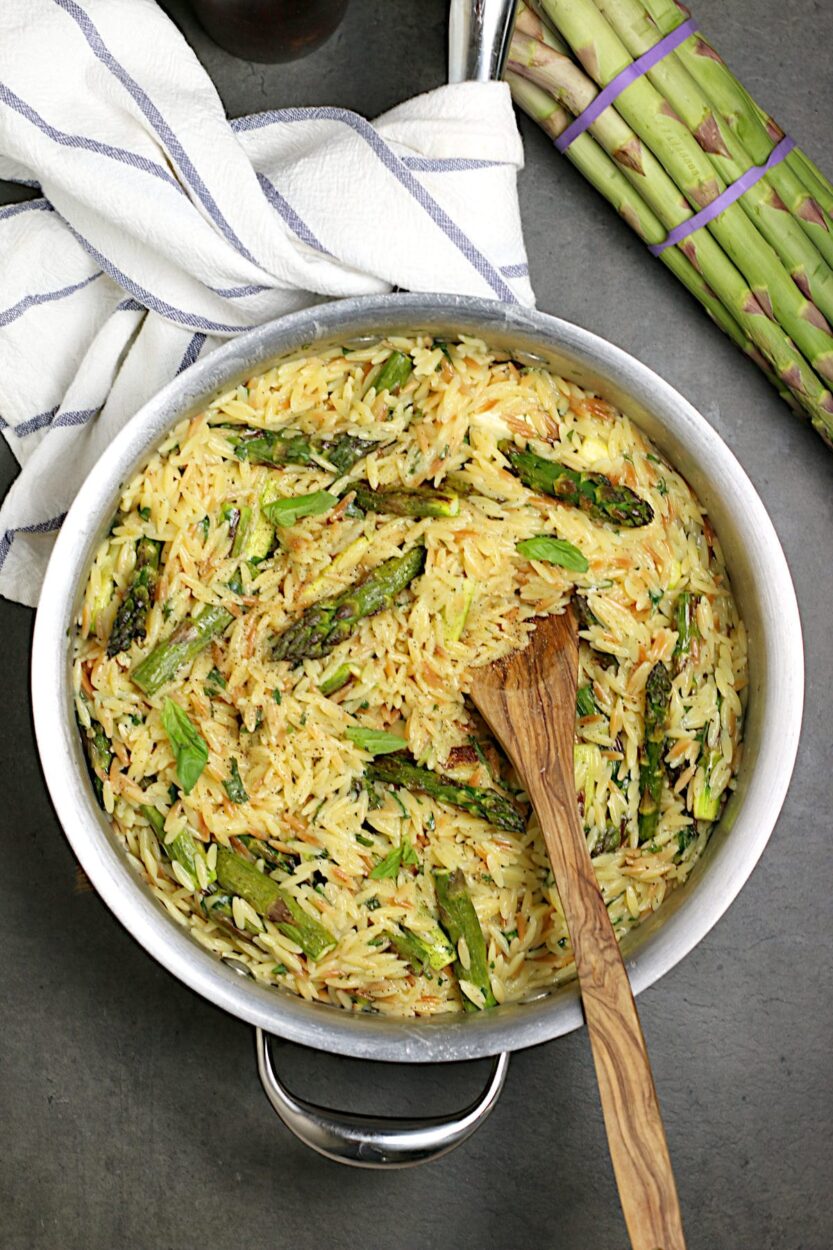
Getting this recipe perfect every time is largely about understanding how the no-drain method works and adjusting accordingly. Here are the tips that take it from good to extraordinary:
Use a Wide, Heavy-Bottomed Pan
A wide sauté pan or Dutch oven gives the orzo room to cook evenly without clumping in the center. A narrow, tall pot will result in uneven cooking and a gluey mass at the bottom. The more surface area, the more even the liquid absorption. If you love one-pot cooking as much as we do, you’ll want to check out our Dutch Oven Lasagna — another no-drain, one-vessel pasta masterpiece that’s packed with sausage and melted cheese.
Watch Your Liquid Ratio
The standard ratio is roughly 2 cups of broth per 1 cup of dry orzo, but your stove’s heat level matters. If the orzo absorbs liquid too fast before it’s fully cooked, add a splash more broth or even hot water. You want it to finish cooking just as the last of the liquid is absorbed — that’s the sweet spot. Serious Eats has a fantastic breakdown of pasta cooking science that helps explain exactly why starchy cooking water is liquid gold in any pasta dish.
Add the Asparagus at the Right Moment
Add your asparagus during the last 3–4 minutes of cooking. If you put it in too early, it turns army-green and limp. You want snap, you want color, you want contrast against all that creamy cheesiness. Thick spears should be sliced into ½-inch coins; thin spears can be cut into 1-inch pieces.
The Cheese Finish Is Everything
Pull the pot off the heat before stirring in your Parmesan and cream cheese. Residual heat melts both perfectly without breaking the fat or making the sauce grainy. Stir with enthusiasm — you want a glossy, cohesive sauce that coats every single piece of orzo.
Flavor Variations Worth Trying
- Add protein: Stir in cooked shredded rotisserie chicken, sautéed shrimp, or crispy pancetta. If you’re in the mood for a heartier one-pot concept, our Low Country Shrimp Boil scratches the same itch with bold Southern flair.
- Swap the vegetable: Frozen peas, baby spinach, sun-dried tomatoes, or roasted cherry tomatoes all work beautifully in place of or alongside asparagus.
- Go spicy: Add a pinch of red pepper flakes to the garlic while it sautés for a subtle kick that plays beautifully against the creamy cheese.
- Make it smoky: A half-teaspoon of smoked paprika stirred in with the broth adds a deep, campfire-like undertone that transforms the whole dish.
- Vegetarian or vegan: Use vegetable broth, skip the cream cheese or use a dairy-free alternative, and substitute nutritional yeast for Parmesan for a surprisingly rich result.
For more inspiration on bold, no-fuss one-pot meals, Food Network’s roundup of one-pot pasta recipes is a fantastic resource for expanding your weeknight repertoire.
Nutritional Highlights
One pot cheesy orzo with asparagus is the kind of dish that feels indulgent but actually delivers a surprisingly balanced nutritional profile. A generous serving clocks in around 420 calories and provides roughly 15 grams of protein — especially if you stir in a handful of white beans or a scoop of ricotta for extra staying power. Asparagus is a nutritional powerhouse in its own right, offering folate, vitamins K and C, and natural anti-inflammatory compounds in every bright green bite. Orzo, while a refined pasta, provides steady energy through complex carbohydrates, and the use of real Parmesan means you’re getting calcium and umami depth from a real food source rather than processed cheese product. Using a quality low-sodium broth keeps the sodium manageable, and finishing with olive oil rather than excessive butter keeps the fat profile leaning toward heart-healthy monounsaturated fats. This is comfort food that loves you back — a rare and beautiful thing.
Frequently Asked Questions
Can I make one pot cheesy orzo with asparagus ahead of time?
You can, with a small caveat: orzo continues to absorb liquid as it sits, so leftover orzo will be thicker and denser than when it was freshly made. If you’re making it ahead, slightly undercook the orzo by about 2 minutes, then let it cool and refrigerate. When reheating, add a generous splash of broth or water (a quarter cup per serving) and warm gently over medium-low heat, stirring until it loosens back to its creamy original texture. The flavors actually deepen overnight, so day-two orzo is secretly delicious — just needs a little liquid love to come back to life.
What can I substitute for asparagus in this recipe?
Asparagus is ideal for its texture and flavor contrast, but this recipe is extraordinarily flexible. Baby spinach wilts beautifully into the hot orzo in the last 60 seconds of cooking. Frozen peas can be stirred in with the cheese at the very end — they thaw from the residual heat alone and add a sweet pop of color. Broccolini, zucchini cut into half-moons, cherry tomatoes, or even thinly sliced sugar snap peas all work wonderfully. In winter, consider wilted kale or roasted butternut squash cubes stirred in just before serving. The key principle is this: delicate vegetables go in at the very end, heartier ones can go in during the last 4–5 minutes of cooking.
How do I store and reheat leftovers?
Store leftover one pot cheesy orzo in an airtight container in the refrigerator for up to 4 days. The orzo will firm up and absorb any remaining liquid as it chills — this is completely normal. To reheat on the stovetop, add the desired portion to a small saucepan with 2–3 tablespoons of broth or water per serving, cover, and warm over medium-low heat, stirring occasionally until creamy and heated through. For microwave reheating, add a splash of water, cover loosely, and heat in 60-second intervals, stirring between each until hot. We don’t recommend freezing this dish — the cream cheese and Parmesan sauce can separate and become grainy upon thawing, and the orzo turns mushy. Fresh or refrigerated is best.
Make It Tonight — Then Tell Everyone About It
One pot cheesy orzo with asparagus is the recipe that earns its place in your permanent weeknight rotation — not because it’s easy (though it absolutely is), but because it’s genuinely, deeply, repeatedly delicious. It hits every note a great pasta dish should: creamy without being heavy, rich without being one-dimensional, simple without being boring. It’s the kind of meal that makes Tuesday feel like an occasion and Friday feel like a restaurant night without leaving the house.
If you’ve been skeptical of the no-drain pasta method, let this be the recipe that converts you. Once you taste the difference that cooking orzo in its sauce liquid makes — the depth, the creaminess, the way the cheese clings to every single piece — you’ll never go back. This is the pasta philosophy we believe in at Desire Recipes: food that tastes like someone cared, made by someone who also values their time and sanity.
We want to see your creamy orzo creations! Share your photos on Instagram and tag us, save this post to Pinterest for your next weeknight dinner emergency, and leave a comment below telling us what variation you tried. Did you add shrimp? Toss in some sun-dried tomatoes? Make it vegan? We love hearing how you make our recipes your own. And if you’re on a one-pot cooking kick after this (we understand completely), you’ll want to bookmark our One Pan Camping Breakfast Skillet — same single-vessel philosophy, same bold flavor payoff, just with eggs and sausage for your morning table.
Find the complete recipe card below ↓

One Pot Cheesy Orzo with Asparagus
Equipment
- Large wide skillet or Dutch oven (at least 4-quart)
- Wooden spoon or silicone spatula
- Box grater
- Measuring cups and spoons
- Microplane or zester
Ingredients
Main Ingredients
- 1.5 cups dry orzo pasta
- 3 cups chicken or vegetable broth low sodium recommended
- 1 cup water
- 1 lb fresh asparagus tough ends trimmed, cut into 1-inch pieces
- 4 cloves garlic minced
- 2 tablespoons olive oil
- 1 tablespoon unsalted butter
- 1 cup Parmesan Reggiano freshly grated, plus more for serving
- 2 oz cream cheese softened, cut into small cubes
- 1 teaspoon lemon zest from about 1 lemon
- 1 tablespoon fresh lemon juice
- 0.5 teaspoon red pepper flakes optional, for heat
- 1 teaspoon kosher salt plus more to taste
- 0.5 teaspoon black pepper freshly ground
- 2 tablespoons fresh parsley chopped, for garnish
Instructions
Build the Base
- Heat olive oil and butter in a large wide skillet or Dutch oven over medium heat until the butter is melted and the mixture is shimmering.
- Add the minced garlic and red pepper flakes (if using) and sauté for 60–90 seconds, stirring constantly, until fragrant and just barely golden. Do not let the garlic brown.
Cook the Orzo
- Add the dry orzo to the pot and stir to coat it in the garlic oil for about 1 minute, toasting it lightly.
- Pour in the broth and water. Stir well, season with kosher salt and black pepper, and bring to a boil over medium-high heat.
- Once boiling, reduce the heat to medium and cook uncovered for 8–10 minutes, stirring every 2–3 minutes to prevent sticking, until the orzo is nearly al dente and most of the liquid has been absorbed. The mixture should look creamy and slightly loose — not dry.
Add the Asparagus
- Stir in the asparagus pieces during the last 3–4 minutes of cooking. The asparagus should cook alongside the orzo until just crisp-tender and bright green.
- If the orzo looks too thick or is sticking before the asparagus is cooked through, add a splash of warm broth or water, a few tablespoons at a time.
Finish with Cheese
- Remove the pot from the heat. Immediately add the cream cheese cubes and freshly grated Parmesan. Stir vigorously until both are completely melted and the sauce is smooth and glossy.
- Stir in the lemon zest and lemon juice. Taste and adjust seasoning with additional salt and pepper as needed.
- Serve immediately, garnished with extra Parmesan and fresh chopped parsley. A drizzle of good olive oil over the top is optional but highly encouraged.